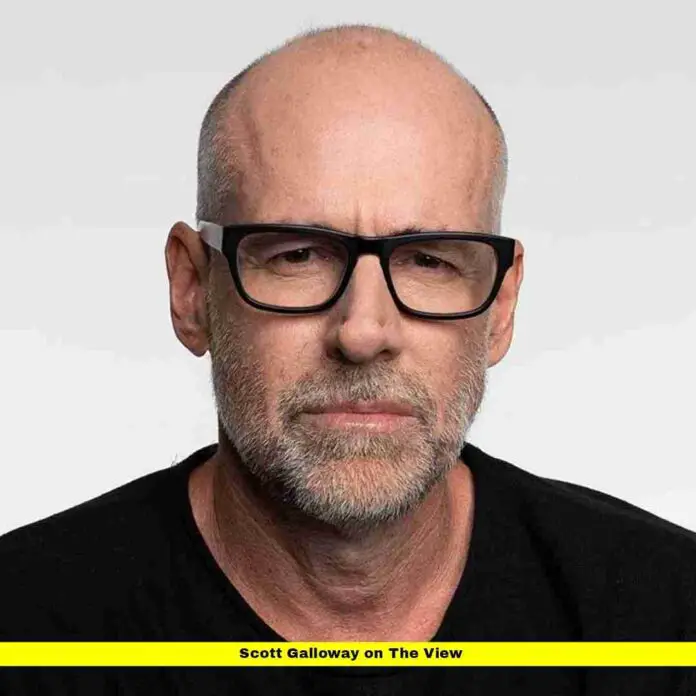
When Scott Galloway on The View appeared recently, his candid and fiery discussion on the U.S. economy, tariffs, and the struggles of modern men caught widespread attention. His appearance wasn’t just another guest spot—it quickly became one of the most discussed moments on the show this season, with clips trending across X (formerly Twitter), YouTube, and Instagram.
Table of Contents
Scott Galloway Captivates The View Audience
Scott Galloway joined The View for an episode that instantly lit up the conversation online. Known for his sharp insights and no-nonsense communication style, the marketing professor and entrepreneur didn’t shy away from controversy. Sitting beside hosts Whoopi Goldberg, Sunny Hostin, Joy Behar, Sara Haines, and Alyssa Farah Griffin, he dissected everything from economic instability to the challenges facing young men in today’s society. His remarks struck a balance between concern and provocation—an approach that sparked deep discussion both on and off social media.
He opened the segment with an assertive critique of current economic policies. Galloway noted that the global market is becoming increasingly skeptical of the United States’ trade strategies, warning that impulsive tariff decisions could have real and lasting consequences. His message was clear: unstable leadership and erratic trade policies risk isolating the U.S. economy from international trust.
Economic Warning That Resonated Nationwide
During his segment, Scott Galloway focused heavily on what he sees as “reckless economic steering.” He emphasized that tariffs are not simply political tools—they affect the cost of living for ordinary Americans. By raising prices on imported goods, tariffs create ripple effects that reach grocery aisles, gas stations, and technology purchases. Galloway stated bluntly that a continuation of such policies could double the cost of consumer electronics like smartphones, disrupting global supply chains and damaging the U.S. economy’s credibility.
He compared the situation to a driver “blackout drunk at the wheel of the global economy,” an analogy that quickly went viral after the episode aired. Social platforms buzzed with support and criticism, but one thing was certain—his message resonated. His ability to make complex macroeconomic concepts relatable to viewers set him apart from typical TV guests.
Masculinity and the Modern Male Identity
Beyond economics, Scott Galloway shifted the conversation to one of his most discussed topics: the evolving crisis of masculinity. He told The View audience that a significant portion of young men today are feeling disconnected—from purpose, from work, and from relationships. He explained that these men are not inherently toxic but rather aimless, lacking the structure and expectations that once helped define adulthood.
According to Galloway, many modern men are struggling with a lack of direction in an era where traditional milestones—steady jobs, community involvement, and family roles—are shifting rapidly. He argued that society must redefine masculinity in a way that encourages accountability and contribution instead of shame. His insights mirrored themes from his previous public talks, where he calls for rebuilding community bonds and mentoring young men toward productive roles in society.
His message struck a chord with The View’s audience, especially because it came in an environment where discussions about gender are often emotionally charged. While some hosts challenged his ideas, others praised his willingness to confront the issue directly, noting that open discussions about men’s mental and emotional health are long overdue.
Public Reaction and Online Buzz
The conversation didn’t end when the cameras stopped rolling. Viewers flooded social media platforms with reactions, debates, and analysis of Galloway’s appearance. The clip featuring his economic critique reached millions of views within 24 hours on YouTube, while his commentary on masculinity trended under #ScottGalloway on X.
Supporters applauded his courage to blend economics and social commentary, praising him for articulating what many people feel but rarely say in mainstream media. Critics, however, argued that his perspective leaned too heavily on broad generalizations. Regardless of stance, few could deny that his interview made people think—a rare outcome in daytime television.
The media industry also took notice. Business and culture podcasts discussed his remarks, citing them as evidence that Galloway continues to shape public discourse in unexpected spaces. His appearance demonstrated that serious topics like economic reform and social identity can thrive in settings traditionally reserved for celebrity interviews and pop culture chatter.
Why Scott Galloway’s Views Matter
Scott Galloway’s influence extends beyond his The View appearance. As a professor at NYU Stern School of Business, he has built a reputation for making data-driven insights accessible to the general public. His ability to connect macroeconomic trends to everyday experience helps audiences understand the “why” behind rising costs and shifting markets.
More importantly, his commentary highlights the interconnection between economic policy and cultural well-being. When he argues that economic instability breeds social instability, he ties together themes that are often discussed in isolation. For many viewers, his insights offered clarity during a time of uncertainty and division.
Galloway’s appearance also underscored the value of honest, unscripted dialogue in mainstream media. By tackling sensitive subjects—such as the perceived crisis of masculinity—on a daytime platform, he demonstrated that audiences are hungry for depth and nuance, not just soundbites.
The Broader Message Behind His Appearance
At its core, Scott Galloway’s message on The View was about responsibility. Whether addressing global economics or social roles, he emphasized that progress requires both personal and collective accountability. He urged leaders to act with discipline, businesses to think long-term, and individuals to take ownership of their lives and communities.
This broader philosophy explains why Galloway continues to attract attention across industries. His opinions may be polarizing, but they stem from a consistent belief that societies thrive when people take responsibility—economically, socially, and morally. His latest appearance reaffirmed this belief, giving viewers a lot to reflect on in their own lives.
Final Thoughts
Scott Galloway on The View reminded audiences why he remains one of today’s most provocative thinkers. By combining economic critique with cultural analysis, he delivered a conversation that was both informative and deeply relevant. Whether you agreed with his points or not, his appearance encouraged viewers to think critically about leadership, identity, and the direction of society.
What do you think about Scott Galloway’s remarks on The View? Did his comments strike a chord with you—or do you see things differently? Share your perspective below and join the discussion.

