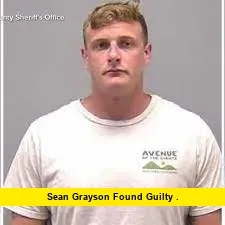
Sean Grayson found guilty — the words that reverberated through an Illinois courtroom this week marked the end of a long, painful journey for the family of 36-year-old Sonya Massey. The former Sangamon County sheriff’s deputy was convicted of second-degree murder after fatally shooting Massey inside her Springfield home in July 2024. The verdict, handed down by a state jury, closes one of the most emotionally charged trials Illinois has seen in years and reignites national debate over police accountability and the use of force.
Table of Contents
The Tragic Night That Sparked a Movement
The deadly encounter between Sean Grayson and Sonya Massey began as a 911 call for help. On the night of July 6, 2024, Massey called emergency services to report a possible intruder at her home. Officers Grayson and his partner responded to what was expected to be a routine welfare check.
What unfolded instead would become a defining moment in Illinois law enforcement history.
According to courtroom testimony and video evidence, Massey appeared visibly anxious when officers arrived. At one point, she picked up a pot of boiling water from her kitchen stove. Grayson later testified that he feared she might throw it at him. He shouted for her to drop it and, within seconds, fired his gun. Massey fell to the floor with a gunshot wound to the head.
Her final words — “I rebuke you in the name of Jesus” — were captured on the body-camera footage that prosecutors said showed an unjustified use of deadly force.
The video spread rapidly across social media, sparking outrage and protests across Illinois and beyond. For many, it became a symbol of how quickly fear, bias, and a lack of de-escalation can lead to irreversible tragedy.
From Officer to Defendant: The Fall of Sean Grayson
At the time of the shooting, Sean Grayson was a deputy with the Sangamon County Sheriff’s Office. He had been on the force for less than a year but had previously worked for other agencies in the state. Later investigations revealed that Grayson’s record included prior disciplinary concerns, including excessive-force complaints that had not been fully disclosed during his hiring process.
When the body-camera footage was made public, Sangamon County officials moved swiftly. Grayson was fired and charged with three counts of first-degree murder, official misconduct, and aggravated battery.
During the trial, prosecutors painted a picture of a deputy who escalated a situation that required compassion and patience. They argued that Massey was not a threat — that she was frightened and calling for help. Grayson’s defense countered that he acted within training and feared imminent harm when he saw her holding a pot of boiling water.
The courtroom was packed throughout the proceedings. Family members of Sonya Massey filled the front row, clutching photos and wearing shirts emblazoned with her name. Grayson’s own family sat silently behind him, occasionally dabbing at tears.
The Verdict: Justice Delivered, But Questions Remain
After several days of emotional testimony and nearly eight hours of deliberation, the jury returned its decision: Sean Grayson was guilty of second-degree murder.
The verdict was met with mixed emotions. Massey’s mother broke down in tears. Her cousin expressed both relief and disappointment, saying, “We’re grateful for accountability, but it should have been first-degree.”
Under Illinois law, second-degree murder applies when someone intentionally kills another person but acts under a sudden, intense passion or an unreasonable belief that deadly force was justified. The jury’s decision suggests they believed Grayson genuinely feared for his safety — but that his fear was not reasonable.
The conviction carries a potential prison sentence of four to twenty years, though probation is also possible. Grayson will remain in custody until his sentencing on January 29, 2026, when a judge will decide his fate.
What the Jury Saw: The Power of Body-Camera Footage
Body-camera evidence played a pivotal role in this trial. Jurors watched the footage multiple times during deliberations, and several reportedly appeared shaken by what they saw. The video clearly showed that Massey was not advancing on Grayson at the time of the shooting.
Prosecutors emphasized that Grayson fired within seconds — too quickly, they said, for him to have truly assessed any threat. They argued that proper de-escalation training would have prevented the shooting entirely.
The footage also captured Grayson’s reaction afterward. Instead of rendering aid, he reportedly told his partner, “Don’t touch her.” Massey lay motionless on the kitchen floor as backup units arrived.
This detail deeply disturbed both the jury and the public. It was cited by prosecutors as evidence of callousness and disregard for human life.
Public Outcry and Calls for Reform
The “Justice for Sonya” movement gained national attention in the months following her death. Activists across Illinois organized vigils, marches, and community forums demanding stronger accountability measures for law enforcement officers.
Public pressure led to a series of reforms in Sangamon County:
- Tighter background checks for officer recruitment and transfers.
- Mandatory de-escalation and implicit-bias training for all deputies.
- A statewide review of use-of-force incidents and disciplinary transparency.
Advocates argued that Grayson’s hiring highlighted a systemic failure in how officers with troubling pasts are screened and monitored. Critics of current hiring practices claimed that departments often prioritize filling positions over vetting candidates.
Massey’s death also reignited conversations about race and policing. Many community members pointed to disparities in how force is used against Black women, particularly during crisis or wellness calls.
The $10 Million Settlement and Civil Accountability
In addition to the criminal trial, Sangamon County reached a $10 million settlement with Massey’s family earlier this year. The agreement acknowledged failures within the department and promised to implement new oversight measures.
While the settlement provided financial relief, the family made clear that their primary goal was justice — not money. “No amount can bring Sonya back,” her cousin said outside the courthouse. “But this verdict shows her life mattered.”
The family has since established the Sonya Massey Foundation, aimed at promoting mental-health awareness, de-escalation education, and community engagement between residents and local law enforcement.
Must Read-Sonya Massey Shooting: Ex-Deputy Sean Grayson Found Guilty of Murder
A Broader Message on Accountability
Sean Grayson’s conviction is more than a local case; it symbolizes a national turning point in how juries view police use of force. Historically, convictions of law-enforcement officers in on-duty killings have been rare. But a growing public demand for transparency and reform has begun to shift that landscape.
The case also underscored the importance of body-camera footage, which continues to reshape public perception of police interactions. Without the video, many advocates believe this case might have ended very differently.
Experts say the verdict sends a message: fear alone is not justification for deadly force. Officers are expected to act with measured judgment, especially when responding to citizens who seek help.
Awaiting Sentencing: What Comes Next for Grayson
As the January 2026 sentencing approaches, both sides are preparing for the final stage of the legal process. Prosecutors are expected to seek the maximum sentence, arguing that Grayson’s actions were deliberate and showed a disregard for human life.
The defense, meanwhile, will likely ask for leniency, citing his service record and lack of prior convictions. However, public sentiment in Illinois remains firmly against a light sentence. Many residents say anything less than prison time would undermine the progress made in the fight for police accountability.
If sentenced to prison, Grayson will serve time in an Illinois Department of Corrections facility. If granted probation, his life will remain under strict court supervision, and any violation could result in imprisonment.
Regardless of the outcome, the case will remain a benchmark for future officer-involved shootings — not only in Illinois but nationwide.
The Legacy of Sonya Massey
Sonya Massey’s story has become a rallying cry for justice reform. Friends describe her as deeply spiritual, kindhearted, and devoted to her two children. She was known in her community for volunteering at her church and mentoring younger women.
Her death, though tragic, has inspired a broader movement. Across Illinois, new advocacy groups have emerged pushing for crisis-response teams that include mental-health professionals to accompany officers on welfare calls.
Her family continues to speak publicly, reminding the world that Sonya was more than a headline. “She wasn’t just a name in a case,” her brother said after the verdict. “She was light. And now that light is helping others see.”
Reflection: Justice, Accountability, and the Road Ahead
The conviction of Sean Grayson found guilty of murder in the death of Sonya Massey stands as a stark reminder that justice, though often delayed, is achievable when truth and persistence prevail.
For many, this verdict brings a measure of closure — not just for the Massey family, but for every community that has lost someone to excessive force. Yet it also highlights the ongoing need for deeper reform: better screening, better training, and a culture of empathy within law enforcement.
The trial may be over, but the movement it inspired is not. As Illinois prepares for Grayson’s sentencing, the nation watches — hopeful that this case will continue to drive change, compassion, and accountability where it’s needed most.
The story of Sean Grayson and Sonya Massey is more than a verdict — it’s a call to action for a more just and humane future. Share your thoughts below and stay informed as this case continues to shape the path toward real accountability.

