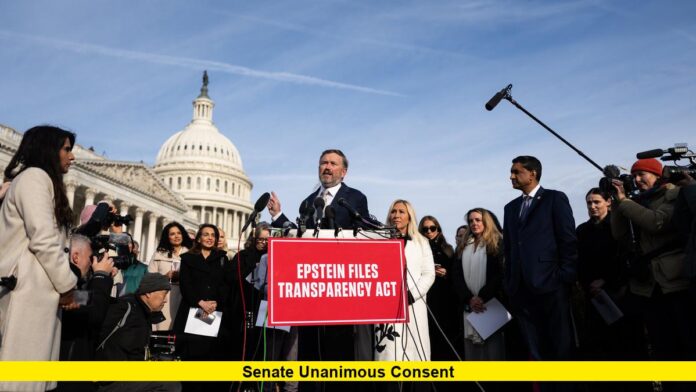
The term senate unanimous consent took center stage this week as the U.S. Senate cleared the bill commonly known as the Epstein Files Transparency Act, enabling its immediate passage once it reached the chamber. The move allowed the Senate to bypass a full vote and amendments because no senator objected.
With a motion for senate unanimous consent, the Senate agreed to pass the bill compelling release of files related to Jeffrey Epstein as soon as it arrived from the House, joining the near-unanimous House approval earlier in the day.
What the Bill Does
- The legislation mandates the Department of Justice to release unclassified records, communications and investigative materials tied to the Epstein case within a defined time frame.
- The House passed the bill overwhelmingly (427-1 vote) in a bipartisan fashion.
- In the Senate, by invoking senate unanimous consent, the bill moved forward without amendments or a formal roll-call vote.
- Once transmitted, the measure will head to the White House for the President’s signature and become law.
Why Senate Unanimous Consent Was Key
- By using unanimous consent, Senate leaders avoided lengthy debate or the possibility of amendments that could delay or weaken the bill.
- The mechanism signals that the Senate found broad bipartisan agreement on the outcome and wanted to expedite action.
- It underscores how the Senate can shift from standard procedures (debate, amendment, cloture) to streamlined consideration when no member objects.
Implications and Considerations
- The swift passage highlights public and congressional pressure for transparency in the Epstein case and shows how procedural tools like unanimous consent can accelerate response.
- However, critics may argue that bypassing full floor debate limits scrutiny or amendments that might better protect victims, sensitive material or investigate potential implications.
- The outcome also sets a precedent: when bipartisan momentum is strong and no senator objects, the Senate can act very quickly via unanimous consent.
What Happens Next
- Following the Senate’s consent passage, the bill awaits the President’s signature.
- Once signed, the DOJ will be required to comply with the disclosure requirements.
- The use of unanimous consent here may encourage similar procedural strategies in other high-profile legislative matters where broad support exists.
Why This Matters to U.S. Audiences
Understanding the role of senate unanimous consent is important for U.S. citizens because it shows how key legislation can advance rapidly without the usual floor process. In this case, the mechanism helped ensure that a transparency measure tied to a major public-interest scandal moved without delay. It also reveals how congressional procedure intersects with accountability in practice.
In closing, the Senate’s use of unanimous consent to approve the Epstein-files bill demonstrates how efficient the chamber can be when procedural agreement aligns with policy urgency. I encourage you to comment below with your thoughts on this approach or stay tuned for how the document releases proceed.

