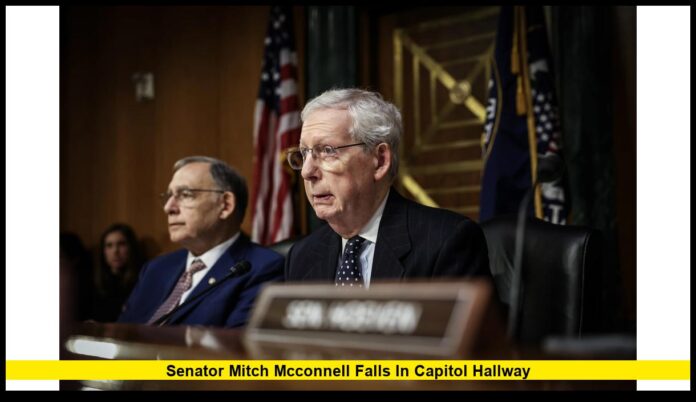
Senator Mitch McConnell falls once again in a public setting, this time inside a Capitol hallway while heading to cast votes. The incident, which took place on Thursday afternoon, quickly drew attention from lawmakers, aides, and the press. Though he appeared uninjured and proceeded with his schedule, the fall immediately reignited nationwide discussion about the health of one of the most powerful and longest-serving figures in American politics.
Table of Contents
Details of the Incident
According to multiple witnesses inside the Capitol, McConnell was walking down the hallway when he stumbled and fell near a group of aides. Capitol Police and members of his staff rushed to help him back to his feet. Within moments, he stood, adjusted his jacket, and signaled that he was fine.
He was later seen entering the Senate chamber, where he cast his vote as planned. Staff members described him as “steady” afterward, though reporters noted the moment closely given his history of previous falls and health episodes.
This latest occurrence adds another chapter to a growing list of public incidents that have raised concern about McConnell’s physical stability. The Kentucky senator, now 83 years old, has dealt with various medical issues in recent years, including earlier falls and temporary freezing episodes while speaking in public.
A History of Falls and Health Concerns
The recent incident is far from isolated. Over the last few years, McConnell has experienced several similar moments that have become matters of national discussion.
- Earlier this year, he stumbled outside the Senate chamber after casting a procedural vote.
- In 2024, he slipped following a luncheon with Senate Republicans, suffering minor injuries but continuing his work schedule.
- In 2023, he fell during an evening event and sustained a concussion and fractured rib, which led to a lengthy recovery period.
- In multiple press conferences, he has paused mid-sentence, appearing momentarily frozen before resuming.
While his office has consistently emphasized his ability to perform his duties, these incidents have heightened scrutiny of his health and stamina as he continues his term.
Political Context and McConnell’s Current Role
McConnell remains a towering figure in Washington. After decades as a Senate Republican leader, he stepped down from leadership in 2024 but retained his seat. Earlier this year, he reaffirmed that he intends to serve out his term through January 2027 but will not seek re-election in 2026.
This decision set the stage for an eventual succession battle in Kentucky, but McConnell’s continued presence in the Senate remains consequential. He plays a role in major legislative negotiations, caucus strategy, and the broader Republican political landscape.
However, each public health episode—especially when it involves a fall—raises questions about whether he can maintain the demanding pace of Senate work during a politically volatile period marked by budget battles, shutdown threats, and election maneuvering.
Concerns Over Age and Fitness in Public Office
McConnell’s fall has once again thrust into the spotlight a broader national conversation: how age, health, and transparency intersect with leadership in government.
Several prominent figures in both parties are in their 80s, and recent health incidents—whether fainting, freezing, or falling—have amplified public calls for clearer medical disclosures and discussions about retirement timelines.
Key points driving the debate:
- Public trust: Voters want assurance that elected officials can fully perform their duties.
- Institutional stability: Sudden health crises can disrupt legislative schedules, leadership plans, and negotiations.
- Transparency expectations: Many Americans believe senior lawmakers should disclose more about their health status to the public.
- Succession planning: In states like Kentucky, the question of how leadership transitions are handled has significant political implications.
McConnell’s incident feeds directly into this larger discussion, especially as the country heads toward another major election cycle.
Reactions Inside the Capitol
Within the Senate, the immediate response was one of concern but also familiarity. McConnell’s colleagues, both Republican and Democrat, have grown accustomed to heightened attention whenever he appears unsteady or pauses unexpectedly. Some senators privately expressed worry about the cumulative effect of these episodes.
Others publicly emphasized his resilience and long record of leadership, pointing out that he returned to work immediately after the fall. Staff members have said his daily routine remains “full and focused,” despite occasional mobility challenges stemming from childhood polio.
The incident also triggered renewed hallway discussions about whether Congress should adopt more formalized health transparency standards for senior lawmakers. Several senators have quietly voiced support for the idea, though no formal proposals have emerged.
Public and Media Reaction
The story spread quickly across social platforms and major U.S. news outlets. Many Americans responded with genuine concern for McConnell’s well-being. Others saw the event as part of a larger conversation about aging leadership in Washington.
In Kentucky, the reaction was especially intense. Constituents offered a mix of support, sympathy, and curiosity about what this means for the remainder of his term. Potential candidates eyeing his Senate seat are watching closely, as any significant health developments could alter the timeline for the state’s political future.
Nationally, commentators debated whether incidents like these should prompt early retirement, mandatory health reporting, or term limits. It’s a discussion that has gained traction in recent years as more senior politicians remain active well into their eighties.
What Happens Next
For now, McConnell is expected to continue his duties without interruption. His team has indicated that no medical intervention was required and that he will keep his upcoming schedule.
However, the broader implications of this incident are unlikely to fade quickly. Lawmakers, journalists, and voters will closely monitor his public appearances, committee work, and voting participation in the weeks ahead.
Areas to watch include:
- Whether he skips future sessions or late-night votes due to mobility concerns.
- Any changes in public engagement, such as fewer press conferences or shorter statements.
- Potential announcements from Kentucky officials regarding contingency plans if his health deteriorates.
- Growing debates within the Republican Party about how to manage leadership transition smoothly when the time comes.
A Defining Moment in a Long Career
Senator Mitch McConnell falls in a moment that may prove symbolic of the closing chapter of his long political life. His career has spanned decades, shaped Supreme Court confirmations, steered budgets through partisan storms, and defined an era of Republican strategy.
Even if the fall itself caused no injury, its resonance lies in what it represents: the intersection of age, power, and public perception. As he continues his term, each public appearance will likely be scrutinized not just for policy, but for physical presence.
Senator McConnell has built a reputation for political resilience. Whether this latest incident is remembered as a brief stumble or a turning point will depend on what follows. For now, he remains on the Senate floor, walking the same halls that have defined his legacy—though more carefully than before.

