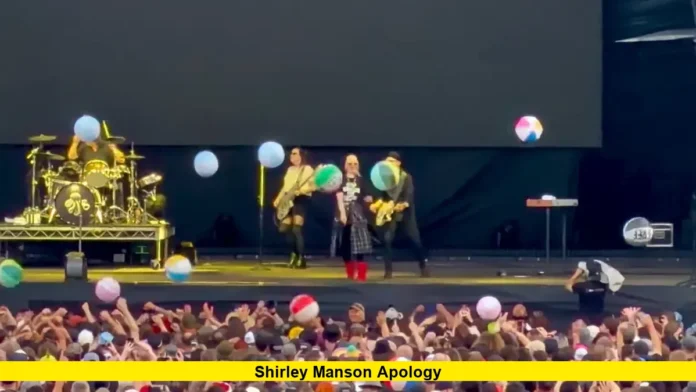
In a dramatic turn of events, rock singer Shirley Manson has issued what many are calling the “Shirley Manson apology,” following a firestorm ignited during the recent leg of the Good Things Festival in Australia. The frontwoman of Garbage faced widespread backlash after an on-stage rant about beach balls tossed by fans — and the fallout has prompted a public mea culpa, a provocative shift in tone, and plenty of debate among fans and critics alike.
Table of Contents
What Happened: The Beach Ball Rant That Sparked It All
During Garbage’s December 5, 2025 performance at the Good Things Festival in Melbourne, Manson took aim at a fan carrying a large beach ball. She called the man a “f—–g douchebag,” criticized him in harsh language, and declared she was fed up with being treated like a “circus performer.” She also lamented the broader disrespect she said musicians often face when audiences treat concerts like parties rather than artistic experiences. Her indulgent rant, filled with expletives and personal attacks, instantly went viral across social media.
The backlash was swift. Many concertgoers and online observers condemned her reaction as over the top — especially given that beach balls at concerts are widely seen as an innocuous, playful tradition. Critics argued that Manson’s rage felt disproportionate and unfriendly to fans who were simply trying to enjoy themselves.
After the Melbourne show, Manson initially dug in. On social media, she wrote, “I make NO APOLOGIES whatsoever for getting annoyed at beach balls at shows. I joined a band because I HATED THE F—–ING BEACH.” She framed her stance as a protest against crowd behavior she considered disrespectful to the art and the artists.
The Shift: Apology — But With a Message
The situation came to a head at Garbage’s December 7 show in Brisbane. This time, fans flooded the crowd with beach balls in protest — a deliberate show of solidarity with the original beach-ball-thrower. Videos and images captured sea of inflatable spheres bouncing through the audience.
On stage, Manson addressed the controversy. She began by complimenting the beach balls: “I just have to address your glorious beach balls — they’re very impressive.” She then acknowledged that the uproar over her rant had overshadowed what she framed as a much more serious issue: the humanitarian crisis in Gaza. “There’s been more fuss made about me offending beach balls than there has about 20,000 Palestinian kids who are now f—ing under the dirt,” she said.
Then came the apology: “Maybe a beach ball brings you joy, and for that I apologise. If I upset you about your blessed beach balls, I humbly apologise.” She also took the opportunity to shine a spotlight on global suffering, suggesting governments should apologize for what she described as catastrophic events overseas.
Why It Resonates — And Why It’s Divisive
Clash Between Rock Attitude and Fan Culture
For decades, Manson and Garbage have embodied a rebellious, unapologetic spirit. But this episode illuminated a deeper tension: the gap between a musician’s desire for artistic seriousness and fans’ desire for carefree fun. Some fans felt Manson’s reaction was dismissive of their right to express themselves. Others sided with her view that live shows shouldn’t be treated like a frat party — that concerts deserve respect and reverence.
Pandora’s Box of Performer Expectations
The “Shirley Manson apology” underlines how modern performers are navigating a minefield. Artists today must manage not only their art but also social media scrutiny, fan reactions, and broader political contexts. Manson’s decision to frame her apology within a global humanitarian issue only deepens the complexity. To some, it was a bold shift; to others, it felt like deflection.
Fans’ Protest: Beach Balls as Symbolic Resistance
The flood of beach balls in Brisbane offered a powerful commentary: what started as a lighthearted tradition turned into a statement. Fans used beach balls as symbolic protest against what they saw as overreaching behavior by a beloved frontwoman. That act of collective pushback reflects changing power dynamics between artists and their audiences — no longer passive recipients, but active participants in shaping concert culture.
What It Means for Concert Culture — and Garbage’s Future
As live music evolves, this incident could influence future performances — not just for Garbage, but for other artists as well.
- Artists might push back harder. Manson’s rant may embolden other performers to call out behavior they find disrespectful — potentially altering norms around concert decorum.
- Fans might double down on playful rebellion. Beach balls, glowsticks, crowd surfers — anything seen as a harmless tradition could become a battleground.
- Expect more politicized apologies. Manson didn’t just apologize for beach-ball anger; she used the moment to draw attention to a global humanitarian issue. That signals a shift: future “apologies” may come layered with bigger causes, social commentary, or activism.
- Concert promoters and festivals may re-evaluate crowd guidelines. Production companies and venues may step in to mitigate tensions, potentially policing or discouraging innocuous traditions for fear of controversies.
For Garbage itself, this era could mark a turning point. The band just released their eighth studio album, Let All That We Imagine Be the Light, in May 2025 — a record that leans into hope, human fragility, and renewal after years of personal and professional turbulence. Now, with their tour underway, this beach-ball saga may rewrite the rules for their live shows, and perhaps even for their identity as a band.
What Manson Herself Has Said — In Her Own Voice
Immediately after the Melbourne show, Manson didn’t shy away. On social media, she proudly doubled down: she wasn’t sorry, and she stood by her words. But by Brisbane, she offered a concession — not a full mea culpa, but a reluctant acknowledgment: if beach balls brought joy to some fans, she apologized for hurting them. In the same breath, she pivoted to a plea for global attention — urging the world not to forget the suffering of innocent children caught in conflict.
It was a layered moment: part apology, part protest, part existential reckoning. Whether it’ll satisfy critics or fans remains to be seen.
The Broader Impact: More Than Just a Beach Ball
This isn’t just about a concert. The “Shirley Manson apology” is a microcosm of bigger themes playing out across music, culture, and society:
- Performing arts vs. entertainment culture: Are concerts sacred artistic experiences — or just another venue for crowd antics and fun?
- Artist authenticity vs. public image management: In the age of social media, any moment can go viral. Artists must weigh what they say on stage against the consequences.
- Fans as cultural participants: Audiences no longer just consume — they respond, resist, and shape the narrative.
- Global awareness through music events: Manson transformed what began as a concert controversy into a moment of political and humanitarian reflection.
Whether you saw it as a justified stand for artistic integrity or an over-the-top reaction to harmless fun, the fallout from the “Shirley Manson apology” is changing how we think about concerts, community, and the power dynamics between artist and audience.
What do you think? Should artists tell fans how to behave — or should concerts be a free-for-all? Share your thoughts, and stay tuned for what comes next.

