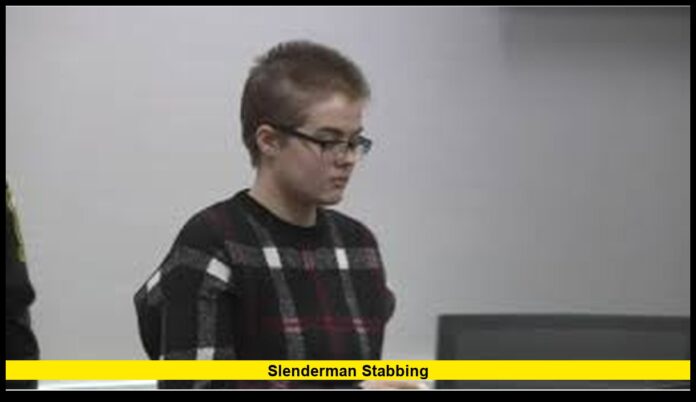
The Slenderman stabbing remains one of the most disturbing and unforgettable crimes in recent U.S. history. Over a decade after two 12-year-old girls attacked their friend in the name of a fictional internet character, the story continues to attract public attention. In 2025, the case still resonates because of its shocking mix of childhood innocence, mental illness, and digital-age influence.
Recent updates reveal that one of the girls, Morgan Geyser, continues her psychiatric treatment in a state institution, while the other, Anissa Weier, remains on supervised release. The survivor, Payton Leutner, has chosen privacy as she continues to live her life away from the spotlight.
Table of Contents
How the Case Began
In May 2014, three sixth-grade girls in Waukesha, Wisconsin, gathered for what seemed like a normal sleepover. The next day, however, the unthinkable happened. Morgan Geyser and Anissa Weier lured their friend Payton Leutner into a wooded area of a local park, where Geyser stabbed her 19 times while Weier encouraged her.
The girls claimed they committed the act to please “Slender Man,” a tall, faceless character created online as part of a horror fiction community. They believed that by killing Leutner, they would become servants of Slender Man and ensure their own safety.
Leutner miraculously survived after crawling out of the woods to a nearby road, where a passing cyclist discovered her. She was rushed to the hospital and recovered after surgery. Her survival became one of the most remarkable parts of the story — a testament to resilience amid tragedy.
The Trial and Verdict
Both girls were arrested the same day and charged with attempted first-degree intentional homicide. Despite their young age, prosecutors charged them as adults due to the severity of the crime.
Psychological evaluations later revealed that Morgan Geyser suffered from early-onset schizophrenia and experienced delusions at the time of the stabbing. Anissa Weier was diagnosed with a shared delusional disorder, meaning she believed in Geyser’s hallucinations.
In 2017, Weier was found not guilty by reason of mental disease or defect and sentenced to 25 years of institutional commitment. The following year, Geyser was found not guilty by reason of mental disease and ordered to spend up to 40 years in a psychiatric hospital for treatment.
Morgan Geyser’s Life in 2025
More than ten years later, Morgan Geyser is still receiving psychiatric care at the Winnebago Mental Health Institute in Oshkosh, Wisconsin. Her treatment includes medication, therapy, and regular psychological evaluations.
In September 2024, Geyser briefly petitioned for conditional release, a legal process that allows a committed individual to live under supervision outside the hospital. However, she later withdrew her request, saying she wasn’t ready to reenter society.
Her doctors and legal team continue to monitor her progress closely. Reports suggest she is cooperative with treatment and stable, but she still needs a structured environment. Her next review hearing is expected in early 2026, when her medical team and the court will again evaluate her condition.
Anissa Weier’s Supervised Release
Anissa Weier, Geyser’s co-defendant, was granted conditional release in 2021 after spending nearly four years in psychiatric care.
Her release came after evaluations concluded that she no longer posed a threat to herself or others. Under her release conditions, Weier must:
- Wear a GPS monitor at all times.
- Attend regular therapy sessions.
- Comply with curfews and restrictions on internet use.
- Undergo random check-ins with state officials.
As of 2025, Weier has reportedly remained compliant with all supervision terms and continues to live quietly in Wisconsin under monitoring.
The Survivor’s Recovery
Payton Leutner, the victim, has intentionally stayed out of the public eye. Now in her early twenties, she is focusing on her education and personal life. In past interviews, she expressed her desire for privacy and forgiveness, saying she does not wish to carry hatred for what happened.
Leutner’s story has inspired many as a tale of survival and recovery. She has received widespread support from her community, and her courage continues to be remembered in discussions surrounding the case.
The Role of Mental Illness and the Internet
The Slenderman stabbing exposed deeper issues about mental health and the impact of online content on impressionable young minds.
Experts have since used the case as an example of folie à deux — a shared delusional disorder — where two individuals share the same false beliefs. Psychiatrists explained that Geyser’s schizophrenia fueled her delusions, while Weier’s susceptibility made her believe in them.
The case also brought attention to the power of internet myths. The Slender Man character originated in 2009 as part of an online storytelling forum, but for two children struggling with fantasy and reality, it became dangerously real.
Following the case, educators and parents nationwide began to emphasize the importance of monitoring children’s online activity and discussing the difference between fiction and reality.
Legal and Social Impact
The Slenderman stabbing changed how Wisconsin and other states approach cases involving juvenile offenders with mental illness. It prompted reforms emphasizing mental health evaluations and treatment over punishment when mental disease plays a central role.
The case also underscored the need for better mental health screening in schools. Teachers, counselors, and parents are now encouraged to look for signs of paranoia, delusions, or social withdrawal in children, especially as online content continues to shape their perception of reality.
In 2025, the case continues to be cited in criminal law discussions and psychology research, as well as documentaries and academic studies exploring juvenile mental illness and internet influence.
A Decade Later: Reflection and Recovery
It has been eleven years since the attack, but the story remains one of the most chilling in modern American crime history. What began as an internet-born myth turned into a real-life tragedy that left lasting scars on everyone involved.
Geyser, now in her early twenties, continues to receive treatment. Weier lives under watchful supervision. Leutner has rebuilt her life, choosing peace and privacy.
The three young lives that collided in the woods of Waukesha in 2014 are now on very different paths — but the lessons from their story continue to echo through schools, courtrooms, and conversations about mental health.
The Slenderman stabbing is a reminder of how quickly fiction can influence reality — and how vital it is to recognize the warning signs of mental illness before tragedy occurs. What are your thoughts on the case after all these years? Share your perspective in the comments below.

