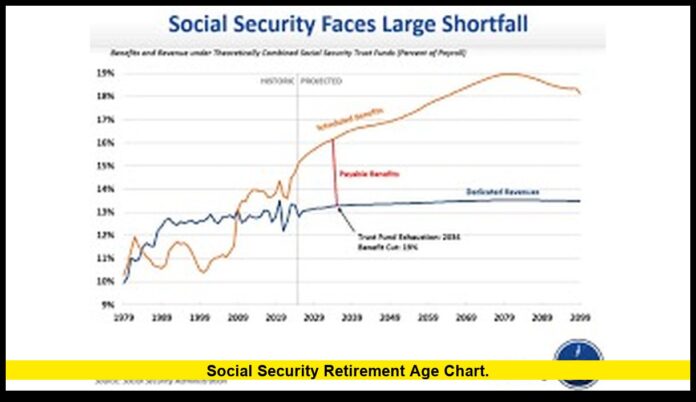
The social security retirement age chart is now one of the most closely watched tools for Americans planning their financial future. With new updates, shifting retirement patterns, and ongoing discussions about long-term Social Security stability, understanding this chart has never been more important. The latest adjustments affect when individuals qualify for their full retirement benefits and how much they will receive depending on when they choose to file.
As of today, new changes tied to birth years, delayed credits, and legislative conversations about potential future adjustments continue to shape retirement planning for millions. Anyone turning 62 this year, nearing their full retirement age, or considering delaying benefits should stay informed, as the details on the chart directly determine the timing and size of monthly Social Security checks.
Table of Contents
What the Social Security Retirement Age Chart Represents
The Social Security retirement age chart determines the full retirement age (FRA) — the age at which an individual becomes eligible to receive 100% of their earned Social Security benefits. FRA is based entirely on your year of birth.
For years, Americans assumed FRA was simply 65. But those days are long gone. Today, FRA gradually increases based on birth year, affecting everyone born after 1954. For younger generations, the FRA reaches 67, with early filing penalties and delayed filing bonuses shifting accordingly.
Changes in the chart affect:
- When you can first claim
- How much your benefit is reduced for claiming early
- How much extra you get for delaying beyond FRA
- How benefits are projected long term
These updates determine retirement timing, budgeting, and long-term income planning for millions of households.
The Full Breakdown: Birth Years and Full Retirement Ages
Below is the latest, complete version of the Social Security retirement age chart used in 2025:
| Year of Birth | Full Retirement Age |
|---|---|
| 1943–1954 | 66 |
| 1955 | 66 years + 2 months |
| 1956 | 66 years + 4 months |
| 1957 | 66 years + 6 months |
| 1958 | 66 years + 8 months |
| 1959 | 66 years + 10 months |
| 1960 or later | 67 |
This progression reflects a decades-long shift aimed at extending the working lifespan due to improvements in life expectancy and pressures on the Social Security system.
Why the Social Security Retirement Age Chart Matters Right Now
The chart is especially significant in 2025 for three reasons:
1. People Born in 1959 Are Reaching a Newly Adjusted FRA
Those born in 1959 are hitting a full retirement age of 66 years and 10 months, which is slightly higher than many had previously believed. Even a two-month difference can change benefit projections, early filing penalties, and long-term financial planning.
2. Those Born in 1960 Are Approaching the FRA of 67
Millions of Americans hitting early retirement eligibility this year belong to the cohort with an official FRA of 67, the highest currently on record. Anyone claiming at 62 instead of 67 will see the maximum early-filing reduction applied.
3. National Discussions Continue About Pushing FRA Even Higher
Though no new laws have passed, ongoing conversations about Social Security trust fund depletion have put retirement age options back in the spotlight. This has made retirees and younger workers alike pay closer attention to the chart and prepare for the possibility of future changes affecting younger generations.
Early Filing: How the Chart Impacts Reductions
You can claim retirement benefits at age 62 — but the chart determines how much smaller your check becomes.
The closer your FRA is to 67, the bigger your early-filing reduction.
Here’s how early filing typically impacts monthly benefits:
- Filing 48–60 months early triggers the highest reduction.
- For those with FRA at 67, claiming at 62 leads to roughly a 30% permanent reduction.
- For those with FRA at 66, claiming at 62 results in a reduction of about 25%.
These reductions are permanent, meaning your benefit will never increase to match the FRA amount later — it only adjusts for annual cost-of-living increases.
Delaying Filing: How Late Benefits Increase
Just as early filing reduces benefits, delaying benefits past the FRA increases them through delayed retirement credits.
Here’s what the chart means for delayed filing:
- Benefits increase by roughly 8% per year for every year you delay beyond your FRA.
- The increases stop at age 70.
- So, someone with an FRA of 67 who waits until 70 can receive 24% more monthly income.
This can be a major advantage for individuals in good health or those expecting longevity based on family history.
How to Read the Chart for Your Own Retirement
To use the social security retirement age chart correctly:
- Identify your birth year. That determines your FRA.
- Determine whether you plan to file early, on time, or late. The chart shows the long-term effects of that decision.
- Estimate your earning history. Social Security uses your highest 35 years of earnings.
- Factor in spousal, survivor, or disability benefits, which can also be affected by FRA.
- Decide whether delaying to age 70 is financially or medically realistic.
Even small misreadings — such as assuming your FRA is 66 instead of 66 and 10 months — can lead to incorrect benefit estimates.
Key Insights for Americans Approaching Retirement in 2025
People Born in 1958–1960 Face the Steepest Early-Filing Penalties
These years fall directly into the transitional phase where FRA increases, meaning early filing cuts are larger and waiting becomes more valuable.
More Americans Are Working Past Age 65
Current trends show many workers extending careers to:
- Maximize Social Security
- Keep employer health insurance
- Boost retirement savings
- Delay tapping into 401(k) or IRA accounts
Younger Generations Are Preparing for a Higher FRA
While nothing has changed legally, many financial planners now encourage people under 50 to expect a potential FRA beyond 67 in their long-term planning.
Detailed Example Scenarios Using the Chart
Scenario 1: Born in 1958
- FRA: 66 years + 8 months
- Filing at 62: About a 28% reduction
- Filing at 70: About a 24% increase
This creates a wide spread between early and late benefits.
Scenario 2: Born in 1960
- FRA: 67
- Filing at 62: Roughly 30% reduction
- Filing at 70: 24% increase
For this group, waiting offers the highest possible reward.
Scenario 3: Born in 1955
- FRA: 66 years + 2 months
- Filing early still reduces benefits, but not as steeply as for younger cohorts
- Many in this age group are adjusting retirement plans based on updated longevity and financial needs
Common Misunderstandings About the Chart
Myth: Everyone has the same retirement age.
Fact: FRA varies significantly by birth year.
Myth: Benefits automatically increase once you reach your FRA if you filed early.
Fact: Early reductions are permanent.
Myth: You should always delay to age 70.
Fact: Delaying helps only if your health and income allow it.
Myth: Social Security will disappear.
Fact: Adjustments may be made, but the program isn’t disappearing; the chart simply reflects long-term sustainability efforts.
Preparing for Retirement Using the Latest Chart
To make the best use of the social security retirement age chart, consider:
- Your health
- Financial obligations
- Expected lifespan
- Retirement savings
- Employment opportunities
- Spousal benefit coordination
- Survivor benefits
Short-term decisions (claiming early) can have long-term consequences, especially when benefits must last 20–30 years or more.
Final Thoughts
The social security retirement age chart is more than a reference — it’s a roadmap for maximizing one of the most important income sources in retirement. With updates now affecting millions and discussions continuing about possible future adjustments, using the chart carefully can help you make informed, confident decisions.
If you’re planning your retirement or adjusting your timeline, feel free to share your thoughts or ask questions below — your perspective might help others in the same stage of life.
FAQs
1. Can the Social Security retirement age increase again in the future?
While no changes have been made yet, lawmakers continue to discuss possible future increases to support program solvency.
2. Does claiming at 62 affect benefits forever?
Yes. Any reduction for early filing is permanent and does not reset once you reach full retirement age.
3. Is delaying to age 70 always the best option?
Not always. Delaying increases benefits but depends on health, income needs, and life-expectancy considerations.
Disclaimer: This article is for informational purposes only and should not be considered financial or legal advice. Please consult a qualified professional for personalized guidance.

