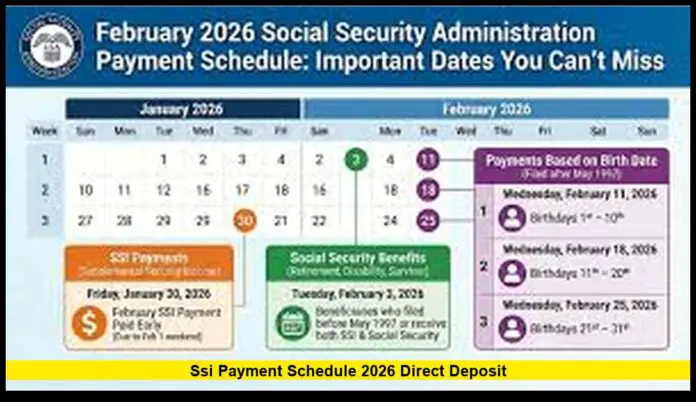
Millions of Americans depend on monthly Supplemental Security Income to cover basic living expenses, making payment timing just as important as payment amounts. The ssi payment schedule 2026 direct deposit has drawn close attention this year because several payments are arriving earlier than usual, creating changes in how recipients manage their monthly budgets.
This in-depth report explains how the 2026 SSI payment calendar works, why certain months include early deposits, how much beneficiaries receive in 2026, and what recipients should do to stay financially prepared throughout the year.
Table of Contents
Understanding How SSI Payments Are Issued
Supplemental Security Income follows a fixed federal schedule. Under normal circumstances, SSI benefits are paid on the first day of each month. This system applies to all recipients nationwide and does not depend on age, disability type, or state of residence.
The only time the schedule shifts is when the first day of a month falls on a weekend or a federal holiday. When that happens, payments are issued on the last business day before the first. This rule exists to ensure beneficiaries receive their funds without disruption.
In 2026, several months trigger this adjustment, which is why many recipients are seeing payments arrive sooner than expected.
Why Early SSI Payments Occur in 2026
Calendar alignment is the sole reason behind early SSI payments. When the first of the month falls on a Saturday or Sunday, federal payment systems do not process deposits. Rather than delaying benefits, the payment is released ahead of time.
This can result in two payments arriving close together, followed by a longer wait until the next deposit. While this may feel unusual, it does not change the total amount of benefits a recipient receives over the year.
Early payments should always be treated as covering the upcoming month, not as extra income.
Confirmed SSI Payment Timing at the Start of 2026
The first quarter of 2026 clearly illustrates how the payment rules work:
- January benefits were issued at the end of December 2025 due to the New Year’s Day holiday
- February benefits arrived in late January because February 1 fell on a Sunday
- March benefits were scheduled for late February for the same reason
These early deposits applied to all SSI recipients, including those using direct deposit and those receiving payments through government-issued debit cards.
What the Rest of the 2026 SSI Calendar Looks Like
For most of the year, SSI payments return to the standard schedule and are issued on the first of the month. Any future changes follow the same pattern: if the first lands on a non-business day, payment moves earlier.
There are no surprise or discretionary changes built into the schedule. Beneficiaries can rely on the consistency of the system as long as they understand how weekends and holidays affect timing.
Direct Deposit and How SSI Funds Reach Beneficiaries
Direct deposit is the preferred method of payment for SSI benefits. With direct deposit enabled, funds are electronically transferred to a beneficiary’s bank account on the scheduled payment date.
Most banks make SSI funds available early in the morning. Some institutions may show deposits as pending the evening before, depending on internal processing times.
Direct deposit offers several advantages:
- Faster access to funds
- Reduced risk of theft or loss
- No reliance on mail delivery
Once direct deposit is set up, it remains active unless the beneficiary updates or changes banking information.
SSI Payment Amounts in 2026
SSI benefits increased in 2026 due to the annual cost-of-living adjustment, which is designed to help recipients keep up with rising prices.
For 2026:
- The maximum federal SSI payment for an individual is $994 per month
- The maximum federal SSI payment for a couple is $1,491 per month
Actual benefit amounts can vary. Income from other sources, living arrangements, and state-level supplements all affect the final monthly payment. Some recipients receive less than the federal maximum, while others receive additional state assistance.
State Supplements and Combined Payments
Many states provide supplemental SSI payments on top of the federal benefit. These state payments may be issued separately or combined with the federal deposit, depending on local administration.
Payment timing for state supplements can differ from federal SSI schedules, which means some recipients may see multiple deposits in the same month.
Understanding whether your state provides a supplement can help explain variations in monthly payment totals.
Budgeting Around Early SSI Deposits
Early payments can create budgeting challenges, especially for households already living on tight margins. Receiving money sooner does not extend its value over a longer period.
To manage early deposits effectively:
- Allocate the payment across the entire upcoming month
- Avoid spending early deposits immediately
- Track expenses weekly instead of monthly
Many recipients find it helpful to mark payment dates on a calendar to visualize longer gaps between deposits.
Common Misunderstandings About SSI Payments
Several misconceptions arise each year when early payments occur:
- Early payments are not bonus payments
- Two deposits in one month do not increase annual benefits
- Payment timing does not affect eligibility
Clarifying these points helps reduce confusion and unnecessary concern among recipients.
What to Do If an SSI Payment Is Late
Although SSI payments are generally reliable, delays can occur due to banking issues or recent account changes.
If a payment has not arrived:
- Check your bank account and pending transactions
- Allow a few business days for processing
- Contact Social Security if the issue continues
Keeping banking information up to date is one of the best ways to avoid payment interruptions.
Preparing for the Year Ahead
The SSI program remains a vital source of income for seniors and individuals with disabilities. Understanding payment timing, deposit methods, and benefit amounts allows recipients to plan with greater confidence.
By staying aware of how the calendar affects deposits and managing funds carefully, beneficiaries can reduce stress and maintain financial stability throughout the year.
Key Takeaways for SSI Recipients in 2026
- SSI is normally paid on the first of the month
- Weekend and holiday rules cause early payments
- Direct deposit provides the fastest access to funds
- Payment amounts increased in 2026
- Budgeting is especially important during early-payment months
Being informed is one of the most effective tools beneficiaries have for managing limited income.
How are you adjusting your monthly plans around SSI payment timing this year? Share your thoughts and stay tuned for future updates.

