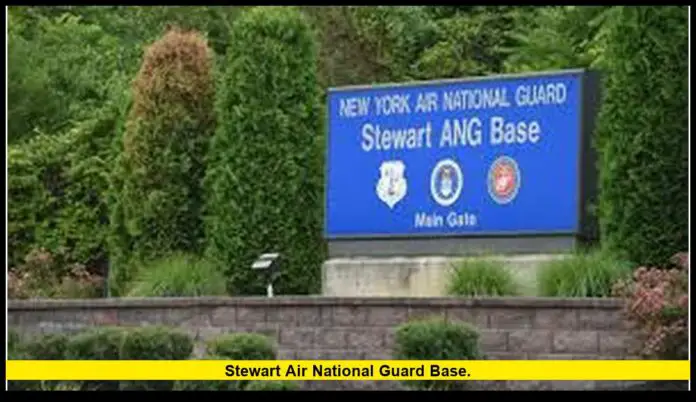
Stewart Air National Guard Base has drawn renewed national attention following a major, confirmed development involving its use in a high-profile federal operation, highlighting the base’s ongoing importance to U.S. military readiness and national security.
Located in Orange County, New York, Stewart Air National Guard Base continues to serve as a critical hub for air mobility operations, emergency response, and homeland defense missions. Its role has expanded in visibility in recent days due to its involvement in a significant international law enforcement and military transfer operation carried out by U.S. authorities.
Table of Contents
What Is Stewart Air National Guard Base
Stewart Air National Guard Base is a U.S. Air National Guard installation situated in the Town of Newburgh in the Hudson Valley region of New York State. The base operates alongside New York Stewart International Airport, allowing it to support both military and civilian aviation activities without disrupting either mission.
The base is controlled by the New York Air National Guard and is best known as the home of the 105th Airlift Wing. Its primary mission centers on global airlift operations, rapid deployment, and logistical support for both domestic and overseas operations.
Despite its proximity to major population centers, the installation maintains a secure operational footprint designed to handle sensitive missions, high-level arrivals, and rapid response requirements.
Latest Confirmed Developments at Stewart Air National Guard Base
On January 3, 2026, Stewart Air National Guard Base was used as the U.S. arrival point for Venezuelan President Nicolás Maduro and his wife, Cilia Flores, following his capture and transfer to U.S. custody. The aircraft carrying Maduro landed at the base under heavy security, marking one of the most high-profile arrivals in the facility’s modern history.
The base served as the controlled military entry location before Maduro’s expected transfer into the federal justice system. The operation reinforced Stewart’s role as a secure and strategically positioned site for sensitive federal and military actions.
Security protocols at the base were elevated during the arrival, and access was tightly restricted. Local and state authorities coordinated with federal agencies to ensure the operation proceeded without disruption to surrounding communities.
Strategic Location in the Hudson Valley
Stewart Air National Guard Base occupies a strategically valuable position approximately 60 miles north of New York City. Its location offers rapid access to major East Coast transportation corridors while remaining far enough from dense urban centers to support high-security military operations.
Key advantages of the base’s location include:
- Proximity to major federal courts and government facilities
- Direct runway access capable of supporting large transport aircraft
- Quick reach to northeastern U.S. population centers
- Reduced congestion compared to larger metropolitan airports
This balance of accessibility and operational security makes Stewart Air National Guard Base uniquely suited for both military logistics and sensitive government missions.
Mission Focus and Operational Responsibilities
The primary mission of Stewart Air National Guard Base is air mobility. The base supports a wide range of operations that include global troop movement, cargo transport, humanitarian assistance, and emergency response.
Core mission areas include:
- Strategic and tactical airlift
- Rapid deployment of personnel and equipment
- Support for federal homeland security directives
- Disaster relief and humanitarian aid delivery
- State emergency support during natural disasters
The base operates under both state and federal authority, allowing it to respond quickly to domestic emergencies while maintaining readiness for overseas missions.
105th Airlift Wing: The Backbone of the Base
The 105th Airlift Wing is the primary unit stationed at Stewart Air National Guard Base. The wing operates C-17 Globemaster III aircraft, among the most versatile and capable transport aircraft in the U.S. military inventory.
The C-17 fleet enables the wing to:
- Transport large military vehicles and equipment
- Conduct long-range flights without refueling
- Land on short or unimproved runways
- Support combat, humanitarian, and evacuation missions
Personnel assigned to the 105th Airlift Wing train year-round to maintain readiness for rapid deployment anywhere in the world.
Key Squadrons and Supporting Units
Several units operate at Stewart Air National Guard Base, each contributing to the installation’s overall mission.
137th Airlift Squadron
This squadron provides operational airlift capabilities and plays a central role in executing transport missions using the C-17 aircraft.
213th Engineering Installation Squadron
Responsible for communications infrastructure, systems installation, and technical support necessary for both base operations and deployed missions.
Marine Corps Reserve Detachments
Marine units stationed at Stewart provide aviation support, logistics, and administrative capabilities that integrate with broader joint-service operations.
Together, these units allow Stewart Air National Guard Base to function as a fully capable, multi-mission installation.
Historical Background and Evolution
The history of Stewart Air National Guard Base stretches back to 1934, when the site was established as an Army Air Corps training field. Over the decades, it has undergone multiple transitions that reflect changing military needs.
Key milestones include:
- Conversion into an Air Force base following World War II
- Deactivation and transition to civilian aviation use
- Reactivation in 1980 as an Air National Guard installation
The base has supported numerous historic events, including military deployments, humanitarian missions, and the reception of returning Americans following international crises.
Its long operational history contributes to its reputation as a dependable and adaptable military facility.
Infrastructure and Capabilities
Stewart Air National Guard Base occupies hundreds of acres and shares runways with the adjacent civilian airport. This arrangement allows military aircraft to operate efficiently without requiring exclusive airspace.
Infrastructure at the base includes:
- Aircraft maintenance hangars
- Secure logistics and cargo facilities
- Training and administrative buildings
- Communications and command systems
The base is capable of supporting large transport aircraft while maintaining operational security and readiness.
Role in National Security and Emergency Response
Stewart Air National Guard Base plays a vital role in national security that extends well beyond routine airlift missions. Its infrastructure, security posture, and strategic location make it one of the most adaptable military installations in the northeastern United States. The base is capable of supporting emergency federal operations that require rapid deployment, secure handling, and coordination across multiple agencies. These capabilities allow it to function as a controlled military entry point for sensitive missions involving national and international security concerns.
The base has also proven suitable for high-level detainee transfers, as demonstrated by its recent use in a major international law enforcement operation. Such missions require strict access control, secure airspace management, and close coordination between military, federal, and state authorities. Stewart’s ability to execute these operations efficiently highlights its value as a discreet and reliable facility for complex federal actions.
In addition, Stewart Air National Guard Base serves as a critical disaster response staging area. Its airlift capabilities enable the rapid movement of emergency supplies, medical teams, and equipment during natural disasters and large-scale emergencies. The base’s proximity to major population centers allows it to respond quickly to hurricanes, winter storms, flooding, and other regional crises affecting the Northeast.
The installation also supports military reinforcement during domestic crises, providing air mobility and logistical support when federal or state authorities require additional resources. Whether responding to homeland defense needs, civil support missions, or emergency mobilizations, Stewart ANGB offers the flexibility to scale operations quickly without disrupting civilian infrastructure.
The recent operational use of the base underscores its continued relevance in modern security planning. As threats evolve and the need for rapid, coordinated response grows, Stewart Air National Guard Base remains a trusted asset capable of supporting missions that demand speed, security, and precision.
Economic and Community Impact
The base contributes significantly to the local and regional economy, and its impact continues to grow as Stewart Air National Guard Base remains deeply integrated with the Hudson Valley’s economic landscape. The installation supports hundreds of full-time and part-time military and civilian jobs, including Air National Guard personnel, federal technicians, contractors, and support staff. In total, the presence of the 105th Airlift Wing and associated units injects well over $170 million annually into the local economy through payroll, contracts, services, and related spending. This economic activity supports local businesses, from hospitality and retail to logistics and transportation services.
The base also creates direct and indirect job opportunities for the surrounding region, contributing to career paths in aviation maintenance, security, logistics, engineering, emergency services, and administrative support. With over 1,300 Air Guard members serving at Stewart ANGB and additional civilian roles tied to contract work, the base is one of the larger employers in this part of New York State. Service members, military families, and civilian workers frequently patronize local housing markets, schools, restaurants, and service providers, further strengthening the area’s economic resilience.
Stewart Air National Guard Base works closely with community partners to ensure that operational activity aligns with local growth and development goals. The base enhances regional transportation activity due to its shared runways with Stewart International Airport, catalyzing investment and improved connectivity that benefits both military missions and civilian travel. Infrastructure improvements funded through federal and state initiatives—including multi-million-dollar upgrades to airport facilities—support broader economic expansion in the Hudson Valley.
The base also actively supports community engagement through public events, employer outreach programs, and cooperative emergency response planning. Programs that invite local residents and employers to tour aircraft, participate in informational sessions, or engage with Guard members help bridge military and civilian communities. Collaborative disaster response drills and coordination with county emergency services reinforce public safety and readiness.
Stewart ANGB also contributes to quality-of-life improvements in nearby towns. Many Guard members choose to live locally, supporting schools, charities, and civic groups. Community initiatives—ranging from Toys for Tots and veteran support events to education outreach—strengthen social fabric and reinforce the base as an economic and cultural partner in the Hudson Valley.
Overall, Stewart Air National Guard Base remains a cornerstone economic engine in the region, balancing its national defense mission with meaningful, long-term community and economic impact.
Training, Readiness, and Personnel
Personnel stationed at Stewart Air National Guard Base include full-time Air National Guard members, reservists, and civilian specialists, all working together to maintain peak readiness. Regular training ensures units remain prepared for immediate activation and mission execution both at home and abroad. Training at Stewart goes beyond routine tasks and increasingly reflects evolving military requirements.
Airmen at the base conduct advanced aircraft operations and maintenance training, focusing on strategic airlift missions with the C-17 Globemaster III. This includes flight operations, aircraft servicing, load planning, and mission execution under simulated real-world conditions. At the same time, maintenance crews sharpen skills through technical drills that keep the aircraft fleet mission-ready.
Personnel also take part in comprehensive emergency response coordination exercises. These scenarios train members to work seamlessly with other branches of the military and civilian agencies in managing large-scale evacuations, medical support missions, and crisis response efforts. Recent multi-day exercises integrated Army and Air Guard medical personnel to test the full medical evacuation pathway, from casualty pickup to transport aboard C-17 aircraft.
Stewart ANGB’s training emphasizes joint-service mission integration, with units regularly participating in complex drills that combine Army, Air Force, and Guard elements. These exercises improve interoperability and strengthen coordination for combined operations, including medical evacuation, base defense, airlift support, and emergency management.
Another key focus is homeland defense readiness. Members take part in security and defense training led by the base’s Base Defense Group, which includes components specially organized to protect personnel and infrastructure. This training involves tactical planning, security response exercises, and specialized defense training to ensure the base can withstand and respond to emerging threats.
Combat readiness has been bolstered through initiatives such as combat medic training, where medical personnel learn to provide life-sustaining care in austere and high-pressure environments. This prepares Air Guard medics to save lives under conditions similar to operational theaters overseas.
This constant cycle of preparation allows Stewart Air National Guard Base to respond quickly and efficiently whenever called upon, whether for national defense, humanitarian support, or emergency response operations. With each exercise and training iteration, the base strengthens its capacity to meet future challenges head-on.
Why Stewart Air National Guard Base Matters Today
The recent confirmed events at Stewart Air National Guard Base underscore its importance in the modern U.S. security landscape. The base was central to the arrival of Venezuelan President Nicolás Maduro following his capture and transfer to U.S. custody, marking one of the most high-profile uses of the installation in recent memory. This event highlighted not only the base’s operational capability but also its role as a secure military gateway for critical federal missions involving national security and international law enforcement. Stewart Air National Guard Base combines strategic location, advanced logistics, and rapid response capability, making it a uniquely vital asset for both domestic and overseas missions.
In addition to this significant national event, the base continues to expand its operational footprint through cutting-edge projects like the newly activated C-17 Combined Test Force, which focuses on developing and testing technologies that enhance the performance and readiness of C-17 Globemaster aircraft. This initiative demonstrates Stewart’s growing role in innovation and modernization efforts that benefit not only the New York Air National Guard’s 105th Airlift Wing but the entire U.S. Air Force’s global airlift capability. The base also remains a focal point for community engagement and regional economic activity, contributing jobs, infrastructure development, and cooperative civilian-military partnerships.
As global and domestic security challenges evolve, Stewart Air National Guard Base is uniquely positioned to support missions that demand discretion, speed, and reliability. Whether facilitating high-stakes federal operations, advancing aviation technology, or responding to humanitarian or emergency scenarios, the base’s strategic importance continues to grow. Its combination of readiness, robust infrastructure, and proximity to major northeastern population centers ensures Stewart will remain integral to U.S. defense and operational strategies for years to come.
Stewart Air National Guard Base continues to stand at the intersection of history, security, and modern military operations—what role do you think it will play next? Share your perspective and stay engaged for future updates.

