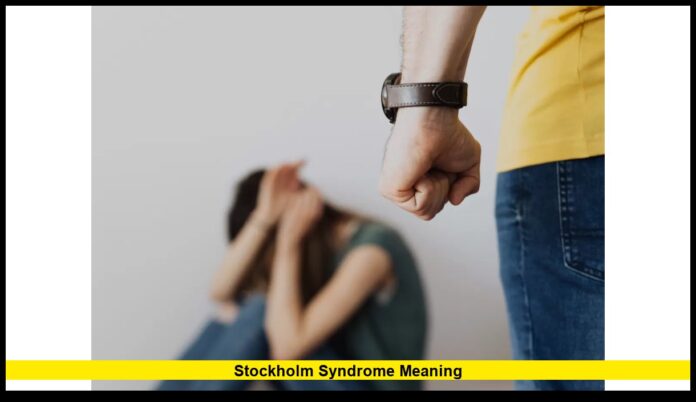
The Stockholm Syndrome meaning goes far beyond its origins in a single crime story. It describes a complex psychological reaction where victims of captivity, abuse, or coercion develop emotional attachment, loyalty, or even affection toward their abusers. Though often dramatized in media, the phenomenon reflects a deeply human survival response — one that continues to intrigue psychologists, law enforcement experts, and the public alike.
Today, the term “Stockholm syndrome” is used widely in discussions of abusive relationships, hostage situations, and manipulative dynamics. Understanding what it truly means helps us better recognize how fear, dependence, and trauma can blur emotional boundaries.
Table of Contents
The Origin of the Term “Stockholm Syndrome”
The phrase Stockholm syndrome originated from a 1973 bank robbery in Stockholm, Sweden. During a six-day standoff, several hostages were held inside the bank vault by armed robbers. When the situation finally ended, police were shocked to find that the hostages had grown emotionally attached to their captors — even defending them publicly and refusing to testify against them in court.
Psychologists observing the incident coined the term “Stockholm syndrome” to describe this counterintuitive reaction. The captives’ emotional alignment with their kidnappers appeared to defy logic — but deeper analysis revealed that it was a psychological adaptation for survival.
Stockholm Syndrome Meaning Explained
At its core, the Stockholm syndrome meaning refers to a psychological coping mechanism that occurs when a victim develops empathy or affection toward the person inflicting harm.
It’s not a sign of weakness or confusion. Instead, it represents how the human brain adapts to prolonged stress and fear by forming emotional bonds with a perceived source of safety — even if that “safety” comes from the abuser themselves.
This bond can emerge in situations where the victim:
- Feels isolated or dependent on the captor for survival.
- Receives small acts of kindness amid ongoing abuse or threat.
- Experiences fear of greater harm if they resist or attempt escape.
- Begins to rationalize or minimize the abuser’s behavior as a way to cope emotionally.
Over time, these reactions can transform into misplaced loyalty, sympathy, or even affection for the abuser — a hallmark of Stockholm syndrome.
Psychological Mechanisms Behind It
Experts describe Stockholm syndrome as part of the “trauma bonding” process. This bond occurs when cycles of fear and relief create emotional confusion and dependence.
Here’s how it often develops:
- Terror and Isolation: The victim faces life-threatening fear, often in isolation from others.
- Intermittent Kindness: The abuser occasionally shows affection or compassion, offering brief relief from the terror.
- Emotional Confusion: The victim begins associating those rare moments of kindness with hope and safety.
- Attachment Formation: Over time, the victim internalizes the bond as a survival mechanism, identifying emotionally with the abuser.
This cycle creates deep psychological dependency. To the victim, maintaining emotional closeness to their abuser feels safer than resistance or detachment.
Examples Beyond Hostage Situations
While the term was born from a bank robbery, the Stockholm syndrome meaning extends far beyond criminal captivity. It’s often seen in:
- Domestic abuse: Victims may defend their partners or stay in harmful relationships, believing the abuser’s love outweighs their cruelty.
- Human trafficking: Individuals may form bonds with traffickers as a way to survive long-term captivity.
- Child abuse: Children may remain loyal to abusive parents due to dependency and fear of abandonment.
- Workplace abuse: Employees in toxic environments sometimes rationalize mistreatment by seeing authority figures as protectors or mentors.
These scenarios share the same psychological blueprint — dependence, fear, isolation, and inconsistent kindness.
Symptoms of Stockholm Syndrome
Though not classified as an official disorder in the Diagnostic and Statistical Manual of Mental Disorders (DSM-5), psychologists recognize a consistent set of symptoms in those exhibiting Stockholm syndrome:
- Positive feelings toward the abuser or captor.
- Negative feelings toward law enforcement, rescuers, or loved ones trying to help.
- Justifying or defending the abuser’s behavior.
- Resistance to leaving the abusive situation, even when escape is possible.
- Feelings of guilt or shame for wanting freedom.
- Difficulty reconnecting with normal emotions after release.
These symptoms highlight how trauma can distort emotional responses, leading victims to protect those who caused their suffering.
How Stockholm Syndrome Differs from Other Trauma Reactions
Stockholm syndrome is often confused with other trauma-related conditions, but it’s distinct because it involves emotional bonding with the abuser.
| Condition | Description | Key Difference |
|---|---|---|
| PTSD (Post-Traumatic Stress Disorder) | Fear-based response after trauma, often involving flashbacks and anxiety. | Victims do not develop affection toward their aggressor. |
| Battered Woman Syndrome | Emotional and psychological dependency in prolonged domestic abuse. | Shares similarities but focuses more on learned helplessness than emotional attachment. |
| Trauma Bonding | Emotional connection formed through cycles of abuse and reconciliation. | Overlaps closely with Stockholm syndrome but can occur in broader relationship contexts. |
Understanding these distinctions helps professionals choose the right therapeutic approach for recovery.
Why Stockholm Syndrome Still Matters Today
Even in 2025, the Stockholm syndrome meaning remains relevant. The term continues to appear in both news coverage and popular culture, as society examines patterns of emotional manipulation and control.
Modern psychologists use the concept to understand:
- Why victims stay silent in abusive relationships or organizations.
- How power dynamics and emotional control can override logic.
- Why empathy can emerge even in dangerous, life-threatening contexts.
In recent years, awareness campaigns across the U.S. have used Stockholm syndrome as a framework to explain emotional dependency in domestic violence and trafficking cases. The increased attention has helped shift public perception — from blaming victims to understanding the psychological traps that keep them bound.
Treatment and Recovery
Recovery from Stockholm syndrome requires patience, empathy, and professional support. Since the condition involves deep emotional confusion, therapy focuses on rebuilding self-trust and separating fear from affection.
Common treatment steps include:
- Trauma-informed therapy: Helps victims process fear and guilt while reframing their experiences.
- Cognitive Behavioral Therapy (CBT): Addresses distorted thinking patterns about loyalty and love.
- Support groups: Provide validation and connection with others who’ve survived similar experiences.
- Gradual re-exposure to safety: Teaches survivors how to rebuild confidence and independence.
For many survivors, the healing journey also involves learning that their reactions were not signs of weakness — but instinctive survival mechanisms shaped by fear.
Cultural Misuse and Misunderstanding
The term “Stockholm syndrome” has also been overused and misapplied in everyday language. People often use it casually to describe any attachment to a toxic situation — from bad relationships to politics.
However, psychologists caution that true Stockholm syndrome involves extreme circumstances of threat and dependence. Using the term loosely can diminish its seriousness and oversimplify the experiences of real survivors.
In popular culture, films and TV shows have dramatized the concept — from crime thrillers to love stories — sometimes romanticizing it. This portrayal risks sending the wrong message: that emotional bonding in abusive situations is “passionate” rather than dangerous.
Modern Understanding: Empathy as Survival
What makes Stockholm syndrome so fascinating is its paradox. It shows that the human capacity for empathy — one of our greatest strengths — can also become a tool for survival under duress.
When escape feels impossible, the brain adapts by seeking connection, even with the oppressor. This connection provides emotional stability in chaos — a reminder of how instinctively humans cling to hope, even in captivity.
Understanding the Stockholm syndrome meaning helps uncover how emotional bonds can form under pressure — and why breaking them requires compassion, not judgment.
Final Thoughts
The Stockholm syndrome meaning isn’t just about hostages or news headlines — it’s about understanding how the mind works under threat. It reveals that love, fear, and survival can become deeply entangled in ways that defy logic.
By learning about it, society can better support victims of abuse, encourage empathy over blame, and raise awareness about the hidden power dynamics that shape human behavior.
Have you ever seen signs of Stockholm syndrome in real-life stories or media? Share your thoughts in the comments and help spread awareness about emotional resilience and recovery.

