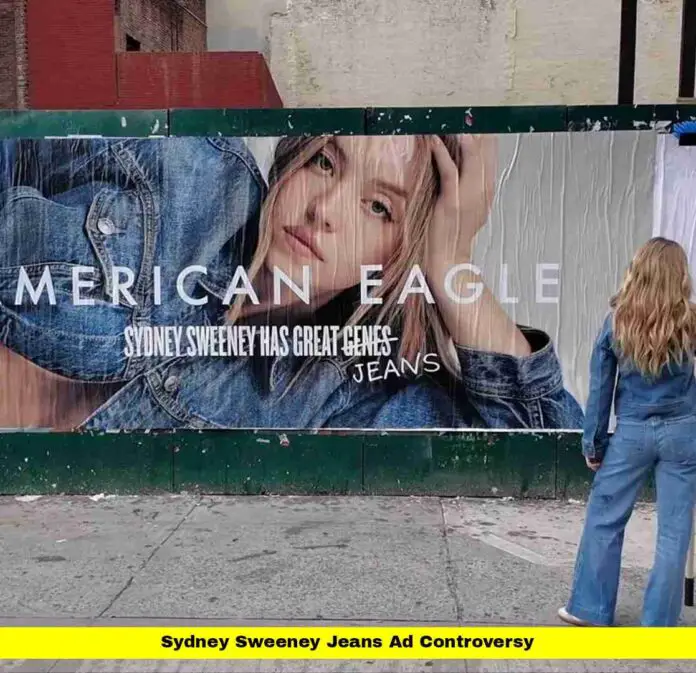
The Sydney Sweeney jeans ad controversy has become one of the most talked-about topics in entertainment and fashion this year. What began as a playful denim campaign for American Eagle quickly spiraled into a heated cultural debate about beauty standards, representation, and marketing ethics. As of November 2025, the controversy continues to generate reactions across social media, highlighting how even a seemingly simple advertisement can ignite a global conversation.
Table of Contents
The Origin of the Sydney Sweeney Jeans Ad
In mid-2025, American Eagle launched a new denim campaign featuring actress Sydney Sweeney. The tagline, “Sydney Sweeney Has Great Jeans,” was intended to be a clever pun between “jeans” and “genes.” The campaign included videos and images of Sweeney wearing various denim looks, often emphasizing her bright blue eyes and blonde hair.
One clip in particular drew attention—Sweeney was shown explaining that “genes are passed down from parents to offspring,” before playfully correcting the word to “jeans.” While the brand’s intention was to use humor and highlight the quality of their denim line, the message landed differently with many viewers.
Why the Ad Sparked Outrage
Almost immediately after its release, the ad was accused of promoting exclusionary beauty ideals. Critics argued that the focus on “great genes” and Sweeney’s physical traits unintentionally reinforced Eurocentric beauty standards. The combination of her fair features and the wordplay around “genes” reminded some of outdated and harmful ideas about genetics and superiority.
Social media platforms like X (formerly Twitter), Instagram, and TikTok exploded with reactions. Some users accused American Eagle of being “tone-deaf” and “out of touch,” while others claimed the brand was deliberately courting controversy to gain publicity. The debate quickly expanded beyond fashion circles, entering mainstream discussions about representation and ethics in advertising.
At the same time, a segment of the public defended both Sweeney and American Eagle, insisting that the outrage was exaggerated. They argued that the campaign’s humor was harmless and that critics were reading too much into a simple marketing pun. This divide made the controversy not just about the ad itself, but about the broader cultural tensions surrounding language and inclusivity.
American Eagle’s Official Response
Facing mounting criticism, American Eagle issued a public statement clarifying the intent behind the campaign. The company explained that the message was never about genetics but about confidence and self-expression through denim. Their spokesperson stated, “‘Great jeans’ look good on everyone—our campaign was designed to celebrate individuality and confidence, not to divide people.”
The brand also highlighted the campaign’s charitable component, which supported youth empowerment programs. Despite the clarification, the statement failed to completely calm the situation. Some commentators accused the company of avoiding accountability, while others felt the explanation was fair and consistent with the brand’s previous marketing tone.
Interestingly, data from retail analytics firms showed that American Eagle’s online engagement and sales actually increased during the height of the debate. The denim line associated with Sydney Sweeney reportedly sold out within days in several regions, proving that controversy can indeed boost visibility—even if for the wrong reasons.
Sydney Sweeney’s Reaction and Public Silence
Throughout the controversy, Sydney Sweeney chose to stay mostly silent. The actress, known for her roles in Euphoria and Anyone But You, did not issue any immediate statement. It wasn’t until a later interview in November 2025 that she briefly addressed the issue, saying she found the public reaction “surreal.”
“I did a jean ad,” Sweeney said with a mix of disbelief and humor. “It’s wild how something so simple became this massive debate. I think people can interpret things however they want, but for me, it was just about the jeans.”
Her decision to stay quiet earned mixed reactions. Many fans praised her professionalism and maturity, arguing that she had no reason to apologize for a marketing choice made by the brand. Others felt she should have used her platform to acknowledge why some viewers felt uncomfortable. Nevertheless, her silence seemed to help the controversy fade gradually, as attention shifted back to her acting projects.
How the Controversy Affected the Brand and Industry
From a marketing perspective, the Sydney Sweeney jeans ad controversy offers several lessons. For American Eagle, the immediate result was paradoxical: while the company faced public backlash, it also enjoyed massive exposure. Social media mentions of the brand surged, and its denim line received more attention than any of its previous campaigns in recent years.
However, the long-term effects could be more complex. Industry experts note that brand perception can be difficult to repair once controversy links a name to insensitive imagery or messaging. The campaign also reignited internal conversations within the fashion industry about representation, tone, and language.
Other brands took notice too. Marketing executives from rival fashion houses reportedly began revising their own campaigns to ensure they avoided similar pitfalls. Many recognized that in today’s cultural climate, even light-hearted humor can quickly be misinterpreted—and that inclusivity must be considered in every creative decision.
Deeper Cultural Context Behind the Debate
The intensity of the reaction to this ad cannot be separated from the broader cultural climate. In recent years, conversations around body positivity, diversity, and representation have become central to media and marketing. The Sydney Sweeney jeans ad controversy touched on all of these at once.
For some, it represented how easily brands can fall into outdated messaging that excludes or alienates audiences. For others, it demonstrated the challenges of creating universally accepted content in an era of heightened sensitivity. The campaign also reignited conversations about who gets to define beauty and how cultural imagery shapes those definitions.
What made the situation even more complex was the intersection of celebrity culture and corporate branding. Sydney Sweeney, already a global icon, became a lightning rod for debates far beyond her control. The controversy blurred the line between personal accountability and professional obligation, highlighting how modern celebrity endorsements come with unique risks.
The Current Status of the Controversy
As of November 2025, the controversy has largely calmed, but it remains a frequent topic of discussion among marketers and pop-culture commentators. American Eagle continues to feature Sydney Sweeney in select campaign materials, though the brand has shifted toward a more neutral marketing tone.
Meanwhile, the denim collection launched alongside the campaign remains one of the company’s best-performing products of the year. Online searches for “Sydney Sweeney jeans” and related keywords have stayed high, suggesting the public’s curiosity hasn’t faded entirely.
The debate also influenced future brand strategies. Many advertising agencies now cite the campaign as an example of how modern audiences expect greater cultural awareness and transparency from the brands they support.
Key Takeaways from the Sydney Sweeney Jeans Ad Controversy
The fallout from this campaign reveals much about modern marketing dynamics. Brands can no longer rely solely on creativity or star power—context, timing, and sensitivity matter just as much. The controversy also proves that even negative publicity can increase visibility, but at a cost to reputation.
Most importantly, it underscores how social media has changed the way audiences engage with advertising. Every campaign is now instantly scrutinized, dissected, and debated by millions of users. The line between intentional controversy and accidental backlash is thinner than ever before.
Conclusion
The Sydney Sweeney jeans ad controversy is a textbook example of how modern advertising operates in a hyper-aware cultural environment. What began as a simple denim promotion turned into a global discussion about inclusivity, marketing ethics, and the evolving role of celebrities in shaping public discourse.
As both Sweeney and American Eagle move forward, this episode will likely remain a defining moment in discussions about brand responsibility and cultural sensitivity. It’s a reminder that in the age of social media, every word, image, and slogan carries meaning far beyond the product itself.
What do you think—was the backlash warranted, or was the ad misunderstood? Share your thoughts below and join the conversation.

