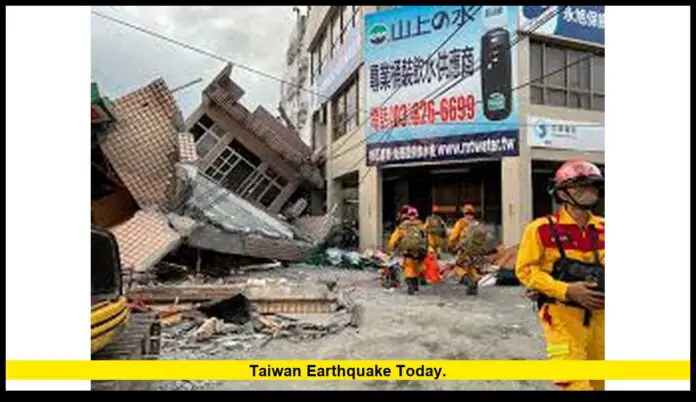
Taiwan earthquake today dominated global headlines after a powerful magnitude 7.0 quake struck near Taiwan’s northeastern coast late Saturday night, shaking buildings across the island from Yilan to Taipei and beyond. Residents felt the ground roll strongly, emergency alerts were sent nationwide, and emergency response teams are now conducting thorough assessments as the situation continues to unfold.
This article provides the most current verified updates on this significant seismic event, details on its impacts, expert context, safety information, and what U.S. readers should know about the ongoing situation. All details are based on confirmed reports from authoritative seismic and government sources.
Table of Contents
Powerful Earthquake Shakes Taiwan Late Saturday
Shortly after 11:05 p.m. local time on December 27, 2025, Taiwan was struck by a major earthquake with an estimated magnitude of 7.0, centered in the ocean off the northeastern coast near Yilan County. The tremor occurred under the Pacific Ocean at a depth of approximately 72.8 kilometers, a moderate depth that allowed shaking to transmit widely across northern, eastern, and central regions.
The quake was strong enough to trigger widespread alerts and set off building alarms throughout major cities. People reported intense shaking in the capital Taipei, as well as in New Taipei City, Taoyuan, Hualien, and other municipalities across the island.
Emergency assessment teams were immediately dispatched, and authorities began inspecting critical infrastructure and public safety conditions. The response remains active as officials gather data and confirm early reports.
Where the Shaking Was Felt
Because of the quake’s strength and depth, the shaking was not localized — it was felt across a broad swath of Taiwan, including:
- Yilan County and eastern coastal areas
- Taipei City and Greater Taipei region
- New Taipei City
- Taoyuan, Hsinchu, and Miaoli
- Taichung and central Taiwan
- Hualien, Taitung, and southeastern regions
- Parts of southern Taiwan
In many of these areas, people described the shaking as strong enough to make high-rise buildings sway for several seconds. Residents in Taipei and other cities reported immediate warnings on mobile phones and mass alerts across emergency broadcast systems.
Some public transit systems adjusted operations in the immediate aftermath, with certain rail and metro lines temporarily slowing or stopping trains as safety checks were initiated.
Magnitude and Technical Details
Experts reported that the earthquake registered around magnitude 7.0, making it one of the stronger quakes Taiwan has experienced in recent years. Some seismic monitoring stations recorded values between 6.6 and 6.7 during initial measuring, but final assessments from national seismic agencies confirmed the 7.0 magnitude reading for the main shock.
The quake’s focus at roughly 72.8 kilometers deep falls within what seismologists classify as a moderately deep seismic event. Earthquakes at this depth can transmit significant energy through the Earth’s crust without necessarily causing the extreme surface damage often seen in very shallow quakes, but they still produce highly noticeable shaking over wide areas.
Government and Emergency Response
Taiwan’s Central Weather Administration and National Fire Agency quickly activated emergency response protocols following the earthquake. Actions included:
- Immediate public alerts and safety messaging
- Deployment of structural inspection teams
- Coordination with local fire departments and civil defense units
- Rapid assessment of transport networks
- Monitoring for aftershocks and issuing guidance
Officials emphasized that damage assessments are ongoing and that information is preliminary. They asked residents to remain alert for updates and exercise caution when inspecting buildings or outdoor structures.
Aftershocks and Continued Seismic Activity
Aftershocks are a common consequence of high-magnitude earthquakes, and authorities warned that further tremors could occur in the coming hours or days. Seismic activity in the region has been elevated in the past week, including a magnitude 6.1 quake in southeastern Taiwan earlier on December 24, which also caused shaking across the island.
The combination of recent seismic events suggests ongoing stress adjustments along local fault lines, making vigilance and preparedness essential. Aftershocks can vary in strength and may be felt even hundreds of kilometers away from the epicenter.
Impact on Daily Life and Infrastructure
In the immediate hours following taiwan earthquake today, local authorities initiated inspections of critical infrastructure such as:
- Roadways and bridges
- Public transportation systems
- Electric power and communication networks
- Hospitals and emergency facilities
Some transit lines temporarily adjusted operations as precautionary measures, while power companies reported isolated outages in certain areas that are being restored.
Residents were advised to:
- Check for gas leaks or structural damage in homes
- Avoid using elevators until inspections are complete
- Keep emergency kits readily available
- Follow official instructions if evacuation becomes necessary
At this stage, no large-scale structural catastrophes have been confirmed, but local officials emphasized that complete evaluations could take several more hours or days as teams inspect buildings, roads, and utilities.
Historical Seismic Context in Taiwan
Taiwan sits within the Pacific Ring of Fire, making it one of the most earthquake-active regions in the world. The island lies near the boundary where the Philippine Sea Plate and the Eurasian Plate converge, creating constant geological pressure and resulting in frequent seismic events.
Major historical quakes in Taiwan’s memory include:
- A 7.3 magnitude quake in 1999 that caused widespread destruction and more than 2,000 deaths.
- A 2016 strong earthquake in southern Taiwan with more than 100 fatalities.
Other notable earthquakes in 2025 included a damaging magnitude 6.4 quake near Tainan and Chiayi in January, which caused injuries and infrastructure damage, and several moderate events earlier this month that were widely felt but caused limited damage.
These events underline the importance of rigorous earthquake preparedness and resilient infrastructure on the island.
Public Reaction and Human Stories
The quake triggered a wide range of reactions from residents and visitors:
- In Taipei, many office workers evacuated buildings temporarily to open spaces after feeling extended shaking.
- Residents shared accounts on social media of objects falling from shelves, buildings swaying, and sudden power flickers.
- Some international visitors described their first-time earthquake experiences and their amazement at Taiwan’s alert systems and public readiness.
These human-level accounts highlight not only the strength of the shaking but also the critical role of public education and preparedness in reducing panic and improving response.
Scientific and Expert Insights
Seismologists stress that earthquakes like taiwan earthquake today are not unusual for this tectonically active region. The collision and subduction of plates beneath and around Taiwan result in frequent stress releases that express themselves as earthquakes ranging from minor to major magnitudes.
Experts also point out that:
- Deep quakes tend to affect broader areas but may cause less localized surface destruction than shallow quakes.
- Earthquakes of magnitude 7.0 can still result in substantial shaking and require careful assessment of buildings designed for earthquake resistance.
- Continuous monitoring helps provide early warnings that can save lives, particularly for regions closer to the epicenter.
Potential Long-Term Effects on Infrastructure and Safety
The full effects of the earthquake will become clearer as damage assessments continue. In previous significant quakes, infrastructure damage has included:
- Cracked walls and compromised foundations in older buildings
- Roadway and bridge stress fractures
- Disrupted communication and power lines
- Transportation delays and repair needs
However, Taiwan’s strict building codes and earthquake-resistant design standards often help mitigate severe outcomes, especially in newer high-rise buildings and critical facilities.
Officials have stated that detailed building inspections and safety reviews will take priority in the coming days to ensure that public spaces, schools, hospitals, and transit hubs remain safe for use.
Advice for Travelers and U.S. Citizens
For U.S. readers and travelers:
- Register with local embassy services if you are in Taiwan
- Follow local official instructions and safety notices
- Keep emergency kits and contact information ready
- Avoid entering buildings that show signs of structural damage
While there is no indication of a broader regional emergency beyond Taiwan, current seismic conditions warrant preparedness and awareness for those living in or visiting the region.
Summary of Verified Developments
Here is a concise overview of the confirmed facts for taiwan earthquake today:
- A magnitude 7.0 earthquake struck near the northeast coast of Taiwan late Saturday.
- The quake was centered offshore near Yilan County, with shaking felt across northern, eastern, and central parts of the island.
- Widespread emergency alerts were issued, and residents reported strong building movement.
- Government agencies initiated damage and safety assessments immediately.
- Aftershocks are expected, and authorities continue monitoring seismic activity.
- Major infrastructure checks are underway, with no catastrophic damage confirmed yet.
- The quake underscores Taiwan’s seismic risk due to tectonic plate boundaries.
Have you experienced the Taiwan earthquake today or felt the shaking? Share your story in the comments and stay connected for verified updates as the situation evolves.

