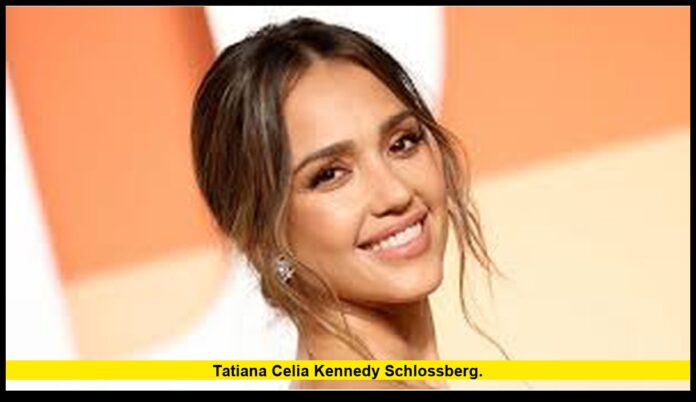
Journalist and author Tatiana Celia Kennedy Schlossberg has publicly announced that she is living with a terminal diagnosis of acute myeloid leukemia, bringing into focus a deeply personal chapter in her life and legacy.
Table of Contents
Background & Early Life
Tatiana Celia Kennedy Schlossberg was born on May 5, 1990, in New York City. She is the daughter of Caroline Kennedy and Edwin Schlossberg, and the granddaughter of President John F. Kennedy and First Lady Jacqueline Kennedy Onassis.
She attended the Brearley School and Trinity School in Manhattan, graduating in 2008. She earned a B.A. in History from Yale University in 2012 and later completed a Master’s degree in American History at the University of Oxford in 2014.
Professionally, Schlossberg worked as a science and climate reporter for The New York Times and wrote for outlets such as The Atlantic and The Washington Post. In 2019, she published Inconspicuous Consumption: The Environmental Impact You Don’t Know You Have, examining hidden environmental effects of everyday choices.
In September 2017, she married George Moran. The couple have two children: a son born in 2022 and a daughter born in May 2024.
The Diagnosis: What We Know
Schlossberg revealed in an essay published in November 2025 that she had been diagnosed with acute myeloid leukemia (AML) following the birth of her daughter.
Key points of her condition include:
- The leukemia carries a rare genetic mutation known as “Inversion 3,” which is typically seen in older patients and limits the efficacy of standard treatments.
- Upon diagnosis, doctors told her that conventional chemotherapy and bone-marrow transplantation offered limited chances for a cure.
- She has undergone intensive treatment, including chemotherapy, stem-cell transplants and enrollment in clinical trials of advanced therapies.
- Her medical team informed her that she may have about one year to live under current circumstances.
- Prior to diagnosis, she was active and healthy — she noted that she had swum a mile just days earlier. The abruptness of this diagnosis underscores how aggressive this form of leukemia can be.
Impact on Family & Public Reaction
Given her place in the Kennedy lineage and her public profile as a journalist and author, Schlossberg’s disclosure has drawn significant attention. Her essay addresses the emotional weight of her diagnosis on herself, her husband George Moran, their children and her parents Caroline Kennedy and Edwin Schlossberg. She speaks candidly about the fear of her children growing up without vivid memories of her, and the heartache of leaving behind the life she had built.
Her remarks also address broader concerns about health-care, medical research and policy. She reflects on how funding decisions and scientific progress shape outcomes for patients with rare blood cancers. Her public statement thus expands beyond personal narrative into questions of public health and research priorities.
Why This Matters
- Medical significance: Schlossberg’s case highlights how AML can strike younger adults, especially when compounded by rare genetic mutations like Inversion 3. The prognosis in cases of this type remains very serious, pointing to the need for ongoing innovation in treatment.
- Legacy and visibility: As a member of the Kennedy family, her situation receives wide attention — this amplifies awareness of blood cancers, stem-cell transplant research, and the emotional burden of terminal diagnoses on families.
- Journalistic voice amplified: Her decision to share her story publicly reflects a willingness to apply her writing skills and public platform to an intensely personal and vulnerable subject. In doing so, she adds a human dimension to discussions of disease, mortality and resilience.
Timeline at a Glance
| Date | Event |
|---|---|
| May 2024 | Birth of her daughter; abnormal white-blood-cell count noted soon afterwards |
| Late 2024 | Confirmed diagnosis of AML with “Inversion 3” mutation |
| Nov 22 2025 | Published candid essay disclosing her terminal diagnosis and prognosis |
| 2019 | Published Inconspicuous Consumption |
| Sep 2017 | Married George Moran |
Looking Ahead
While Schlossberg’s prognosis is grave, her public message emphasizes presence, love and memory. She writes about cherishing time with her children, husband and extended family, and about building a legacy of meaningful moments rather than measurable achievements. From a public-health perspective, her story may prompt renewed emphasis on:
- early detection and aggressive treatment of blood cancers;
- the importance of research investment in rare leukemia subtypes and immunotherapy;
- how health-care policy intersects with patient outcomes in life-threatening illness.
Her narrative is both personal and universal: it reminds readers that life-altering diagnoses can arrive without warning, that love and family become central anchors, and that public willingness to talk about mortality can spur empathy and action.

