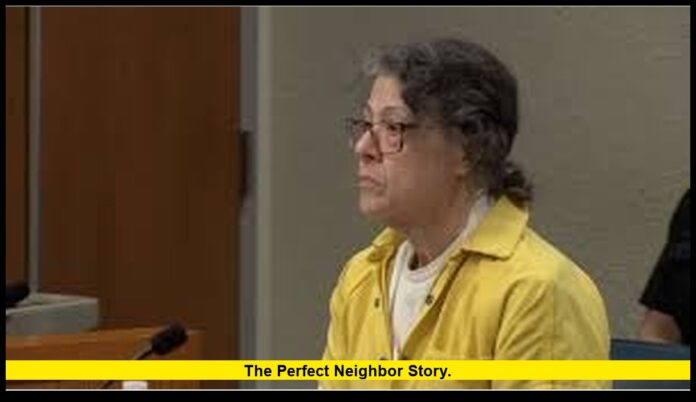
The perfect neighbor story has become one of the most talked-about true crime cases in the country, not because it’s fictional, but because it exposes the devastating reality of how neighborhood tensions can escalate into fatal violence. The events involving Ajike “AJ” Owens and Susan Lorincz in Marion County, Florida, have now been brought to life in Netflix’s 2025 documentary The Perfect Neighbor, and the real-life story behind it continues to resonate nationwide.
Table of Contents
A Deadly Confrontation in Ocala, Florida
On June 2, 2023, a confrontation between two neighbors ended in tragedy. Ajike “AJ” Owens, a 35-year-old Black mother of four, was fatally shot by her neighbor, 58-year-old Susan Lorincz, through a locked front door in a residential community in Ocala, Florida.
The conflict between the two had been simmering for months. Lorincz, a white woman, had repeatedly complained about Owens’ children playing near her property. Neighbors reported incidents where Lorincz yelled at the kids and threw objects toward them.
On that June afternoon, the situation escalated when Owens approached Lorincz’s door to confront her about allegedly throwing a skate at one of her children. Lorincz fired a single gunshot through the closed door, striking Owens in the chest. Owens later died at the hospital.
The shooting shocked the community and quickly drew national attention, sparking discussions about race, gun laws, and neighborhood dynamics.
The Legal Battle That Followed
Lorincz was arrested and charged with manslaughter and aggravated assault. She claimed self-defense under Florida’s controversial “stand your ground” law, asserting that she feared for her life.
However, evidence presented during the trial revealed that Owens was unarmed and had not physically attacked Lorincz. Jurors were shown months of prior complaints, 911 calls, and neighborhood tensions that painted a picture of hostility instigated largely by Lorincz.
In August 2024, a Florida jury found Lorincz guilty of manslaughter, sentencing her to 25 years in prison. The verdict was seen as a landmark moment, illustrating how “stand your ground” defenses can be challenged when evidence shows provocation and bias.
AJ Owens: A Life Cut Short
Ajike “AJ” Owens was more than a headline. She was a devoted mother raising four children on her own. Friends and family described her as strong, loving, and fiercely protective. She worked multiple jobs to support her family and was deeply involved in her children’s lives and education.
Her death left a deep hole in her community. Vigils, marches, and rallies were held in her honor, demanding justice and accountability. Her story has since become a symbol of both the fragility of community relations and the complexities of self-defense laws in America.
Susan Lorincz: The ‘Perfect Neighbor’
Susan Lorincz lived just a few doors away from the Owens family. In the months leading up to the shooting, she developed a reputation in the neighborhood for frequent complaints, particularly about noise and children playing outside.
Lorincz reportedly referred to herself as “the perfect neighbor,” a nickname that would later become grimly ironic. Her behavior, combined with documented racial slurs and confrontations, created a climate of hostility that set the stage for the fatal encounter.
Netflix Brings the Perfect Neighbor Story to the Screen
Netflix’s documentary The Perfect Neighbor, which premiered on October 17, 2025, takes an unflinching approach to telling this story. Directed by Geeta Gandbhir, the film avoids traditional narration or dramatization. Instead, it relies on:
- Police body camera footage from the night of the shooting
- 911 call recordings from neighbors and witnesses
- Surveillance videos showing prior disputes between Owens and Lorincz
- Courtroom audio from Lorincz’s trial
This evidence-based storytelling method forces viewers to experience the unfolding tragedy in real time, without the filter of commentary. The result is a raw and haunting account of how everyday conflicts can turn deadly.
Community Reaction and National Impact
The perfect neighbor story ignited conversations across the U.S.
- Local Reaction: In Marion County, community leaders organized rallies, calling for justice for AJ Owens and advocating for changes in neighborhood policies and law enforcement responses.
- National Discussion: Civil rights organizations highlighted the case as an example of how race and self-defense laws intersect, often with deadly consequences.
- Policy Conversations: The trial and conviction prompted renewed debates about “stand your ground” legislation, particularly in states like Florida where such laws have been hotly contested.
The case also brought to light how neighborhood disputes—often dismissed as “small issues”—can build over time and result in tragic outcomes when fear, bias, and firearms are involved.
Why This Story Resonates Nationwide
Several factors make the perfect neighbor story especially powerful:
- Race and Law: The dynamic between a white shooter and a Black victim in a “stand your ground” state echoes high-profile cases that shaped national conversations about justice.
- Neighborhood Conflict: Unlike stranger crimes, this tragedy unfolded between people living just a few steps away from each other.
- Raw Evidence: The use of real footage gives viewers an unfiltered view of events, making the story more immediate and personal.
- Legal Implications: The conviction is seen by many as a benchmark for how self-defense laws can be applied when evidence contradicts claims of fear.
A Story That Goes Beyond One Neighborhood
The perfect neighbor story isn’t just about two individuals. It reflects broader societal issues: how fear and prejudice can shape interactions, how legal systems interpret those fears, and how communities respond when tragedy strikes close to home.
Netflix’s documentary ensures this story will not be forgotten, pushing viewers to confront difficult questions about their own neighborhoods, biases, and laws.
The perfect neighbor story is both tragic and revealing. It shows how ordinary disputes can escalate when underlying tensions are ignored—and how justice, while served, cannot undo a devastating loss.
What are your thoughts on this case? Share your perspective below and join the discussion.

