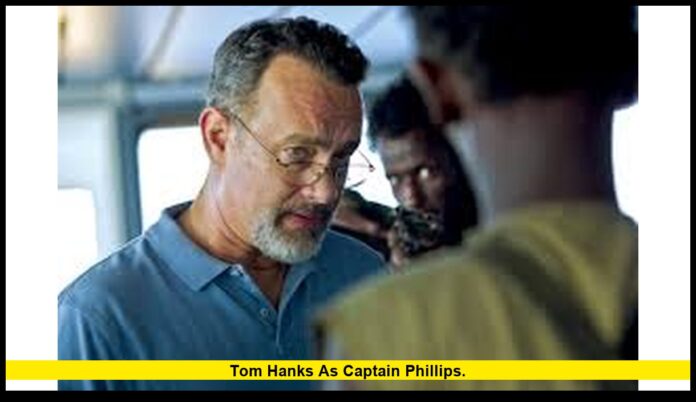
Tom Hanks as Captain Phillips remains one of the most powerful performances of the modern era, and in 2026 the film continues to generate renewed attention as streaming availability shifts and audiences rediscover this gripping true-story thriller. More than a decade after its release, the movie still resonates deeply with American viewers who value realism, leadership, and emotional authenticity in cinema.
Released in 2013, Captain Phillips dramatizes the 2009 hijacking of the U.S.-flagged cargo ship MV Maersk Alabama by Somali pirates. Directed by Paul Greengrass, the film places Tom Hanks at the center of a tense maritime standoff as he portrays real-life captain Richard Phillips.
As of early 2026, the film remains available in the United States through major digital rental and purchase platforms. Its availability on subscription streaming services rotates due to licensing agreements, which often leads to renewed interest whenever it reappears or exits a catalog.
Table of Contents
A Career-Defining Performance
By 2013, Tom Hanks had already earned two Academy Awards and established himself as one of the most respected actors in American film history. Yet Captain Phillips marked a distinct chapter in his career.
Hanks approached the role with restraint. He avoided exaggerated heroics and focused instead on quiet professionalism. That decision shaped the tone of the entire film.
His portrayal builds tension gradually. Small gestures carry weight. Controlled dialogue replaces dramatic monologues.
The medical examination scene near the end of the film remains widely discussed. In that moment, composure collapses into visible shock. The performance feels raw and unfiltered. Many critics continue to cite it as one of the most authentic depictions of trauma in modern cinema.
Despite strong praise, Hanks did not receive a Best Actor nomination at the Academy Awards that year. The film itself earned multiple nominations, reinforcing its critical standing.
The Real 2009 Hijacking
The events behind the film unfolded in April 2009. The Maersk Alabama was traveling through the Gulf of Aden when Somali pirates boarded the vessel.
This incident marked the first hijacking of a U.S.-flagged merchant ship in nearly two centuries.
Captain Richard Phillips offered himself as a hostage to secure his crew’s release. He was placed aboard a small enclosed lifeboat, triggering a tense standoff that lasted several days.
The crisis concluded when the United States Navy SEALs executed a coordinated rescue operation that freed Phillips.
The real-world event involved complex negotiations, military strategy, and international attention. The film focuses primarily on the psychological and emotional aspects of the ordeal.
Direction That Amplified Realism
Paul Greengrass employed a documentary-style approach to heighten immersion. Handheld camera work and tight framing place viewers inside the ship’s confined spaces.
The pacing remains deliberate. Tension builds through silence as much as confrontation.
Sound design plays a crucial role. Engine noise, ocean waves, and sharp bursts of gunfire create an environment that feels immediate.
The rescue sequence emphasizes coordination and precision rather than spectacle. This choice avoids sensationalism and keeps the focus on human stakes.
Barkhad Abdi’s portrayal of pirate leader Muse added complexity to the narrative. His performance earned an Academy Award nomination for Best Supporting Actor and helped prevent the story from becoming one-dimensional.
Box Office Performance and Recognition
Captain Phillips achieved strong commercial success in the United States. It grossed more than $100 million domestically and over $200 million worldwide.
The film received six Academy Award nominations:
- Best Picture
- Best Supporting Actor
- Best Adapted Screenplay
- Best Film Editing
- Best Sound Editing
- Best Sound Mixing
Although it did not win in major categories, it remains highly regarded within the industry.
Why It Continues to Resonate
Several elements explain why Tom Hanks as Captain Phillips still generates discussion in 2026.
Leadership Under Pressure
American audiences often connect with stories of steady leadership during crisis. Phillips is portrayed as calm, disciplined, and focused on protecting his crew.
That relatability strengthens the emotional impact.
Authentic Tone
The film avoids excessive dramatization. It relies on realism rather than spectacle.
That grounded approach keeps the story credible.
Enduring Interest in True Stories
Movies based on real events tend to have long shelf lives. Viewers return to them to understand the human side of historical incidents.
Captain Phillips fits firmly within that category.
Preparation and Production Details
Tom Hanks researched maritime command responsibilities before filming. He studied the structure of merchant shipping operations and learned how captains manage risk at sea.
Production teams filmed many scenes in confined environments to create authentic tension. Actors portraying pirates were not heavily rehearsed alongside Hanks before certain scenes, which heightened spontaneity during filming.
These production choices contributed to the film’s intensity.
Cultural Impact Beyond Entertainment
Captain Phillips has been referenced in leadership discussions and crisis management training sessions.
Themes often examined include:
- Risk assessment
- Negotiation strategy
- Emotional control
- Communication clarity
The story provides a case study in decision-making under extreme pressure.
A Mature Chapter in Hanks’ Career
This role marked a transition in Tom Hanks’ career. Earlier performances often leaned on warmth and charisma. Captain Phillips emphasized endurance and restraint.
There are no sweeping speeches or grand triumphs.
Instead, the character survives through discipline and composure.
That shift demonstrated Hanks’ versatility and reinforced his standing as one of the most respected actors in American cinema.
Continued Streaming Interest in 2026
In 2026, Captain Phillips continues to be accessible to U.S. audiences through major digital rental and purchase platforms, including Amazon Prime Video, Apple TV, Google TV, and Fandango at Home. Viewers who prefer permanent access can buy the film in HD or 4K, while physical Blu-ray and DVD editions remain widely available through national retailers.
Subscription streaming availability continues to rotate due to licensing agreements between studios and platforms. At various points over the past year, the film has cycled on and off major subscription services, prompting noticeable spikes in online search activity each time its status changes. When it reappears on a subscription platform, it often trends among “Top 10” or “Most Watched” categories within the drama and thriller sections.
True-story thrillers consistently perform well in streaming environments because they appeal to both first-time viewers and repeat audiences. Captain Phillips fits that model perfectly. The film combines historical relevance, sustained tension, and a standout central performance, which keeps it competitive even against newer releases.
Tom Hanks’ enduring popularity also plays a significant role in sustained streaming interest. His filmography spans generations, and many viewers revisit his most intense performances during themed watchlists or retrospective viewing cycles. As streaming platforms continue to refresh their libraries throughout 2026, Captain Phillips remains a steady and reliable performer whenever it becomes available again.
Lasting Legacy
More than a decade after its release, Tom Hanks as Captain Phillips stands as a benchmark for modern American thrillers. The film captures fear without exaggeration and heroism without spectacle.
Its realism and emotional depth continue to resonate with viewers across the country.
Where does Captain Phillips rank among your favorite Tom Hanks performances? Share your thoughts and join the conversation below.

