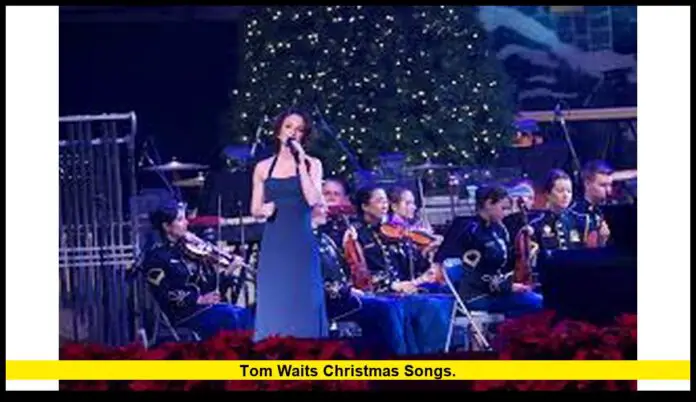
Tom Waits Christmas songs continue to hold a singular place in American holiday music as of 2025. While the season is often dominated by polished pop anthems and nostalgic carols, Tom Waits represents something entirely different. His Christmas-associated music offers reflection instead of celebration, storytelling instead of spectacle, and emotional truth instead of artificial cheer.
Even without new holiday releases this year, interest in Tom Waits’s Christmas music remains strong across the United States. Streaming platforms, curated playlists, and cultural discussions continue to bring his work back into focus every December. For many listeners, his songs feel less like background music and more like personal letters meant to be heard late at night, when the noise of the season fades.
Table of Contents
Understanding Tom Waits’s Artistic Relationship With Christmas
Tom Waits has never approached Christmas as a commercial opportunity. Unlike artists who release holiday albums filled with covers and festive arrangements, Waits treats Christmas as a setting rather than a subject.
In his work, Christmas becomes a moment of pause. It’s a time when characters reflect on who they were, who they are, and who they might never become. This perspective aligns with how many adults experience the season — quietly, privately, and often emotionally.
This is why Tom Waits Christmas songs do not age. They aren’t tied to trends, production styles, or seasonal marketing. They remain relevant because the emotions they capture never change.
The Cornerstone of Tom Waits Christmas Songs
“Christmas Card from a Hooker in Minneapolis”
At the heart of Tom Waits Christmas songs is “Christmas Card from a Hooker in Minneapolis.” Released in 1978 as part of the Blue Valentine album, the song has grown far beyond its original context.
Structured as a letter sent during the Christmas season, the song tells the story of a woman writing to a man named Charlie. At first, the letter sounds optimistic. She claims to be doing well, mentions plans, and creates a picture of stability. As the song unfolds, that picture slowly cracks, revealing emotional struggle, longing, and vulnerability.
The power of the song lies in its restraint. There is no dramatic explosion, no raised voice, no forced lesson. The truth reveals itself quietly, which makes it devastating and unforgettable.
Why This Song Became a Christmas Tradition
“Christmas Card from a Hooker in Minneapolis” was never intended to be a holiday hit. Yet over time, it became one of the most talked-about non-traditional Christmas songs in American music.
Several factors contributed to its seasonal status:
- The Christmas framing gives emotional weight to the letter
- The contrast between hope and reality mirrors real holiday experiences
- The storytelling feels intimate and personal
- The song resists sentimentality
Every December, listeners rediscover the song and pass it along to others. It has become a tradition not through promotion, but through connection.
Live Performances and Holiday Associations
Tom Waits has occasionally emphasized the Christmas aspect of the song during live performances. In some appearances, he incorporated elements of traditional Christmas melodies, subtly reinforcing its place in the season.
These performances added another layer to the song’s identity. They showed that Waits understood how listeners connected the piece to Christmas, even if it wasn’t written as a holiday anthem.
Although Waits rarely performs publicly today, recordings of these moments continue to circulate and gain renewed attention every year.
Other Songs Commonly Linked to Tom Waits Christmas Listening
While only one song directly references Christmas, fans often include other Tom Waits tracks in their holiday listening rotation. These songs share emotional or thematic qualities that align with the season.
Songs Frequently Included in Holiday or Winter Playlists
- “Come On Up to the House”
A song often associated with redemption, forgiveness, and warmth. Many listeners see it as a spiritual or emotional companion to Christmas themes. - “A Sight for Sore Eyes”
Gentle and reflective, this track fits the quieter moments of the season. - “Go Tell It on the Mountain”
Featuring Tom Waits’s unmistakable voice, this track connects directly to traditional spiritual music. - “Chocolate Jesus”
Though not a Christmas song, it explores faith and contradiction in a way that resonates during the holidays.
These tracks are not marketed as Christmas songs. Their inclusion is driven entirely by listener interpretation and emotional resonance.
Why Tom Waits Christmas Songs Feel Honest
Many Christmas songs present an idealized version of the season. Tom Waits does the opposite.
His Christmas-associated music acknowledges:
- Loneliness
- Financial struggle
- Emotional distance
- Regret and longing
- Small moments of hope
This honesty makes his music especially meaningful for listeners who find the holidays complicated. For them, Tom Waits offers understanding rather than instruction.
The Role of Storytelling in His Holiday Appeal
Tom Waits is first and foremost a storyteller. His characters feel like real people with pasts, flaws, and unfinished business.
In the context of Christmas, this storytelling approach becomes even more powerful. The season is already associated with memory and reflection. Waits’s songs amplify those feelings without exaggerating them.
Listeners don’t just hear his Christmas-associated songs. They inhabit them.
Tom Waits Christmas Songs in Modern Streaming Culture
In 2025, Tom Waits Christmas songs continue to thrive on streaming platforms. Each December, algorithms resurface his work through:
- Alternative Christmas playlists
- Winter jazz and blues collections
- Late-night listening recommendations
- Story-driven music categories
Younger listeners, many discovering Waits for the first time, often encounter his Christmas music through shared playlists or social media clips. This organic discovery keeps his work alive across generations.
Why New Generations Are Drawn to His Holiday Music
Despite being released decades ago, Tom Waits Christmas songs feel timeless. Younger audiences are drawn to:
- The raw, unfiltered vocals
- The cinematic storytelling
- The contrast to polished holiday pop
- The emotional depth
In an era dominated by fast content and short attention spans, Waits’s music asks listeners to slow down. That request feels especially fitting during the holidays.
Cultural Recognition Without Commercialization
Tom Waits Christmas songs rarely appear on mainstream holiday charts. Yet their cultural presence is undeniable.
Each year, they appear in:
- Discussions about alternative Christmas music
- Lists of essential non-traditional holiday songs
- Curated playlists focused on storytelling
This recognition exists without heavy promotion. It’s sustained entirely by listeners who return to the music year after year.
The Emotional Range of Tom Waits During the Holidays
One of the reasons Tom Waits Christmas songs endure is their emotional complexity. They do not present Christmas as purely joyful or purely sad.
Instead, they acknowledge:
- Hope mixed with disappointment
- Love mixed with regret
- Comfort mixed with isolation
This emotional realism mirrors real life. It allows listeners to feel seen rather than corrected.
Tom Waits and the Idea of Christmas as a Mirror
In Waits’s music, Christmas functions as a mirror. It reflects who people are when the noise fades and the lights dim.
The season becomes a moment when characters confront themselves. That idea resonates deeply, especially with listeners who experience Christmas as a time of self-evaluation rather than celebration.
Why His Christmas Music Is Often Played Late at Night
Many fans associate Tom Waits Christmas songs with late-night listening. There’s a reason for that.
His voice, pacing, and arrangements suit quiet environments. His songs demand attention, not distraction. They fit moments when listeners are alone with their thoughts.
For many, playing a Tom Waits Christmas song feels like opening a window into someone else’s life — briefly, honestly, and without judgment.
Tom Waits Christmas Songs as a Personal Tradition
Over time, Tom Waits Christmas songs have become personal traditions for listeners rather than public ones.
People play them:
- After family gatherings
- While driving alone at night
- During quiet moments on Christmas Eve
- When the season feels heavy
This private connection explains why his holiday music remains powerful even without widespread airplay.
The Enduring Legacy of Tom Waits at Christmas
Tom Waits never positioned himself as a holiday artist. Yet his work earned that place through authenticity and emotional truth.
In 2025, his Christmas-associated songs remain:
- Relevant
- Frequently rediscovered
- Deeply personal
- Emotionally grounding
They remind listeners that Christmas music doesn’t need to be loud to be meaningful.
Why Tom Waits Christmas Songs Will Always Return
Every year, new Christmas music is released. And every year, listeners return to Tom Waits.
They return because his songs don’t expire. They don’t rely on trends or nostalgia alone. They rely on truth.
As long as people experience Christmas as more than a celebration — as a time of memory, reflection, and emotional reckoning — Tom Waits Christmas songs will continue to matter.
If Tom Waits Christmas songs have become part of your holiday season, share the track that resonates most with you and stay connected for more stories that explore music beyond the surface.

