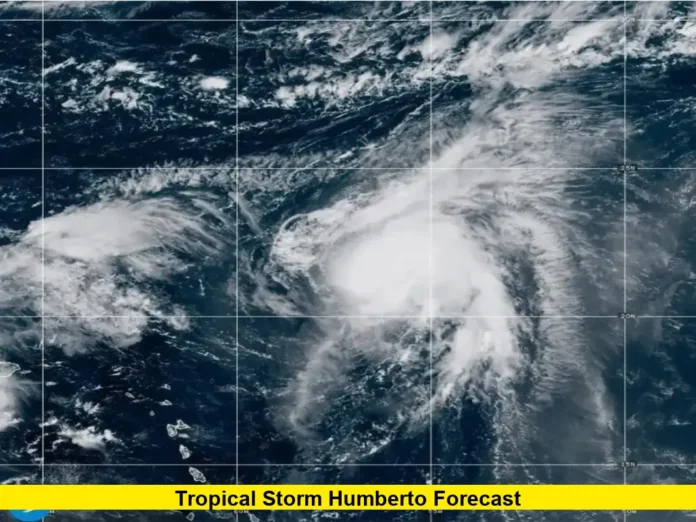
Tropical Storm Humberto forecast updates have captured attention as the storm continues to build strength in the Atlantic Ocean. Forecasters now confirm Humberto has reached hurricane status, with models suggesting it could intensify into a powerful system over the next several days. While the storm itself is not projected to make landfall in the United States, the indirect impacts and its interaction with other tropical developments make this storm one to watch closely for U.S. residents.
Table of Contents
Where Humberto Stands Right Now
Humberto has officially been upgraded to a Category 1 hurricane after showing sustained winds exceeding 74 miles per hour. The storm is currently positioned northeast of the northern Leeward Islands, slowly tracking northwestward. Its forward speed remains moderate, but the storm is expected to strengthen significantly as it moves over warm waters with favorable atmospheric conditions.
The National Hurricane Center has emphasized that Humberto has the potential to intensify into a major hurricane. This would mean Category 3 status or higher, with sustained winds over 110 miles per hour. The strengthening process could occur through the weekend, making Humberto one of the strongest storms of this year’s hurricane season so far.
Tropical Storm Humberto Forecast: Tracking the Path
At the moment, most forecast models agree that Humberto will remain over open water. The storm is projected to continue moving northwest, then curve northward and eventually northeast, guided by an upper-level trough steering it away from the continental United States.
Bermuda remains within the broader cone of uncertainty, though forecasters say the current path takes the storm to the west of the island. For the U.S., no direct landfall is anticipated at this time. However, tropical systems often have unpredictable elements, and residents along the East Coast are being urged not to let their guard down completely.
Even without direct impact, Humberto is expected to generate large swells that will travel outward across the Atlantic. These swells will reach the East Coast of the United States, producing rough surf and dangerous rip currents, particularly for coastal states like Florida, Georgia, and the Carolinas.
The Season’s Active Pattern
Humberto is not developing in isolation. The Atlantic basin is currently very active, with another tropical disturbance—known in forecasting terms as an “invest”—forming near Hispaniola and the Turks and Caicos. This system is showing strong potential for development and may soon be named Tropical Storm Imelda.
Unlike Humberto, this second disturbance is much closer to U.S. waters. It is already producing heavy rainfall and gusty winds in the Caribbean, and models suggest it could strengthen as it moves toward the Bahamas. If it organizes further, parts of the Southeast United States could see rain, wind, and coastal flooding early next week.
Could Humberto and the New Disturbance Interact?
When two tropical systems form near each other, meteorologists sometimes watch for a rare phenomenon called the Fujiwhara Effect. This occurs when two storms draw close enough that their circulations begin to influence one another. They may rotate around a central point, alter each other’s paths, or even merge.
At this stage, Humberto and the Caribbean disturbance appear far enough apart to avoid such a direct interaction. Still, the possibility of overlapping influences cannot be fully ruled out. Even without full Fujiwhara interaction, the presence of two nearby storms can complicate forecasts, making it harder to pin down precise tracks and intensities.
How Humberto Could Affect the U.S. Coast
While the continental United States is not in Humberto’s direct path, indirect impacts are still expected, especially along the Atlantic coastline.
- High Surf and Swells: Humberto’s expansive wind field is pushing large waves outward, which are expected to reach U.S. shores this weekend and into next week. Beachgoers from Florida to the Mid-Atlantic should prepare for rough conditions.
- Rip Currents: Dangerous rip currents will become more common along beaches. These strong currents pose a risk to swimmers, even when skies are clear. Local officials may issue beach warnings or close sections of shoreline if conditions worsen.
- Heavy Rain (Indirectly): Should the second tropical system intensify near the Bahamas and head toward the U.S., heavy rain could fall along the Southeast coast. Flood-prone regions, especially in Georgia and the Carolinas, may need to prepare for localized flooding.
Forecast Scenarios: What Could Happen Next
Meteorologists are watching several possible scenarios unfold with Humberto and the nearby disturbance:
- Baseline Scenario
Humberto continues strengthening into a major hurricane but remains at sea, curving away from the U.S. The Caribbean system develops but also tracks offshore, sparing the mainland from serious effects. - Closer Coastal Approach
Humberto stays offshore but influences steering currents enough to draw the second storm closer to land. This could lead to rain, gusty winds, and minor storm surge along the Southeast coast. - Rare Interaction
If Humberto and the Caribbean disturbance drift closer together, partial Fujiwhara interaction could occur, altering both storms’ paths. This scenario introduces more uncertainty, but it is considered less likely than the first two.
Regardless of the outcome, forecasters stress that the U.S. coast will feel at least some effects from Humberto’s swells and from the unsettled weather pattern in the Atlantic.
Safety Advice for Coastal Residents
Even without a direct landfall threat, it’s important for people in vulnerable regions to stay cautious during hurricane season. Experts recommend:
- Avoiding Dangerous Surf: Stay out of the water if rip current advisories are posted. Even experienced swimmers can be caught in strong currents.
- Monitoring Local Alerts: Pay attention to weather advisories from trusted sources, especially in states like Florida, Georgia, and the Carolinas.
- Preparing for Rainfall: If you live in a flood-prone area, clear drains and gutters ahead of potential downpours.
- Having a Readiness Plan: Keep supplies on hand—such as bottled water, non-perishable food, flashlights, and batteries—in case the secondary storm brings more direct impacts.
Humberto in the Bigger Picture
Every hurricane season in the Atlantic has a window of heightened activity. Historically, late September is peak season, and Humberto’s development fits right within that pattern. Warm ocean waters, low wind shear, and active atmospheric conditions are helping storms form more easily and intensify quickly.
The fact that Humberto strengthened into a hurricane and could become a major storm underscores how favorable conditions are right now. Even though the U.S. may be spared from a direct strike, the storm serves as a reminder of the season’s volatility. Coastal residents know that preparedness is key, as conditions can change in just a few days.
Looking Toward the Week Ahead
The coming week will be a critical time for forecasters. Humberto is expected to gain strength and begin turning away from the mainland U.S., but the tropical wave near the Bahamas holds the greatest potential for direct American impacts. Whether it organizes into Tropical Storm Imelda or remains a weaker disturbance, its rain and wind could still disrupt life in coastal regions.
Meanwhile, Humberto will continue to send swells toward U.S. beaches, adding hazards for swimmers, surfers, and boaters. Local officials are already preparing to warn visitors about dangerous surf conditions.
Final Thoughts
The tropical storm Humberto forecast highlights the importance of staying informed during hurricane season. While Humberto is unlikely to strike the U.S. directly, its powerful swells and the nearby disturbance demand attention. For coastal communities, even an offshore storm can create hazardous conditions that affect daily life.
Stay safe, remain alert, and share your th

