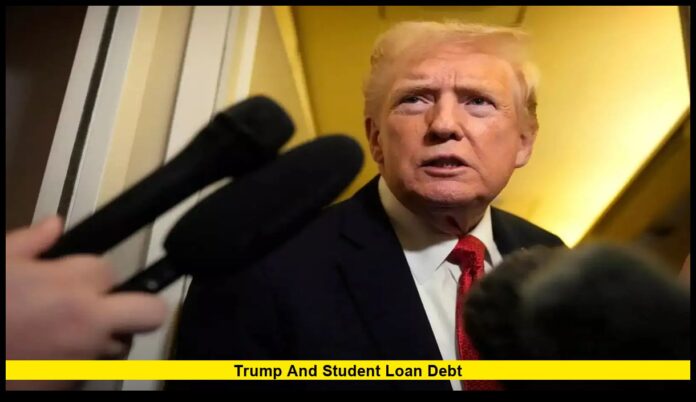
Trump and student loan debt policy has re-entered the national spotlight as federal enforcement actions, repayment structures, and borrowing limits undergo major changes that affect millions of Americans. From renewed collection efforts to stricter repayment accountability, the current direction of federal student loan policy reflects a sharp departure from broad forgiveness initiatives and places renewed emphasis on repayment responsibility, budget discipline, and program restructuring.
These changes are not theoretical. They are already influencing how borrowers repay loans, how defaults are handled, and how future students will finance higher education. Understanding the evolving approach tied to Trump and student loan debt is essential for borrowers navigating repayment today and planning for the years ahead.
Table of Contents
The Core Philosophy Behind Trump and Student Loan Debt Policy
At the heart of Trump and student loan debt policy is a long-standing belief that federal student loans should operate more like traditional financial obligations. The administration’s approach emphasizes borrower accountability, reduced federal exposure, and a rollback of what it views as overly expansive forgiveness policies.
This philosophy contrasts with prior periods that focused on payment pauses, large-scale forgiveness proposals, and flexible repayment protections. Instead, the current framework prioritizes restoring loan collections, simplifying repayment systems, and limiting federal borrowing to control long-term costs.
Supporters argue this approach restores fairness for taxpayers and reinforces personal responsibility. Critics counter that it places additional strain on borrowers already facing rising living costs.
The Return of Federal Loan Collections and Enforcement
One of the most visible developments in Trump and student loan debt policy is the full restoration of federal loan collection mechanisms that were paused or softened in previous years.
Borrowers who remain in default are now once again subject to:
- Wage garnishment
- Federal tax refund offsets
- Reductions to certain federal benefit payments
These tools allow the government to collect unpaid federal student loans without a court judgment. For borrowers in default, this shift represents a significant change from the temporary relief measures that once limited enforcement actions.
The resumption of these tools underscores the administration’s message that federal student loans are enforceable obligations, not optional debts.
Why Wage Garnishment Matters to Borrowers
Wage garnishment is one of the most impactful enforcement tools tied to Trump and student loan debt policy. Under federal rules, a portion of a borrower’s disposable income can be withheld directly from paychecks to repay defaulted loans.
For affected borrowers, garnishment can:
- Reduce take-home pay immediately
- Complicate household budgeting
- Create urgency around resolving default status
Borrowers are generally notified before garnishment begins and may have options to challenge or stop the process. However, failure to act can result in automatic deductions that continue until the loan is resolved.
Rising Default Numbers and the End of Temporary Protections
Federal data shows that student loan defaults increased after the expiration of pandemic-era payment pauses and temporary protections. Many borrowers struggled to re-enter repayment after years without required payments.
Under Trump and student loan debt policy, these temporary measures are no longer extended. The government’s focus has shifted to bringing borrowers back into active repayment or enforcing collection when repayment does not occur.
This transition has been particularly difficult for borrowers who experienced income disruptions or rising living expenses during the pause period.
Changes to Repayment Plans and Long-Term Structure
Trump and student loan debt reforms also include a restructuring of federal repayment options. The goal is to reduce complexity while ensuring loans are repaid in a predictable and sustainable way.
Key features of the evolving repayment framework include:
- Fewer overlapping income-driven repayment options
- Clearer repayment timelines
- Reduced reliance on indefinite forgiveness
While income-based repayment remains available for eligible borrowers, the emphasis has shifted toward repayment completion rather than long-term balance cancellation.
Borrowers are encouraged to review their repayment plans regularly, as eligibility rules and payment calculations have changed.
Impact on Loan Forgiveness Programs
Loan forgiveness remains one of the most debated aspects of Trump and student loan debt policy. Broad forgiveness initiatives have been consistently opposed, with the administration arguing they unfairly shift costs to taxpayers.
Forgiveness programs that still exist tend to:
- Require long-term repayment histories
- Include stricter eligibility criteria
- Emphasize verified public service or hardship
Borrowers pursuing forgiveness must now pay closer attention to compliance requirements, employer eligibility, and documentation standards.
Public Service Loan Forgiveness Under Scrutiny
Public Service Loan Forgiveness continues to operate but under increased oversight. The program’s rules are more strictly enforced, and borrower eligibility is closely reviewed.
Key considerations include:
- Employer qualification verification
- On-time qualifying payments
- Accurate enrollment in eligible repayment plans
Under Trump and student loan debt oversight, errors or misclassification can delay or disqualify forgiveness, making careful record-keeping essential.
Borrowing Limits and Higher Education Financing
Another major element of Trump and student loan debt policy involves limiting how much borrowers can take on in federal loans, especially for graduate and professional education.
The rationale behind tighter borrowing caps includes:
- Reducing excessive debt burdens
- Limiting taxpayer risk
- Encouraging cost discipline among institutions
While undergraduate federal loan limits remain relatively stable, graduate students now face stricter constraints that may require alternative financing or lower-cost educational choices.
How These Changes Affect Future Students
For future students, Trump and student loan debt reforms may reshape how higher education is financed.
Potential outcomes include:
- Increased reliance on scholarships and grants
- More price sensitivity when choosing schools
- Greater use of private financing for advanced degrees
Supporters argue this encourages responsible borrowing and market discipline. Critics warn it could reduce access to education for lower-income students.
The Role of Pell Grants and Workforce Training
While loan limits have tightened, grant programs remain an important part of federal education policy. Pell Grants continue to support low-income students and, in some cases, workforce training programs.
This reflects a broader shift toward funding education pathways tied directly to employment outcomes rather than unlimited loan borrowing.
Economic Implications of Trump and Student Loan Debt Policy
The broader economy is also affected by changes in student loan policy. When borrowers resume repayment or face garnishment, disposable income decreases, which can influence spending patterns.
At the same time, proponents argue that reducing long-term federal debt improves fiscal stability and lowers taxpayer exposure.
The debate continues over whether stricter loan enforcement strengthens or weakens economic growth.
Borrower Strategies in the Current Environment
Borrowers navigating Trump and student loan debt policies can take proactive steps to protect themselves.
Recommended actions include:
- Checking loan status regularly
- Responding promptly to federal notices
- Exploring rehabilitation or consolidation if in default
- Updating income information for repayment plans
Ignoring loan communications can lead to enforcement actions that are harder to reverse later.
Loan Rehabilitation and Consolidation Options
For borrowers already in default, rehabilitation and consolidation remain available pathways to restore good standing.
Rehabilitation involves a series of agreed-upon payments that can remove default status. Consolidation replaces defaulted loans with a new federal loan but may not erase credit history impacts.
Choosing the right option depends on individual financial circumstances.
Credit Score and Financial Consequences
Student loan default can significantly damage credit scores, making it harder to qualify for mortgages, car loans, or credit cards.
Under Trump and student loan debt enforcement, defaults are actively reported, reinforcing the importance of addressing delinquency early.
Returning to good standing can gradually improve credit profiles, but recovery takes time.
Public Opinion and Political Debate
Trump and student loan debt policy remains deeply divisive. Public opinion is split between those who favor strict repayment enforcement and those who advocate broader relief.
This divide reflects broader debates over:
- The role of government in education financing
- Fairness between borrowers and taxpayers
- Long-term economic mobility
Student loan policy continues to be a defining issue in national political discourse.
Legal Challenges and Policy Stability
Some student loan changes have faced legal challenges, contributing to uncertainty for borrowers. While the overall direction favors enforcement and restructuring, specific rules may continue to evolve.
Borrowers should stay informed and rely on official communications rather than assumptions.
What Borrowers Should Expect Moving Forward
Looking ahead, Trump and student loan debt policy is expected to continue emphasizing repayment completion, fiscal restraint, and administrative simplicity.
Borrowers should expect:
- Continued enforcement of defaulted loans
- Limited expansion of forgiveness programs
- Ongoing adjustments to repayment systems
Preparing for repayment rather than relying on future relief is increasingly important.
Final Thoughts on Trump and Student Loan Debt
Trump and student loan debt policy represents a decisive shift toward accountability and long-term system sustainability. While the changes present challenges for many borrowers, they also signal a clear federal stance on the role of student loans in higher education financing.
Understanding these policies empowers borrowers to make informed decisions, avoid costly mistakes, and take control of their financial future.
What are your thoughts on how these changes affect borrowers today? Share your perspective below and stay engaged as student loan policy continues to evolve.

