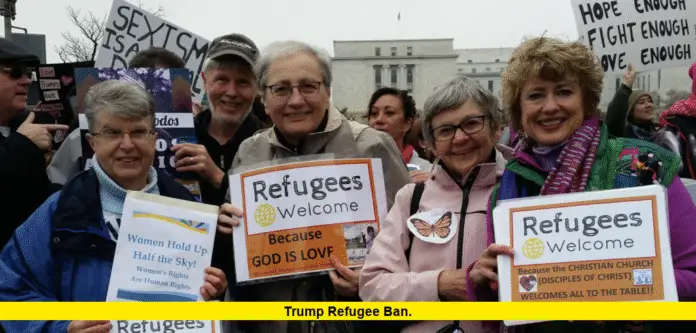
The Trump Refugee Ban has reshaped America’s immigration landscape, sharply reducing refugee admissions, suspending resettlement pathways, and placing hundreds of thousands of people in legal uncertainty. The sweeping changes now represent the most restrictive refugee policies ever implemented in the United States.
Table of Contents
Historic Low Refugee Cap Sets a New Baseline
The administration has set the refugee admissions ceiling at 7,500 individuals for Fiscal Year 2026, marking the lowest quota since the U.S. established its modern refugee program more than four decades ago.
Most available slots have been designated for white South Africans, specifically those claiming racial discrimination in their home country. With this narrow prioritization, global refugee populations seeking safety—many escaping war, persecution, and humanitarian crises—face a drastically restricted path to U.S. resettlement.
For millions worldwide, the United States has effectively closed its doors.
Suspension of the Entire Refugee Admissions Program
A key executive order issued early in the administration halted all new refugee referrals and stopped travel for individuals who had already been approved for resettlement. This sudden suspension stranded thousands who had spent years undergoing interviews, security screenings, medical checks, and background reviews.
A major private sponsorship pathway that previously allowed community groups to support refugee arrivals has also been terminated. The closure of this option removed an essential tool for resettlement and placed greater pressure on already strained humanitarian networks.
Meanwhile, refugee service organizations within the United States have been forced to scale back or discontinue programs that once helped newcomers access housing, employment, education, and language training. Refugees already living in the country now face significant barriers to integration.
Pause on Asylum and Immigration Processing
In addition to freezing refugee admissions, the administration has paused the processing of all asylum applications. This means individuals fleeing persecution, regardless of their origin, cannot move forward with their claims.
Immigration benefits—including permanent residence, naturalization, and derivative benefits for family members—have also been delayed or suspended for applicants from several countries. These actions have created a backlog affecting families, workers, and long-term residents who believed they were close to securing stable legal status.
A sweeping review has begun for more than 200,000 refugees previously admitted to the United States, particularly those who arrived under the prior administration. Their applications for permanent residence are now on indefinite hold, and officials have stated that approvals may be revoked if individuals fail to meet newly interpreted eligibility criteria.
This broad re-examination is unprecedented in the history of the U.S. refugee system.
Humanitarian Impact on Families and Communities
For many refugees, the recent policy changes have reopened emotional wounds. People who already endured forced displacement, violence, and trauma now face renewed uncertainty about their future.
Families awaiting reunification—often after years of separation—have seen their cases frozen without clear timelines. Refugees already in the United States express fear about re-interviews, possible denials, or the risk of losing legal protections they were previously granted.
Service organizations report that disruptions to integration programs have left newcomers struggling to secure housing, find employment, or access education and health resources. Communities that traditionally welcomed refugees now find themselves filling service gaps without federal support.
Policy Consequences and Legal Concerns
Immigration experts warn that halting asylum and refugee processing undermines long-standing legal commitments and humanitarian norms. The United States has historically led the world in refugee resettlement, but this leadership role is now at risk.
The re-vetting of refugees already granted status is particularly concerning to legal advocates. Review processes that could revoke refugee protections retroactively may destabilize families who have built lives, careers, and communities in the United States.
Legal challenges have emerged across the country, aiming to restore services and overturn policy elements deemed unlawful. Courts may soon play a decisive role in determining the future of refugee admissions and program funding.
Economic Costs and Community Implications
Refugees have historically boosted the American economy by contributing to the workforce, filling essential roles, and revitalizing local communities. With the drastic reduction in resettlement and cuts to support programs, these potential contributions are severely limited.
Workforce shortages in healthcare, manufacturing, and agriculture may intensify in regions that typically rely on refugee labor. Small towns that previously benefited from population growth linked to resettlement could see economic stagnation.
The suspension of integration support programs may also lead to higher state and local costs, as refugees struggle to access basic needs independently.
Why the Administration Says the Overhaul Is Necessary
Officials defend the policy shifts as measures to protect national security, reduce strain on federal resources, and reevaluate global migration pressures. They argue that pausing and restructuring the system enables agencies to reassess vetting standards and ensure only the most vulnerable—and safest—individuals are admitted.
Supporters believe the prioritization of specific groups aligns with the administration’s interpretation of discrimination-based refugee eligibility.
However, refugee advocates counter that the U.S. vetting process was already among the world’s most rigorous, involving multiple agencies and exhaustive security checks.
Global and Long-Term Implications
The United States has long positioned itself as a global beacon of safety for those fleeing persecution. The Trump Refugee Ban marks a dramatic departure from that tradition.
International partners, humanitarian organizations, and allied nations may view these changes as a retreat from moral and diplomatic leadership. Countries struggling with internal conflict or mass displacement could receive diminished support or feel increased pressure without U.S. resettlement capacity.
Perhaps most significantly, experts warn that dismantling the infrastructure of refugee resettlement could have long-lasting effects. Even if policies shift in future years, rebuilding agencies, staff, and community networks may take considerable time.
What Americans Need to Know Today
- The U.S. refugee ceiling is now set at 7,500—an unprecedented low.
- Most available spots are earmarked for one specific group, limiting access for others.
- All new asylum applications remain paused.
- Previously admitted refugees face broad re-screening and delayed permanent residence approvals.
- Resettlement agencies have lost funding and paused essential integration services.
The combined effects of these changes are already visible—slowed immigration processing, heightened fear among vulnerable populations, and the rapid decline of America’s refugee infrastructure.
These developments are reshaping the nation’s humanitarian identity, and your voice and attention can help shape what comes next.

