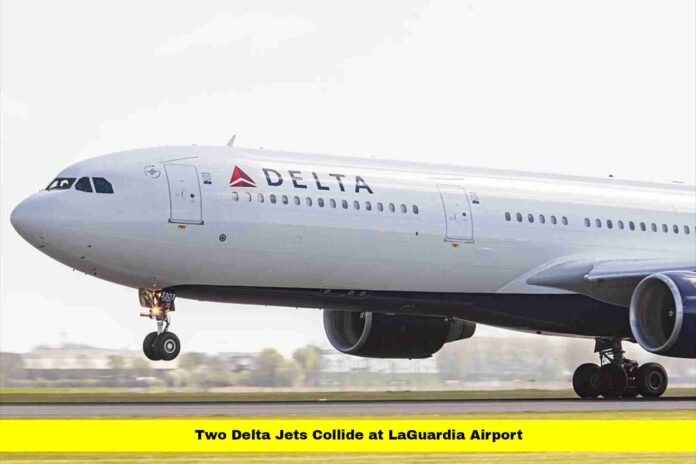
On the evening of October 1, 2025, a startling two Delta jets collide incident occurred at New York’s LaGuardia Airport. Two Delta Connection regional jets operated by Endeavor Air were involved in a low-speed taxiway collision. The incident resulted in minor injuries, including a flight attendant, and caused substantial damage to both aircraft, temporarily disrupting airport operations.
Table of Contents
Incident Overview
At approximately 9:58 PM Eastern Time, Endeavor Air Flight 5047, arriving from Charlotte, North Carolina, was taxiing to its gate when it was struck by the right wing of Flight 5155, preparing to depart to Roanoke, Virginia. Both aircraft were Bombardier CRJ-900 regional jets, widely used for short-haul regional flights.
Witnesses described a sudden jolt as the wing of one aircraft contacted the fuselage of the other. Airport emergency crews responded immediately, securing passengers and assessing aircraft damage. The collision caused temporary taxiway closures, leading to delays for other flights.
Passenger and Crew Impact
The collision caused a knee injury to a flight attendant, who received prompt medical attention. No passengers were injured.
- Flight 5047 carried 57 passengers.
- Flight 5155 carried 28 passengers.
Passengers were safely escorted back to the terminal, where airline staff provided accommodations, meals, and assistance with rebooking flights. The efficient response minimized panic and ensured passenger safety.
Aircraft Damage
The collision caused significant damage to both jets:
- Flight 5047’s fuselage sustained a shattered cockpit window and damage to the nose section.
- Flight 5155’s right wing, which struck Flight 5047, was also damaged.
Both aircraft were immediately grounded for inspection and repairs, affecting scheduled departures and arrivals. Aviation experts emphasize that even low-speed collisions can result in costly structural damage due to sensitive aircraft components.
Investigation and Response
The Federal Aviation Administration (FAA) and National Transportation Safety Board (NTSB) launched investigations to determine the cause. Preliminary reports indicate potential miscommunication between ground control and flight crews. Investigators are reviewing cockpit voice recordings, air traffic control instructions, and flight data.
Delta Air Lines expressed regret over the incident, reaffirming its commitment to safety and cooperation with federal authorities. The airline is reviewing ground operations procedures to prevent similar occurrences.
Airport Operations and Disruption
The collision caused temporary operational disruptions:
- Taxiway congestion delayed multiple flights.
- Ground crews worked to secure damaged aircraft and clear the taxiway.
- Nearby flights were held or rerouted while emergency procedures were implemented.
This incident underscores the importance of coordination among pilots, ground controllers, and emergency personnel, especially during busy evening hours.
Safety Concerns and Industry Implications
The incident raises concerns about airport ground safety:
- Low-speed collisions can still result in injuries, structural damage, and delays.
- Effective communication between pilots and air traffic control is essential.
- Airport authorities may review taxiway layouts, lighting, and signaling systems to reduce collision risks.
Aviation experts suggest the event could prompt stricter taxiway monitoring and updated crew training programs across major airports.
Historical Context of Ground Collisions
Ground collisions, though less dramatic than mid-air accidents, are a persistent concern:
- Past incidents, like the 2017 Atlanta airport collision, demonstrate the risks of taxiway operations.
- Common causes include miscommunication, limited visibility, and human error.
- Modern aircraft are designed to withstand minor collisions, but structural damage often requires extensive repairs.
The LaGuardia incident reinforces the need for continuous improvement in ground safety protocols.
Passenger Experience and Support
Delta Air Lines prioritized passenger care:
- Immediate medical treatment was provided to the injured flight attendant.
- Passengers were kept informed and assisted with flight rebooking.
- Meals and hotel accommodations were arranged for affected travelers.
Ensuring passenger trust and safety during such incidents is critical for maintaining airline reputation.
Lessons Learned
The two Delta jets collide event highlights key aviation lessons:
- Ground communication must be precise and timely.
- Crew training for taxiway maneuvers is essential, especially for regional jets.
- Emergency preparedness on the ground is as important as in-flight safety.
Airports and airlines may implement updated drills, stricter procedures, and improved monitoring technologies to minimize future risks.
Conclusion
The low-speed collision between two Delta regional jets at LaGuardia Airport demonstrates the complexities of airport ground operations. While the incident resulted in no passenger injuries and only minor crew harm, it underscores the importance of rigorous safety measures during taxiing and ground maneuvers.
As FAA and NTSB investigations continue, findings will guide improvements in taxiway operations and communication protocols. This event serves as a reminder of the aviation industry’s ongoing commitment to safety, efficiency, and passenger protection.
The aviation community and passengers alike will be closely monitoring updates as authorities determine the cause and implement measures to prevent similar incidents.

