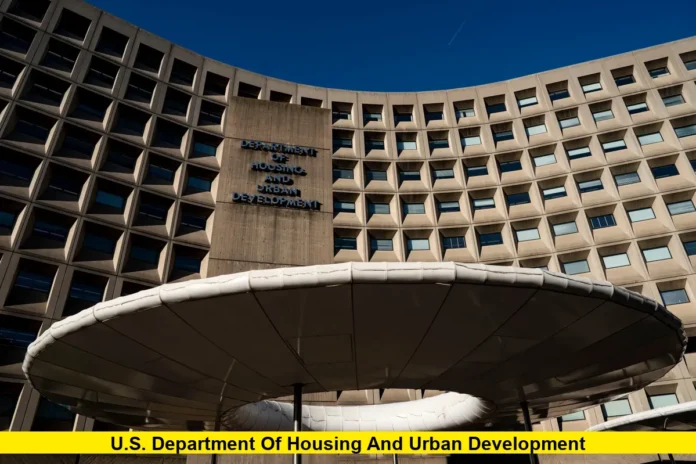
The Housing Choice Voucher (HCV) Program — widely known as Section 8 — stands at one of the most consequential crossroads in its history. The U.S. Department of Housing and Urban Development has rolled out a sweeping range of updates spanning funding policy, administrative requirements, inspection standards, payment standards, and program eligibility rules. These changes are already being felt on the ground by renters, landlords, and Public Housing Agencies (PHAs) across the country. Whether you are a current voucher holder, someone waiting to receive assistance, a landlord who accepts Section 8 tenants, or a housing professional working with affordable housing programs, understanding these developments is essential to protecting your household, your property, and your livelihood.
This article breaks down everything you need to know in clear, plain language — covering the latest regulatory updates, the federal budget debate, real-world impacts on renters and housing authorities, and what to watch next.
Table of Contents
What Is the Housing Choice Voucher Program?
Before diving into the changes, it helps to understand what is at stake. The Housing Choice Voucher Program is the largest federal rental assistance program in the United States. It provides low-income families, seniors, people with disabilities, and working individuals with vouchers that cover the difference between a household’s affordable contribution — generally around 30 percent of their monthly adjusted income — and the actual cost of rent in the private market. Over 5 million households depend on this program to keep a roof over their heads every month.
The program is federally funded and overseen by HUD, but it is administered locally by roughly 3,300 Public Housing Agencies spread across every state. That means the rules, payment amounts, waitlist status, and day-to-day experience of using a voucher can vary significantly depending on where you live. A family in Los Angeles may face very different conditions than a family in rural Ohio, even though they are both technically enrolled in the same federal program.
The Federal Funding Crisis: The Biggest Threat to the Program in Decades
By far the most urgent development affecting the Housing Choice Voucher Program is a funding crisis that has been building throughout recent months and has now reached a critical point.
The federal government did not pass a formal appropriations budget for fiscal year 2025, instead relying on a full-year continuing resolution that essentially carried over the prior year’s funding levels. For most programs, that would be a manageable situation. But for the voucher program, it is a structural problem. Rental costs rise every year, and the program’s expenses rise with them. Flat funding in a rising-rent environment is effectively a budget cut — it means the same pot of money buys fewer vouchers and covers fewer households.
HUD acknowledged this reality by warning housing agencies that a significant number of them could face funding shortfalls in the current year. In fact, HUD confirmed that nearly 50 percent of public housing authorities administering Section 8 programs across the country were already experiencing funding shortfalls. In response, HUD established a $200 million national shortfall fund to help agencies cover gaps — but experts and housing advocates widely agree that this amount, while helpful, falls far short of what is needed to stabilize the program.
The impact of these shortfalls is not abstract. The Housing Authority of the City of Los Angeles, which manages one of the largest Section 8 programs in the country, notified more than 3,000 families that it was pausing the processing of new housing applications and voucher issuance. It subsequently reduced its Voucher Payment Standard from 120 percent to 110 percent of the Fair Market Rent for new rental agreements. Agencies in Denver, Chicago, New York City, and communities across Colorado have implemented similar austerity measures.
The White House Budget Proposal: A 40 Percent Cut and Block Grants
While the immediate funding pressure has been driven by a lack of an adequate appropriations bill, the longer-term threat to the program comes from a sweeping restructuring proposal put forward by the current administration. The White House’s budget proposal would combine the five main federal rental assistance programs — including project-based rental assistance, Housing Choice Vouchers, public housing, supportive housing for the elderly, and supportive housing for people with disabilities — into a single block grant to states, funded at approximately 43 percent below what the combined programs received in the most recent fiscal year.
The proposal would also introduce a two-year cap on rental assistance for able-bodied adults, a major departure from the program’s current structure, which provides ongoing assistance as long as a household remains eligible and funding is available.
Housing advocates and policy analysts across the political spectrum have raised serious concerns about the practical effects of block-granting the program. Historically, block-granted federal programs tend to see their funding erode over time and are more vulnerable to budget cuts in future years. States would gain flexibility, but they would also inherit the responsibility of serving a population with needs that currently exceed available resources in most parts of the country.
Both the House and Senate voted in the summer of 2025 to reject the 40 percent cut and block-grant approach. However, neither chamber has yet passed a funding bill that fully covers the renewal costs of all existing vouchers. Under the House appropriations proposal, analysts estimate that approximately 411,000 people could lose rental assistance. Under the Senate version, the figure is lower but still substantial, with roughly 243,000 people potentially losing assistance. The final resolution of the fiscal year budget remained unsettled at the time of publication.
HUD’s Cost-Savings Notice PIH 2025-28: What It Means in Practice
In November of 2025, HUD sent a formal notice to all Public Housing Agencies across the country, titled “Cost-Savings Measures in the Housing Choice Voucher and Project-Based Voucher Programs.” The notice laid out a three-tier framework of cost-reduction actions that agencies may consider in order to prevent the worst outcome — the termination of assistance for currently housed families.
The first tier covers standard good management practices, such as ensuring rent reasonableness, maintaining proper documentation, and carefully managing voucher issuances. These are baseline expectations for any well-run PHA and do not represent a dramatic change in policy.
The second tier outlines actions that housing agencies can take without requiring HUD’s approval. These measures are more consequential and include stopping the issuance of new vouchers to applicants on the waitlist, reducing turnover vouchers, raising the minimum rent that tenants must pay up to $50 per month, stopping the absorption of portable families who wish to transfer their voucher to a new jurisdiction, and revising subsidy standards to reduce the number of bedrooms a household qualifies for under its voucher.
The third tier involves the most significant interventions, which require HUD’s explicit approval before a PHA can implement them. These include setting payment standards below 90 percent of the applicable Fair Market Rent and, as an absolute last resort, terminating Housing Assistance Payment contracts for existing voucher-holding families when funding is completely insufficient to sustain the program.
It is important to understand that this notice is framed as guidance, not as a mandate. Individual housing agencies have discretion over which, if any, of these measures to implement. HUD strongly urged agencies to avoid actions that would directly harm families currently in the program. Nevertheless, the very existence of this guidance document signals how serious the funding environment has become.
Updated Fair Market Rents Effective October 2025
Fair Market Rents are the benchmarks HUD uses every year to determine what constitutes a reasonable rental cost in each geographic market. They directly influence the maximum payment standards that PHAs are allowed to set, which in turn determines how much of a tenant’s rent the government will cover. Updated Fair Market Rents for fiscal year 2026 took effect on October 1, 2025, following publication in the Federal Register.
The updated methodology for calculating FMRs incorporates both Consumer Price Index data and private-sector rent data to better capture actual market conditions, particularly the divergence between rents paid by recent movers and overall rents in any given area. HUD has also built in a floor provision, ensuring that FMRs in any area cannot fall below 90 percent of the prior year’s figure for units of the same bedroom size. This provides a degree of stability and protection for voucher holders against sudden sharp reductions in subsidy levels.
For areas where Small Area Fair Market Rents apply — calculated at the ZIP code level rather than metro area-wide — the same 90 percent floor applies. Small Area FMRs are designed to give voucher holders meaningful access to higher-opportunity neighborhoods where rents tend to be above the metro average. They are an important tool for reducing residential segregation and giving families access to better schools, employment centers, and community resources.
HOTMA Compliance Now in Full Effect
The Housing Opportunity Through Modernization Act, passed by Congress in 2016, took years to implement across the HCV program. As of mid-2025, however, key provisions of HOTMA are now actively in force and are reshaping how income, assets, and eligibility are calculated for voucher holders.
Under the HOTMA income and asset provisions, which became mandatory for housing agencies no later than July 1, 2025, HUD strengthened the requirements for how household income must be verified and how assets are treated in the calculation of a family’s contribution toward rent. Households with assets above a certain threshold will have an imputed income attributed to those assets for purposes of determining rent contribution, even if the assets are not generating actual income.
Additionally, the HOTMA Voucher Final Rule, which was originally published in the spring of 2024, underwent a round of technical corrections and clarifying amendments published in the Federal Register in December 2025. These amendments took effect in January of this year. The corrections addressed minor regulatory errors and clarified language around payment standard effective dates, Small Area FMR adoption procedures, and lease protection provisions. PHAs that have not already updated their administrative plans to reflect these changes are required to do so promptly.
Updated HCV Guidebook: What Changed
HUD updated three chapters of its official Housing Choice Voucher Guidebook during 2025. These guidebook chapters cover “Housing Search and Leasing,” “Payment Standards,” and “Fair Housing and Nondiscrimination Requirements.” The first two chapters were revised in the summer and incorporate changes resulting from the HOTMA Voucher Final Rule, including updates to how HUD conducts briefings with voucher holders, how Fair Market Rents are communicated to participants, and how payment standards are calculated and applied.
The fair housing chapter saw a more politically sensitive revision, with HUD removing references to certain previously established equal access protections. Housing advocates have noted these changes as a departure from longstanding program values around fair and equal treatment of all participants, and organizations working on housing discrimination are closely monitoring how the revised guidance affects enforcement at the local level.
New PHA Annual Plan Requirements and Digital Reporting
Housing agencies are also adjusting to a new administrative layer introduced through Notice PIH 2025-18, which requires mandatory digital submission and certification systems for Annual and Five-Year Plans. This change is intended to give HUD more efficient, real-time visibility into how agencies are planning their programs, managing their budgets, and complying with federal requirements. For housing developers and investors working on project-based voucher deals, the implications are practical and immediate — plan amendments and certifications may introduce new timeline variables into project development, and the tightened tracking of voucher allocations limits the flexibility that some PHAs previously exercised in reallocating project-based voucher units.
Additionally, updated voucher tracking systems mean that project-level funding and administration are subject to closer federal scrutiny than in years past. For affordable housing developers and owners, this represents a more rigorous operating environment that rewards meticulous documentation and proactive communication with housing agencies.
NSPIRE Inspection Standards: Extended Timeline
HUD rolled out its National Standards for the Physical Inspection of Real Estate (NSPIRE) program as a comprehensive overhaul of how assisted housing units are evaluated for health, safety, and habitability. The new standards replace the older Housing Quality Standards framework and introduce a more rigorous, evidence-based inspection protocol. Compliance with NSPIRE has been extended to February 1, 2027, giving PHAs, landlords, and property owners additional time to prepare their units and management systems for the transition.
For landlords who participate in the Housing Choice Voucher program, understanding the NSPIRE standards is increasingly important. Inspections conducted under NSPIRE are more comprehensive in scope, and properties that do not meet the new standards may face delays in HAP contract renewals or loss of eligibility to participate in the program altogether. Property owners should treat this extension as preparation time, not as permission to defer action.
Emergency Housing Vouchers: A Program Winding Down
A separate but closely related program — the Emergency Housing Voucher initiative launched during the COVID-19 pandemic — is now approaching the end of its available funding, and the consequences for tens of thousands of households are severe.
The Emergency Housing Voucher program was specifically designed to assist individuals and families experiencing or at risk of homelessness, fleeing domestic violence, or exiting institutions. More than 50,000 households have relied on these vouchers to maintain stable housing. HUD announced in early 2025 that the program’s funding would run out in late 2026, ahead of its original projected timeline, citing historic increases in rental prices as the reason the money moved faster than anticipated.
Cities and housing authorities across the country are now scrambling to figure out what happens next. Some agencies, like those serving smaller populations in Iowa, have been able to transition emergency voucher holders into the regular Section 8 program. New York City’s housing authority, managing over 5,200 active Emergency Housing Voucher participants, found itself unable to make that transition due to its own funding shortfall and was denied a federal waiver that would have given it more flexibility.
Housing advocates are pushing Congress to include dedicated funding in the next appropriations bill to ensure these households do not suddenly lose the assistance that has kept them off the streets.
What This Means for Renters Right Now
If you are a current Housing Choice Voucher holder, the most important thing to understand is that program changes vary significantly by location. What is happening in one city or county may not be happening in yours. However, there are some universal actions you should take.
First, stay in regular contact with your local Public Housing Agency. PHAs are required to notify participants of changes to payment standards and program policies, but the volume of changes currently in motion means it is worth proactively reaching out rather than waiting to hear from them. Second, keep all your paperwork up to date. Under HOTMA’s updated income and asset verification requirements, accurate and timely documentation of your household income and assets is more important than ever. Missing a verification deadline or failing to report a change in household composition can jeopardize your assistance.
Third, if your housing agency has reduced its payment standard, understand what that means for your specific unit and lease. In most cases, lower payment standards apply immediately to new leases and new rental agreements. For households already in an existing lease, changes typically take effect after the next annual reexamination. Knowing your timeline matters.
Fourth, be vigilant about scams. Fraud targeting Housing Choice Voucher participants and landlords has been on the rise. Housing agencies will never call you to ask for your Social Security number, banking information, or other sensitive personal details over the phone. If you receive such a call, hang up and contact your PHA directly using a phone number from their official website.
What This Means for Landlords
Landlords who rent to Housing Choice Voucher holders play an essential role in the program’s ability to function. Without sufficient landlord participation, voucher holders cannot find units that meet program standards, and vouchers go unused even as families remain unhoused. The current funding pressures and policy changes create both challenges and reasons for concern.
On the challenge side, payment standard reductions in many markets mean that the subsidy toward rent is shrinking, potentially widening the gap between what the program will pay and what landlords need to cover their costs. Agencies that have frozen new voucher issuance or paused new lease-ups reduce the pool of prospective tenants who can pay with a voucher.
At the same time, it is important to understand that HUD has consistently prioritized protecting currently housed families over any other cost-cutting measure. Agencies have been instructed to exhaust all other options before taking any action that terminates an existing HAP contract. This means that if you currently have a tenant with a Housing Choice Voucher, the risk of their assistance ending abruptly is lower than some headlines might suggest — though it is not zero.
Landlords should also be aware of the upcoming NSPIRE inspection standard transition. Properties that do not meet the new standards could face issues at HAP contract renewal. Taking time now to assess your units against the NSPIRE criteria and address any deficiencies is a far less disruptive approach than being flagged during an official inspection.
What This Means for Developers and Housing Professionals
For affordable housing developers, project-based voucher operators, and investors in mixed-income developments with Section 8 components, the current regulatory environment demands careful attention to several specific issues. Closer HUD monitoring of voucher allocations and funding flows means that project timelines may be affected by delays in plan approvals, certification submissions, or reporting requirements. Building strong working relationships with the housing agencies that administer your project’s vouchers is not just good practice — it is essential risk management.
The strengthening of HOTMA income and asset verification requirements affects underwriting assumptions for project-based voucher deals, particularly around lease-up projections and tenant income stability. Developers should expect the certification process to be more rigorous and potentially slower than it has been in prior years, and should factor that into their project timelines.
Updated income limits, published in April 2025, establish current rent ceiling thresholds and affordability benchmarks that are critical for low-income housing tax credit compliance and project pro formas. Any deal underwritten on assumptions from prior years should be reviewed against the current figures.
The Road Ahead: What to Watch
The most consequential open question for the Housing Choice Voucher Program is what Congress will decide in the next round of appropriations negotiations. The outcome of that process will determine how many vouchers can be issued, how many families currently receiving assistance remain housed, and whether Emergency Housing Voucher holders can be transitioned into the regular program.
HUD has also floated the possibility of using administrative rule changes to introduce work requirements and time limits for voucher holders, which would represent a significant philosophical shift in how the program operates. These proposals have not yet been implemented but are being actively discussed within the federal housing policy community.
At the local level, watch for updates from your housing authority on payment standard adjustments, waitlist openings or closures, and the rollout of NSPIRE inspection protocols. Given that the program is administered locally, direct communication with your PHA remains the most reliable source of accurate, timely information about what is happening in your specific community.
The Housing Choice Voucher Program has helped millions of American families maintain stable housing for decades. The changes currently underway are among the most significant the program has ever seen, and their ultimate impact will depend heavily on decisions that are still being made in Washington and in local housing authorities across the country. Staying informed, staying engaged, and staying in contact with the agencies that serve you is the most important thing any participant, landlord, or housing professional can do right now.

