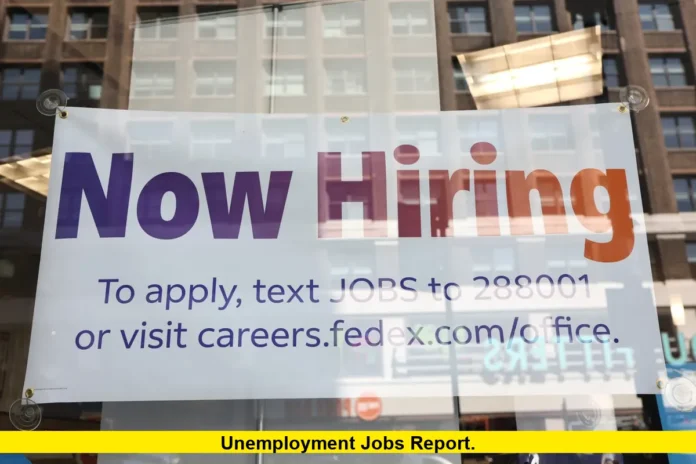
The latest unemployment jobs report highlights a U.S. labor market that continues to lose momentum, with weak hiring, uneven sector performance, and growing caution among employers. While unemployment remains relatively low by historical standards, the pace of job creation has slowed significantly, pointing to broader economic pressures as the country moves into 2026.
Released in early January, the data confirms that hiring cooled sharply at the end of 2025. Employers added far fewer jobs than in previous years, reinforcing concerns that the labor market has shifted from post-pandemic strength to a period of restraint and adjustment.
Table of Contents
December Job Growth Remains Modest
In December, U.S. employers added just 50,000 jobs, a figure that underscores how cautious hiring has become. Payroll growth remained limited across most industries, and overall employment levels showed little change compared with the prior month.
The national unemployment rate edged down to 4.4%, offering a slight improvement on paper. However, this decline did not reflect strong hiring activity. Instead, it suggests a labor market where job creation is struggling to keep pace with population growth and workforce needs.
This combination of slow job gains and a stable unemployment rate signals a labor market that is holding steady, but no longer expanding in a meaningful way.
2025 Marked the Weakest Job Growth in Years
Looking at the full year, 2025 stands out as the slowest year for job creation since the pandemic era. Employers added roughly 584,000 jobs over the entire year, a dramatic drop compared with the millions of jobs added annually in the years immediately following the economic reopening.
Average monthly job growth fell to under 50,000 positions, far below the pace seen in 2024. This slowdown reflects shifting employer priorities, tighter financial conditions earlier in the year, and a growing focus on efficiency rather than expansion.
While widespread layoffs did not materialize, many companies opted to freeze hiring or limit new positions, leading to a stagnant labor environment for job seekers.
Industry Breakdown: Gains Concentrated in Few Sectors
Job creation in December was highly concentrated, with only a handful of industries contributing to overall growth.
Healthcare and social assistance continued to lead hiring, driven by ongoing demand for medical services, long-term care, and support roles. Aging demographics and persistent staffing needs kept this sector relatively resilient.
Food services and hospitality also added jobs, reflecting steady consumer spending on dining and travel-related activities. Seasonal demand played a role, but gains were more modest than in prior years.
Local government employment increased slightly, helping offset losses elsewhere in the economy.
At the same time, several industries experienced job declines:
Retail employment fell as large retailers reduced staffing levels, particularly in general merchandise and warehouse-style stores.
Manufacturing continued to lose jobs, signaling ongoing challenges related to production costs, global competition, and shifting demand.
Construction employment declined, reflecting slower activity tied to financing conditions and reduced project starts.
This uneven performance shows a labor market increasingly divided between stable service sectors and struggling goods-producing industries.
Revisions Reveal Weaker Momentum
Revisions to prior months added to concerns about labor market strength. Job gains originally reported for October and November were adjusted downward, removing tens of thousands of positions from earlier estimates.
These revisions suggest that hiring was weaker than initially believed and that momentum slowed earlier than many analysts expected. Such adjustments often point to underlying softness that becomes clearer only after additional data is collected.
Labor Force Participation and Long-Term Unemployment
Labor force participation showed little movement, indicating that a portion of the population remains disengaged from active job searching. Some workers appear to be stepping away from the labor market entirely, either due to discouragement or personal circumstances.
Long-term unemployment remains a persistent issue. A growing share of unemployed workers have been without jobs for six months or longer, highlighting the difficulty many face in reentering the workforce during a period of limited hiring.
This trend raises concerns about skill erosion and long-term income instability for affected households.
Wages Continue to Rise Despite Slow Hiring
Even as job growth cooled, wages continued to rise. Average hourly earnings increased at a pace that outperformed inflation, providing some relief to workers who remain employed.
Stronger wages help support consumer spending, which remains a key driver of economic activity. However, wage growth alone may not be enough to offset the broader impact of weak hiring, especially if job opportunities continue to shrink.
For workers in high-demand fields, wage gains remain a bright spot. For others, limited job openings reduce leverage and career mobility.
Federal Reserve Implications
The softer labor market carries important implications for monetary policy. Slower job growth reduces pressure on inflation and gives policymakers more flexibility in setting interest rates.
Recent rate cuts were designed to support economic activity, but continued weakness in hiring may prompt officials to proceed cautiously in early 2026. Balancing economic growth with price stability remains a central challenge.
Labor market data will play a critical role in shaping future policy decisions as the year unfolds.
What This Means for Workers and Job Seekers
For American workers, the latest unemployment jobs report reflects a job market that is stable but increasingly difficult to navigate. Unemployment remains relatively low, but opportunities are limited, and competition for open roles is intense.
Job seekers may find better prospects in healthcare and service-related industries, while those in manufacturing, retail, or construction may face longer job searches.
Employees already in the workforce may benefit from rising wages, but fewer job openings mean less flexibility to change roles or negotiate better conditions.
Outlook for Early 2026
As the U.S. enters 2026, expectations point to continued slow hiring rather than a sharp rebound or sudden decline. Economic uncertainty, evolving business strategies, and structural changes in the workforce are likely to keep job growth restrained.
Upcoming labor data will be closely watched for signs of improvement or further slowdown, particularly as policy decisions and economic conditions evolve.
What do you think about the current job market and where it’s headed next? Join the conversation and stay tuned for the latest updates.

