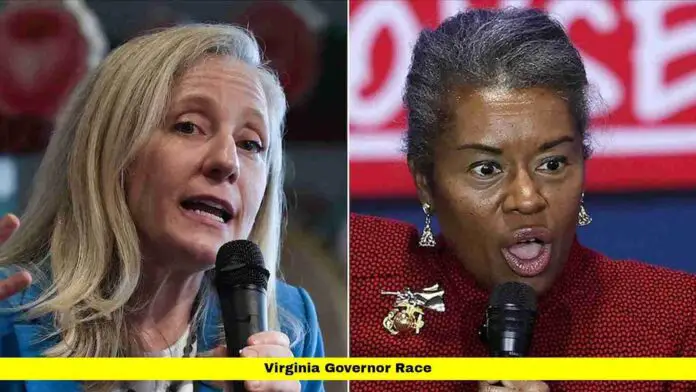
The Virginia governor race in 2025 has taken on a historic dimension as Democrat Abigail Spanberger and Republican Winsome Earle‑Sears prepare to go head-to-head in a high-stakes election on November 4 that could see the commonwealth elect its first female governor. Spanberger, a former member of Congress, and Earle-Sears, the current lieutenant governor and a veteran, represent sharply different visions for Virginia’s future—and their campaigns reflect both local priorities and national political currents.
Table of Contents
Candidate Profiles and Political Context
Abigail Spanberger’s candidacy in the Virginia governor race is notable for her background in national security, public service, and moderate Democratic politics. After serving three terms in the U.S. House of Representatives, Spanberger entered the race with an emphasis on bipartisanship, practical governance, and bridging divides. She has positioned herself as a candidate who can appeal to suburban moderates while still energizing the Democratic base.
Winsome Earle-Sears, in the Virginia governor race, brings a contrasting profile: immigrant roots, military service, and a conservative agenda focused on economic growth, public safety, and educational choice. As Virginia’s lieutenant governor, she has emphasized parental rights in schools, law-and-order policies, and maintaining the commonwealth’s low-tax business environment. Her candidacy also reflects the Republican Party’s efforts to broaden its appeal to women and minority voters.
The context for this election adds to its significance. With outgoing Governor Glenn Youngkin prohibited from seeking consecutive re-election under Virginia law, the field was open. Both major parties swiftly settled on their nominees—Spanberger unopposed in the Democratic primary and Earle-Sears the clear choice for Republicans. That clarity allowed both campaigns to move into the general election early, sharpening their messages and mobilizing resources.
Key Points Summary
- The Virginia governor race features two historic candidates vying for the state’s top office.
- Spanberger leads in recent polling and fundraising, while Earle-Sears emphasizes conservative economic and social themes.
- Suburban voters and turnout in critical regions may determine the outcome.
- The election—on November 4, 2025—could serve as a bellwether for national politics heading into 2026.
- In the race for Virginia governor, voters will choose which vision of the Commonwealth’s future will prevail.
Issues and Campaign Strategies
Economy and Jobs
In the Virginia governor race, both candidates make economic growth a cornerstone. Spanberger argues for investments in technology, infrastructure, and workforce training. She focuses on revitalizing rural jobs and mitigating cost-of-living pressures for families. Her campaign emphasizes that economic success must benefit all Virginians—not just urban centers.
Earle-Sears, by contrast, champions deregulation, tax relief, and maintaining Virginia’s status as a top business-friendly state. She argues that low taxes and strong property-rights protections will draw companies and investment, particularly in fast-growing ex-urban and rural areas. Her pitch resonates with voters who prioritize growth and conservative stewardship.
Education and Social Policy
Education is a major battleground in the Virginia governor race. Spanberger has called for increased educator support, expanded early-childhood programs, and stronger public-school funding, while also backing community-college access and job training. She frames education as a means of lifting working families.
Earle-Sears emphasizes parental empowerment and expanded school choice. She argues that Virginia’s education system should give families more options and less bureaucracy. Her message appeals to voters concerned with curriculum content, transparency, and local control.
Public Safety and Crime
In this Virginia governor race, public safety has emerged as a high-profile topic. Earle-Sears takes a hard-line stance: tougher penalties, increased policing, and stronger enforcement of laws. She positions her campaign as responsive to voters concerned about violent crime, drug trafficking, and law-and-order issues.
Spanberger’s approach blends accountability and community investment. She supports maintaining strong policing while also funding crime-prevention programs and addressing root causes such as mental-health services and addiction. Her appeal lies with voters who favour a balanced approach.
Demographics and Voter Mobilization
Suburban and ex-urban regions are central to the Virginia governor race outcome. Spanberger leads significantly in polling across Northern Virginia and suburban Richmond, where demographic shifts and education priorities align with her message. Earle-Sears, meanwhile, is focused on turning out rural voters, evangelical communities, and growth-area exurbs.
Both campaigns are executing intensive ground games. Spanberger has thrown resources into early-voting mobilization and outreach to younger and minority voters. Earle-Sears is banking on strong turnout in conservative strongholds and greater traction with women and small business owners.
Polling, Fundraising, and Campaign Dynamics
Recent polling in the Virginia governor race shows Spanberger holding double-digit leads. For example, a survey by the Wilder School at VCU found Spanberger ahead 49% to 42%. Another Emerson College poll reported a 55% to 44% margin. These leads reflect both her fundraising edge and momentum in key regions.
Fundraising data underscores her advantage: one record shows Spanberger raising over $27 million and retaining more than $15 million in cash-on-hand, nearly doubling her opponent’s war-chest. The financial distinction allows her campaign to run robust advertising, digital outreach, and field operations across the state.
Despite these metrics, the Virginia governor race remains competitive. Earle-Sears has the advantage of party alignment in rural districts and the ability to frame the contest as a choice between economic freedom and liberal governance. Her campaign continues to receive national Republican backing and grassroots momentum.
What to Watch: Voter Turnout and Election Day Trends
Election day in the Virginia governor race is scheduled for November 4, 2025. Early voting has been underway for weeks, and both campaigns are tracking the composition of their vote-casts. Key metrics include:
- Suburban turnout in Fairfax, Loudoun, Henrico, and Prince William counties.
- Performance in the fast-growing Hampton Roads and Richmond suburbs.
- Rural and ex-urban voter engagement, where Republican strength remains significant.
- Youth and minority turnout, especially in districts shifting Democratic in recent years.
- Early-voting trends vs. Election-Day turnout—differences may reveal voter enthusiasm.
With the polling lead favouring Spanberger, the dynamics of turnout will become increasingly important. If Earle-Sears underperforms in urban and suburban areas, she will need to exceed expectations elsewhere to close the gap.
Implications for State and National Politics
The Virginia governor race carries implications far beyond state lines. It serves as one of the first major statewide elections of the 2025 cycle and may foreshadow party trajectories ahead of 2026. A Spanberger victory would signal Democratic strength in suburban battlegrounds and reinforce the party’s appeal to moderate voters. A win for Earle-Sears would demonstrate continued GOP strength in states with growing urbanization and demographic change, while elevating a woman and minority voice to executive leadership.
In addition, the race reflects a generational moment: Virginia has never elected a female governor, and both leading candidates are women. That alone elevates the contest’s national significance and media interest.
Conclusion
The Virginia governor race is shaping up to be one of the most consequential contests in recent memory for the commonwealth. With two charismatic, historic candidates leading the charge, policy differences rooted in real-world concerns, and national political reverberations in play, Virginia voters will determine the state’s next chapter.
Whether you lean toward Spanberger’s message of moderate progress and inclusive growth or Earle-Sears’ agenda of conservative reform and economic resilience, your vote will matter. Make a plan to cast your ballot, stay informed on the final campaign developments, and above all—let your voice be heard in this landmark election.

