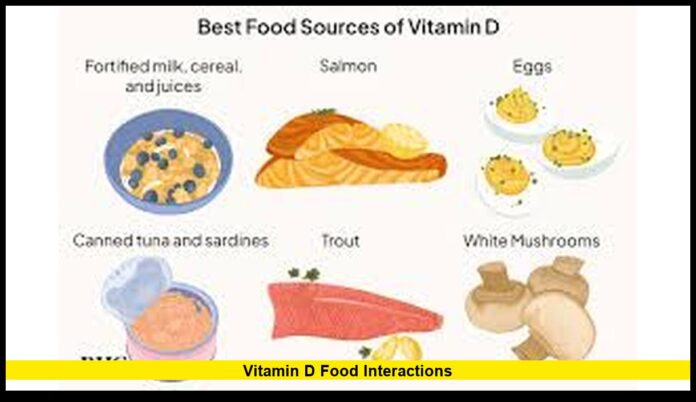
Vitamin D food interactions continue to gain national attention as new research clarifies how diet choices affect the body’s ability to absorb and use vitamin D. In recent updates throughout 2025, nutrition professionals have emphasized that certain foods support vitamin D absorption, while other combinations may reduce its effectiveness. That makes understanding these interactions essential for anyone relying on diet or supplements to maintain healthy levels.
Table of Contents
Why Food Matters for Vitamin D Absorption
Vitamin D is a fat-soluble vitamin. This means the body absorbs it best when it is taken with foods that contain dietary fat. Studies over the past decade show that taking vitamin D with a meal that includes healthy fats significantly increases blood levels compared to taking it on an empty stomach or with a low-fat meal.
Foods that support absorption include:
- Avocado
- Full-fat dairy
- Nuts and seeds
- Eggs
- Fatty fish such as salmon or sardines
Many dietitians now encourage pairing both supplements and fortified foods with a meal that contains some fat to enhance absorption and support stable vitamin D levels.
Foods and Nutrients That May Interfere With Vitamin D
While many foods help vitamin D work more efficiently, some combinations may weaken absorption or reduce its benefits. These interactions do not usually pose health risks but can make supplementation less effective.
Low-Fat or Fat-Free Meals
Meals without fat do not support optimal vitamin D absorption. People who take a vitamin D supplement with fat-free yogurt, fat-free milk, or plain fruit may not absorb the full dose.
High-Fiber Meals
Meals high in fiber, such as those containing legumes, bran, whole grains, or seeds, may bind to minerals in the digestive tract. Since vitamin D helps regulate calcium use in the body, high-fiber meals can indirectly affect how well vitamin D supports calcium absorption.
Foods Containing Phytates or Oxalates
Phytates, found in grains, nuts, and legumes, and oxalates, found in foods like spinach and certain leafy greens, can interfere with mineral absorption. These compounds do not directly block vitamin D but may limit calcium uptake, reducing vitamin D’s overall effectiveness.
Very High Calcium Intake at the Same Time
Calcium and vitamin D work together, but taking very large amounts of calcium at the same time as a vitamin D supplement may affect absorption balance. Many nutrition experts now recommend spacing out high-dose calcium supplements and vitamin D when possible.
Other Fat-Soluble Vitamins in Large Quantities
Vitamins A and K are also fat-soluble, and high doses taken at the same time as vitamin D may compete for absorption pathways. Moderate amounts found in food are not a concern, but megadose supplements may interfere.
Multiple Mineral Supplements Taken Together
Iron, magnesium, and zinc often compete for absorption. When taken in high doses at the same time as vitamin D, these minerals may reduce efficiency. Spacing out supplement timing can prevent this interaction.
Food Fortification Trends and What They Mean for Consumers
Vitamin D fortification has expanded in recent years, and 2025 brought sustained interest in improving vitamin D access through everyday foods. Dairy products, certain beverages, cereals, and yogurts in the U.S. continue to include regulated vitamin D levels. New research also examined fortifying foods such as sugar to evaluate stability and absorption. Early findings show that vitamin D can remain effective when added to various foods, although absorption still depends heavily on the fat content of the meal.
Fortified foods remain a useful way for many Americans to support vitamin D intake. Yet experts continue to stress that how these foods are consumed matters more than ever. Combining fortified products with healthy fats offers better absorption than consuming them alone.
Best Practices for U.S. Adults Managing Vitamin D Intake
Below are practical, research-supported guidelines to help optimize intake and minimize interaction issues:
1. Pair Vitamin D With Healthy Fats
Take vitamin D supplements with meals that include sources of beneficial fats. This simple adjustment can significantly boost absorption.
2. Avoid Taking Supplements With High-Fiber Meals
Fiber is healthy, but when taken with vitamin D supplements, it may reduce absorption efficiency. Consider separating supplement timing from fiber-heavy meals.
3. Space Out Multiple Supplements
If you take calcium, magnesium, zinc, iron, vitamin A, or vitamin K, spacing them out can prevent competition during digestion.
4. Check Fortified Food Labels
Vitamin D is added to many dairy and non-dairy products. These foods can significantly boost daily intake when eaten with meals that include fat.
5. Consider Digestion Factors
People with conditions that affect fat absorption or those taking medications that alter fat metabolism may need to be especially aware of how they take vitamin D.
6. Choose Vitamin D3 When Possible
Vitamin D3 (cholecalciferol) tends to raise and maintain vitamin D levels more effectively for many adults than vitamin D2.
Understanding Vitamin D in Everyday Eating
Vitamin D intake is not only about the supplement you swallow or the fortified product you choose. The context of your meal — the fats, fibers, minerals, and nutrients consumed alongside it — determines how much your body can actually use.
A few real-world examples help illustrate this:
- Taking a vitamin D pill with fat-free yogurt or plain fruit may limit absorption.
- Drinking fortified milk with a meal containing eggs or avocado helps your body use more of the vitamin D.
- Eating leafy greens high in oxalates, paired with a vitamin D supplement, may not provide the best support for mineral absorption.
- Swallowing multiple supplements together can crowd the digestive process and reduce efficiency.
As nutrition science evolves, the message has become clearer: vitamin D works best as part of a thoughtful meal plan, not in isolation.
Why Vitamin D Food Interactions Matter More in 2025
Growing attention on bone health, immune support, and chronic disease prevention has made vitamin D one of the most closely studied nutrients in the U.S. As research progresses, experts now emphasize interactions more than ever before. Many people assume vitamin D supplements work the same way regardless of food intake, but studies repeatedly show that diet determines how much benefit the body receives.
With food fortification increasing and more Americans taking vitamin D supplements year-round, understanding how foods influence vitamin D absorption helps ensure better health outcomes, fewer deficiencies, and more effective use of everyday nutrition.
Conclusion
Vitamin D is essential, but its effectiveness depends on what you eat with it. By understanding vitamin D food interactions and making small adjustments to meal timing and supplement habits, U.S. consumers can improve absorption and support better long-term health.
Share your thoughts or experiences in the comments and let others learn how you manage vitamin D in your daily routine.

