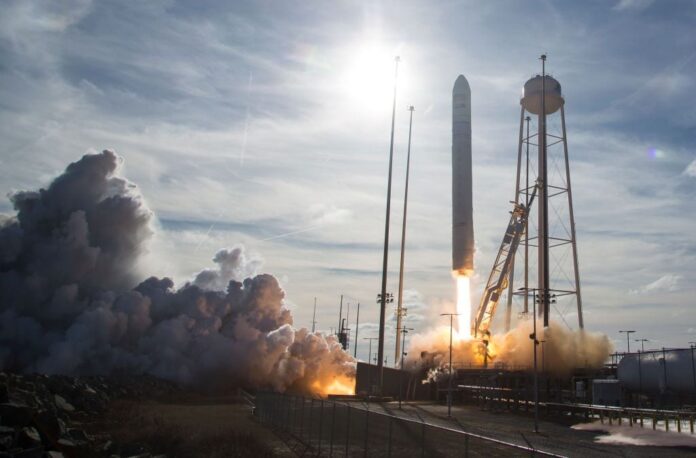
The wallops rocket launch once again captured the attention of skywatchers and scientists as NASA successfully sent up a trio of sounding rockets late on August 25 into the early hours of August 26, 2025. The mission, designed to probe Earth’s upper atmosphere, created a brief but spectacular sight across the Mid-Atlantic region, where residents reported bright streaks shooting skyward for several seconds after liftoff.
This launch was part of the ongoing TOMEX+ project, which is focused on studying turbulence and wind patterns at the mesopause—the coldest and most mysterious boundary of Earth’s atmosphere, located roughly 53 to 65 miles above the surface. The flight window ran from 10 p.m. to 3 a.m. EDT, with rockets launched within that timeframe when conditions allowed.
Table of Contents
Mission Goals and Highlights
Key Points Summary
✨ Quick facts at a glance for readers on the move
- Mission Name: TOMEX+ (Turbulent Oxygen Mixing Experiment Plus)
- Launch Window: August 25–26, 2025, between 10 p.m. and 3 a.m. EDT
- Target Region: Mesopause at about 53–65 miles altitude
- Science Focus: Measuring turbulence and sodium layers in the atmosphere
- Visibility: Rockets visible for 10–30 seconds across parts of the Mid-Atlantic
Probing the Sky’s Hidden Boundary
The wallops rocket launch carried instruments built to illuminate the sodium layer of the atmosphere using specialized lidar beams. These instruments help trace air movement, allowing scientists to map turbulence and track how energy moves through this upper boundary region.
Unlike satellites, which orbit above, or balloons, which float far below, sounding rockets are uniquely positioned to study this “in-between” layer. For decades, Wallops Flight Facility has been a hub for these short but high-impact scientific missions, providing crucial data that influences our understanding of space weather and satellite operations.
A Spectacle for the Public
Though scientific goals drive the launches, the event also delivered a memorable viewing opportunity. Residents from Pennsylvania to New Jersey were advised to look toward the southeast sky. Depending on distance from the Virginia launch site, the rockets became visible within seconds of liftoff. For many, the sight lasted less than half a minute—just enough time to witness streaks of light tearing through the night.
NASA streamed the mission live, with coverage beginning five minutes before the launch window opened. This ensured that even those unable to see the event in person could still take part virtually. Enthusiasts gathered online, watching as the rockets lifted off against the backdrop of a clear August night.
Why This Launch Matters
The TOMEX+ mission is significant for several reasons:
- Scientific Discovery: By analyzing turbulence in the mesopause, researchers can better predict satellite drag and protect communication systems from sudden atmospheric shifts.
- Space Weather Research: Understanding how energy moves through this region is essential for predicting geomagnetic storms that affect Earth’s technology.
- Public Engagement: Events like the wallops rocket launch draw new generations of science enthusiasts, sparking curiosity about space and atmospheric research.
- Operational Readiness: The mission demonstrates NASA’s flexibility, with backup dates available through early September to ensure scientific goals are met.
What Comes Next
Although this mission is complete, scientists will now spend months analyzing the data collected from the flights. The information gathered about winds, turbulence, and sodium activity in the mesopause will enhance models that predict satellite behavior and improve understanding of Earth’s connection to space.
Additional launches may be scheduled if further atmospheric conditions need to be studied within the backup window. For now, the data collected from this successful flight stands as another achievement for Wallops and its role in advancing atmospheric science.
As the wallops rocket launch fades from the night sky, the insights it leaves behind will shine for years to come. Did you manage to catch a glimpse of the streaking rockets? Share your experience or let us know what excites you most about these atmospheric missions.

