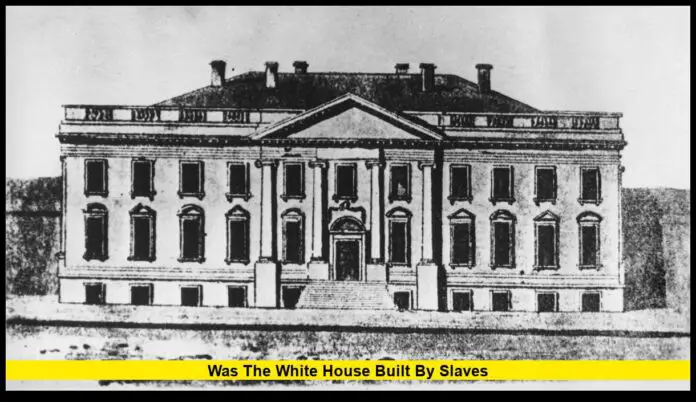
The question was the White House built by slaves has been asked by millions of Americans — and the answer is both simple and deeply significant: yes, enslaved African Americans helped build the White House.
This fact reveals an important, often-overlooked part of U.S. history. The grand home that stands today as a symbol of freedom, democracy, and leadership was partly constructed by people who themselves were denied freedom.
Let’s explore how it happened, who was involved, and why this truth still matters for every American today.
Table of Contents
The Beginning: How the White House Was Born
After the American Revolution, the new nation needed a capital. In 1790, President George Washington chose the location for the federal city — what would become Washington, D.C. Construction of the President’s House, now known as the White House, began in 1792.
The man hired to design it was James Hoban, an Irish-born architect. But when work began, Washington quickly faced a problem: the new capital had too few skilled workers. To finish the ambitious project, he turned to enslaved labor.
Enslaved African Americans were hired from their owners in Maryland and Virginia to work alongside free white laborers and immigrants from Europe. Their labor provided the backbone of the workforce that built the White House.
The Role of Enslaved Workers in Building the White House
The White House didn’t rise from the ground through machinery or modern equipment — it was built by hand, stone by stone, brick by brick.
Enslaved laborers worked tirelessly in difficult and often dangerous conditions. Their contributions included:
- Quarrying sandstone from the Aquia Creek quarry in Virginia.
- Cutting, hauling, and shaping stone blocks for the building’s foundation and walls.
- Sawing timber, mixing mortar, and constructing wooden frames.
- Working as skilled carpenters, masons, and painters.
- Transporting materials by hand and animal cart across miles of uneven terrain.
Some enslaved men were even listed by name in payroll documents from the 1790s — people like Ben, Harry, Peter, and Daniel — though the wages paid for their work went to their enslavers, not to them.
These individuals never earned freedom or recognition in their lifetime. Yet their craftsmanship and strength helped shape one of the most iconic buildings in the world.
Who Else Worked on the White House
While enslaved African Americans provided crucial labor, they weren’t the only workers on the project. The workforce also included:
- Free African Americans, some of whom earned direct wages for their skills.
- European immigrants, mainly Irish and Scottish masons, stonecutters, and carpenters.
- Local white laborers from nearby states who worked for pay.
This blend of free and enslaved laborers reflected the complicated realities of America in the late 18th century — a nation built on ideals of liberty, yet dependent on slavery for its growth.
A House of Freedom Built on Bondage
There’s an undeniable irony in the fact that the White House — the ultimate symbol of American freedom — was built in part by people who had none.
When President John Adams moved into the unfinished building in 1800, enslaved people were still working there. They helped complete construction, maintain the grounds, and serve the president and his family.
Even after the nation began to grow and prosper, enslaved people continued to labor in and around the White House for decades. They cooked meals, cleaned rooms, and tended gardens — their hands shaping not only the home but also its daily life.
It wasn’t until 1862, during President Abraham Lincoln’s term, that slavery was officially abolished in Washington, D.C.
Rebuilding After the War of 1812
In 1814, the British army invaded Washington and burned the White House during the War of 1812. When reconstruction began soon after, enslaved labor was again used to restore the building.
Once more, they quarried stone, cut lumber, and laid bricks — rebuilding the same walls they had built the first time. Their labor, strength, and skill literally rebuilt the symbol of the U.S. presidency from ashes.
Yet history forgot their names for centuries.
Recognizing the Forgotten Builders
For much of American history, textbooks and tours of the White House ignored the enslaved workers who built it. But in recent decades, historians and researchers have worked hard to uncover the truth.
Documents, payment records, and personal accounts now confirm that enslaved people were vital to the construction not just of the White House but also of the U.S. Capitol and other early federal buildings.
In the 21st century, this truth is finally being recognized. Visitors to the White House can now learn about the enslaved men and women who built and maintained the home of the president.
Their story has become an essential part of understanding America’s history — not as a story of shame, but as one of resilience, contribution, and truth.
A Defining Moment in Modern History
This story came into the national spotlight in 2016 when First Lady Michelle Obama reflected on her family’s historic role as the first Black family to live in the White House.
She said, “I wake up every morning in a house that was built by slaves.”
Her statement resonated deeply with Americans. It was not only a reminder of how far the nation has come but also of how deeply its roots are connected to the struggles of those who came before.
That moment encouraged millions to learn more about this chapter of history — and to recognize that the story of enslaved Americans is inseparable from the story of America itself.
Understanding What “Built by Slaves” Truly Means
When historians say that the White House was “built by slaves,” it doesn’t mean enslaved laborers built it alone. It means:
- They were a crucial part of the workforce that made the building possible.
- They provided both skilled and unskilled labor, often under brutal conditions.
- Their work was unpaid, as their wages were given to their enslavers.
- Their role was largely erased from public memory for more than 200 years.
The phrase “built by slaves” captures both the injustice and the resilience of the people whose labor built one of the world’s most recognizable buildings.
Why This History Matters Today
Understanding that enslaved people helped build the White House is not about rewriting history — it’s about completing it.
This truth matters because it:
- Honors the contributions of forgotten workers. Their hands helped shape the home of every U.S. president.
- Shows how intertwined slavery was with America’s early economy and government.
- Reminds us of progress. From a home built by enslaved people to one occupied by a Black president, America’s story continues to evolve.
- Encourages honesty. Real patriotism means acknowledging both our triumphs and our flaws.
The White House stands today not just as a symbol of leadership but as a testament to the strength, endurance, and humanity of those who built it under unimaginable conditions.
Final Reflection
So, was the White House built by slaves? Yes, it was — at least in part. Enslaved African Americans helped lay its foundations, build its walls, and shape its legacy.
Their story is a powerful reminder that America’s greatness comes not just from its ideals, but from the perseverance of those who labored — often unseen — to bring those ideals to life.
Recognizing their role does not diminish the White House’s meaning; it deepens it. It makes the building not only a symbol of power but also of progress, truth, and resilience.
What does this history mean to you? Share your thoughts below and join the conversation — because remembering the past helps us build a more honest and united future.

