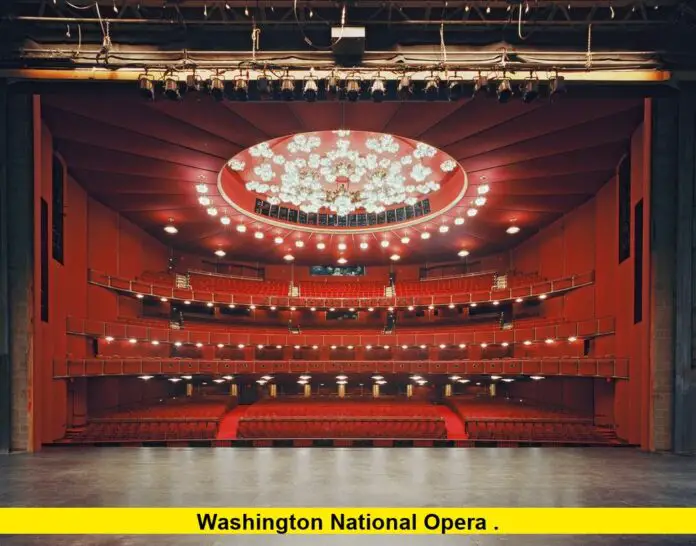
The washington national opera has officially confirmed a major turning point in its history, ending its decades-long residency at the Kennedy Center and preparing to operate as an independent nonprofit opera company in Washington, D.C. The announcement, made this week, brings an end to a partnership that shaped opera in the nation’s capital for more than half a century and signals a new direction for one of America’s most prominent cultural institutions.
This decision does not represent a closure or pause in activity. Instead, it reflects a strategic shift designed to preserve the opera’s artistic mission while adapting to changing financial and operational realities. Performances will continue in Washington, D.C., though future venues and programming formats will differ from those associated with the Kennedy Center era.
Table of Contents
A defining moment in American opera history
For generations of audiences, the Washington National Opera has been closely associated with the Opera House at the Kennedy Center. Since the early 1970s, the company presented major works from the classical canon alongside contemporary productions, building a national reputation for artistic excellence.
Its designation as the nation’s official opera company elevated its profile well beyond the District of Columbia. The company regularly attracted international artists, conducted educational outreach programs, and staged productions that reached audiences across the country.
The end of this residency therefore represents more than a logistical change. It closes a chapter that defined opera in Washington for over five decades.
Why the separation became unavoidable
The decision to leave the Kennedy Center followed extensive discussions between opera leadership and the center’s administration. Over time, differences emerged in how large-scale productions should be funded and managed.
Recent operational changes at the Kennedy Center introduced stricter financial requirements for resident organizations, including expectations that productions be fully funded before going on stage. Opera companies traditionally rely on a combination of ticket sales, donations, grants, and long-term fundraising rather than complete upfront financing. This structural mismatch created ongoing challenges for planning and sustainability.
Declining ticket sales in recent seasons and reduced donor participation added further strain. Opera productions involve significant costs, from orchestras and choruses to staging, costumes, and technical crews. Without flexibility in funding timelines, leadership determined that continuing under the existing framework risked the long-term health of the organization.
After careful review, the board voted to pursue independence as the most responsible path forward.
What independence means for future seasons
Operating independently allows the company to regain control over scheduling, budgeting, and artistic planning. While specific venues have not yet been announced, leadership has confirmed that performances will remain in Washington, D.C.
Future seasons are expected to reflect a more flexible approach. This may include shorter performance runs, varied production scales, and partnerships with alternative venues suited to different types of works. Smaller productions and innovative staging concepts could play a larger role as the company adapts to its new structure.
Importantly, independence also opens opportunities to reach new audiences. Performing in different spaces across the city may help the opera connect with communities that have not traditionally attended performances at the Kennedy Center.
Impact on artists, staff, and audiences
For singers, musicians, stage professionals, and administrative staff, the transition brings both uncertainty and opportunity. Leadership has stated that preserving jobs and maintaining artistic standards remain priorities during the shift.
Artists who have built long-standing relationships with the company are expected to remain part of its future, though contracts and production schedules may evolve. The opera’s commitment to American and international talent remains unchanged.
Audiences can expect adjustments as well. Ticketing systems, performance locations, and subscription models will likely change. However, the company has emphasized that its goal is continuity of quality, not disruption for its loyal supporters.
Reaction across the cultural community
The announcement has resonated throughout the U.S. arts community. Cultural leaders recognize the move as part of a broader transformation affecting major performing arts organizations nationwide.
Rising production costs, changing audience habits, and shifts in philanthropic giving have forced institutions to rethink traditional models. The opera’s decision is widely viewed as a proactive step rather than a retreat, aimed at ensuring long-term survival in a challenging environment.
Many observers see the transition as a test case for how legacy arts organizations can adapt without sacrificing artistic integrity.
The Kennedy Center after the departure
The Kennedy Center will continue to host opera and large-scale productions, though its programming approach will change without a resident opera company. The center plans to present a mix of domestic and international productions under new financial models designed to manage risk and broaden its offerings.
While the end of the residency marks a significant loss for the venue’s historical identity, officials have acknowledged the importance of adjusting to current economic realities. Both organizations have described the separation as respectful and cooperative, with the shared goal of preserving access to high-quality performing arts.
A legacy that continues beyond one building
Although the opera’s physical home is changing, its cultural legacy remains intact. The company’s history includes landmark performances, influential artistic leadership, and a lasting impact on American opera.
Educational initiatives, community programs, and national collaborations are expected to continue as part of the independent model. By reimagining how and where opera is presented, the organization aims to remain relevant to modern audiences while honoring its traditions.
The name and mission that audiences recognize will move forward, even as the setting evolves.
What comes next
In the months ahead, announcements regarding venues, season schedules, and ticketing details are expected. Leadership has pledged clear communication as plans are finalized.
The transition will not be instantaneous, but it is already underway. With independence comes the challenge of rebuilding operational systems, strengthening donor relationships, and redefining public presence. At the same time, it offers renewed creative freedom.
For supporters of opera in Washington and beyond, this moment represents change—but also possibility.
As this historic transition unfolds, readers are encouraged to share their perspectives and stay tuned for the next chapter in the story of American opera.

