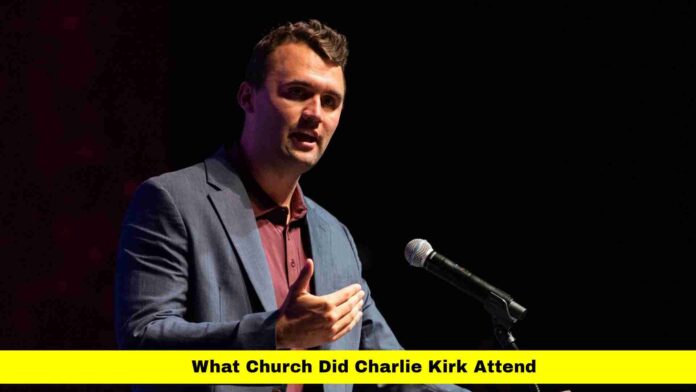
Many have asked what church did Charlie Kirk attend following his passing in September 2025. His religious journey has drawn significant attention, not only because of his role as a political commentator but also due to the influence faith had on his life and public message. From his early years in traditional Protestant churches to his close ties with evangelical congregations, and later his steps toward Catholic worship, Kirk’s church life reflects a spiritual path that evolved over time.
Table of Contents
Early Church Roots
Charlie Kirk grew up in the suburbs of Chicago in a Presbyterian household, where he was exposed early to traditional Protestant practices such as structured worship, biblical teaching, and strong community values. This environment gave him a foundational understanding of Christianity and helped shape his early moral outlook.
However, during the early stages of his public career, faith was not the primary focus of his identity. Kirk became widely known for his involvement in conservative politics, particularly through youth activism, and his messaging at that time centered more on economic and political issues than religion.
Over time, this began to change. In the late 2010s and into the 2020s, he increasingly embraced a more visible Christian identity, often speaking about faith alongside politics and engaging more directly with evangelical audiences. By the mid-2020s, Christianity had become a more central part of how he presented himself publicly.
Following events in 2025, discussions about Kirk placed even greater emphasis on his religious beliefs. Supporters and commentators alike highlighted his faith as a defining element of his life and influence, showing how his early church upbringing ultimately became more significant in shaping his long-term legacy.
Shift Toward Evangelical Churches
As Kirk entered his adult life and political career, his faith practices shifted significantly toward evangelical communities. He became closely associated with evangelical pastors and leaders who emphasized Biblical teaching, personal responsibility, and community outreach.
One of his strongest connections was with Godspeak Calvary Chapel in Thousand Oaks, California. This church, known for its evangelical values, became a spiritual anchor for Kirk. He developed a close relationship with Pastor Rob McCoy, who was often referred to as his pastor in later years.
Through this connection, Kirk found both personal guidance and a platform for his message that intertwined faith, culture, and politics.
Partnership With Dream City Church
Another major chapter in Charlie Kirk’s religious life involved his frequent attendance and speaking engagements at Dream City Church in Phoenix, Arizona. This Pentecostal congregation emphasized energetic worship, charismatic teaching, and community activism.
Kirk often took part in events at this church, including the well-known “Freedom Night in America” gatherings. These events combined faith with civic discussion and drew large audiences. His relationship with Dream City highlighted his strong appeal within Pentecostal and evangelical communities nationwide.
Turning Point Faith and Church Engagement
Charlie Kirk was not only a church attendee but also actively worked to connect faith with public life. He helped launch Turning Point Faith, a faith-focused initiative tied to Turning Point USA, aimed at encouraging Christians across the United States to become more engaged in cultural and political conversations.
Through this initiative, Kirk sought to mobilize church communities by framing civic participation as an extension of Christian responsibility. The program focused on equipping pastors, church leaders, and congregants with resources and messaging that aligned political involvement with faith-based values.
This effort significantly deepened his relationship with local congregations. Kirk frequently spoke at churches, conferences, and faith events across denominations, emphasizing issues such as religious freedom, family values, and the role of Christianity in American society. His approach blended political advocacy with spiritual messaging, making his outreach distinct from traditional political organizing.
In recent years, especially leading up to 2025, Turning Point Faith became a more visible part of his broader platform. It reflected his evolving identity—where Christianity was no longer just a personal belief system but a central pillar of his public mission.
Steps Toward Catholic Worship
In the final period of his life, Kirk also began attending Catholic Mass with his wife and children, who were Catholic. Reports from close friends and pastors noted that he had expressed serious interest in formally converting to Catholicism. He spoke warmly about his experiences at Mass and the impact of Catholic traditions on his family life.
Though he had not publicly confirmed a formal conversion, his closeness to Catholic worship was seen as one of the final chapters in his spiritual journey. This step symbolized both his respect for tradition and his desire to worship alongside his family.
Who Was His Pastor?
Pastor Rob McCoy remained the most central spiritual figure in Kirk’s later life. As the pastor of Godspeak Calvary Chapel, McCoy provided personal mentorship and was deeply involved in Kirk’s faith-based projects.
At memorial services after Kirk’s passing, McCoy reflected on his role as Kirk’s pastor and emphasized the depth of Kirk’s Christian faith. Their partnership through Turning Point Faith made McCoy not only a pastor but also a collaborator in shaping religious and cultural discussions nationwide.
Summary of Kirk’s Church Connections
Charlie Kirk’s church attendance cannot be tied to just one congregation throughout his life. Instead, it reflects a spiritual journey across different traditions:
- Presbyterian upbringing in his youth.
- Evangelical engagement as an adult, particularly at Godspeak Calvary Chapel.
- Pentecostal influence through Dream City Church in Phoenix.
- Catholic Mass attendance with his family in his final days.
This mix shows how Kirk’s spiritual path evolved, adapting to both personal growth and family life.
Why His Church Attendance Matters
The question of what church did Charlie Kirk attend carries meaning beyond curiosity. His church life influenced his public speaking, his activism, and his legacy. It also reflected broader themes in American Christianity today, including:
- The blending of evangelical faith with political advocacy.
- The role of charismatic churches in shaping cultural conversations.
- The importance of family in guiding personal faith decisions.
Kirk’s life illustrates how church attendance can be both a private act of devotion and a public statement of values.
Faith and Legacy
As reflections on Charlie Kirk’s legacy continue, his church attendance remains a key part of the story. Supporters view him as a man who stood firmly for his beliefs, rooted in Christian teaching. Others note the way his faith journey highlighted the diversity within American Christianity.
From Presbyterian beginnings to evangelical activism, Pentecostal partnerships, and Catholic connections, Kirk’s spiritual path was as dynamic as his public career. It showed an openness to engage with different traditions while maintaining a strong Christian identity.
Closing Thoughts
So, what church did Charlie Kirk attend? The answer is layered. He grew up Presbyterian, embraced evangelical churches in adulthood, partnered with Pentecostal leaders, and later attended Catholic Mass with his family. His journey across these traditions underscores both the complexity and the depth of his faith life.
Kirk’s story reminds us that faith is rarely static—it evolves, adapts, and shapes the way people live and lead. His connection to multiple churches highlights a legacy of belief that will continue to be discussed for years to come.
What are your thoughts on how church communities influence personal and public life? Share your perspective in the comments and join the conversation.

