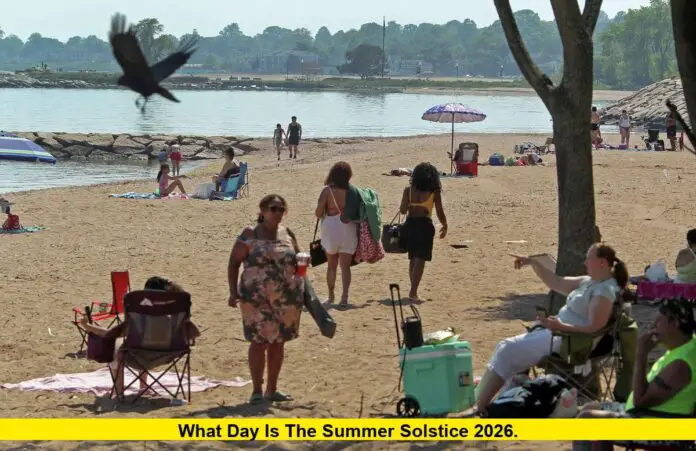
The summer solstice is one of the most significant astronomical events of the year, marking the official start of summer in the Northern Hemisphere. Every year, people around the world look forward to this date because it brings the longest period of daylight and the shortest night of the year.
Table of Contents
What Day Is the Summer Solstice 2026?
In 2026, the summer solstice occurs on Sunday, June 21, 2026.
This is the day when the Earth’s Northern Hemisphere is tilted most directly toward the Sun. As a result, the Sun reaches its highest point in the sky at noon, providing the maximum amount of daylight for locations north of the equator.
Why Does the Summer Solstice Happen?
The Earth orbits the Sun while tilted at an angle of approximately 23.5 degrees. Throughout the year, this tilt causes different parts of the planet to receive varying amounts of sunlight.
During the summer solstice:
- The Northern Hemisphere is tilted closest to the Sun.
- Daylight hours reach their annual maximum.
- The Sun appears at its highest position in the sky.
- The astronomical summer season officially begins.
After the solstice, daylight hours gradually begin to decrease until the autumn equinox in September.
How Much Daylight Is There on the Summer Solstice?
The exact amount of daylight depends on your location. Areas farther north experience longer daylight periods than locations closer to the equator.
For example:
- Northern U.S. states may see more than 15 hours of daylight.
- Southern states typically receive around 14 hours of daylight.
- Regions near the Arctic Circle can experience nearly 24 hours of sunlight.
This makes the summer solstice the brightest day of the year for many people in the Northern Hemisphere.
How Is the Summer Solstice Celebrated?
Many cultures have celebrated the summer solstice for thousands of years. Common ways people observe the day include:
- Watching the sunrise or sunset.
- Attending outdoor festivals and community events.
- Visiting historical sites aligned with the Sun.
- Spending time hiking, camping, or enjoying nature.
- Hosting seasonal gatherings with family and friends.
The event symbolizes warmth, abundance, and the peak of the growing season in many traditions.
Interesting Facts About the Summer Solstice
- It is the longest day of the year in terms of daylight, not the longest 24-hour period.
- The word “solstice” comes from Latin and means “Sun standing still.”
- The summer solstice occurs between June 20 and June 22 each year.
- The Southern Hemisphere experiences its winter solstice at the same time.
- Ancient civilizations used the solstice to track seasons and agricultural cycles.
Looking Ahead After the Solstice
Although June 21 marks the longest day of the year, summer is just beginning. Many of the warmest temperatures of the season typically arrive weeks after the solstice because land and oceans continue absorbing heat throughout the summer months.
Whether you’re planning outdoor adventures, vacations, or simply enjoying extra daylight, the summer solstice serves as a reminder of the Earth’s remarkable relationship with the Sun.
When the summer solstice arrives on June 21, 2026, take a moment to enjoy the year’s longest day—and share in the comments how you plan to celebrate the start of summer!

