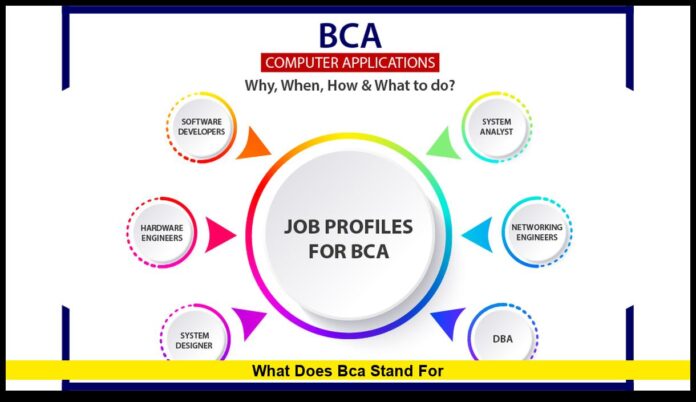
In today’s fast-paced digital economy, students and professionals often wonder, what does BCA stand for? The term BCA stands for Bachelor of Computer Applications, an undergraduate degree program that focuses on computer science fundamentals, software development, and IT applications. As technology continues to shape every aspect of modern life, the BCA degree has become one of the most practical and future-oriented academic paths available.
Table of Contents
Understanding What BCA Means
The Bachelor of Computer Applications (BCA) is an undergraduate degree designed for students who want to build a strong foundation in computer applications and software engineering. It serves as an entry point into the world of technology, combining theory with hands-on learning.
In the U.S., while the title “BCA” itself is more commonly used in regions like South Asia, the program content mirrors that of a Bachelor’s in Computer Science or Information Technology. The degree typically spans three to four years, depending on the institution and country, and emphasizes programming, system design, data management, and real-world software projects.
BCA Program Structure and Curriculum Overview
A BCA program is structured to provide comprehensive exposure to both technical and analytical aspects of computer science. The curriculum usually includes core subjects, elective modules, and project-based assessments.
Core Subjects Typically Include:
- Programming Languages: C, C++, Java, Python, and JavaScript
- Database Management Systems (DBMS): MySQL, Oracle, MongoDB
- Computer Networks and Security: Network design, routing, and ethical hacking fundamentals
- Operating Systems: Windows, Linux, and Unix environments
- Web and Mobile App Development: HTML, CSS, React, Flutter
- Software Engineering: System design, testing, and project lifecycle management
- Artificial Intelligence and Data Analytics: Introduction to AI, machine learning, and data visualization tools
In addition, many universities incorporate capstone projects and internships, allowing students to gain real-world experience before entering the workforce.
Skills Acquired Through a BCA Degree
A BCA graduate develops a blend of technical expertise and soft skills essential for today’s job market. Some of the key abilities include:
- Strong programming proficiency in multiple languages
- In-depth understanding of database and network systems
- Analytical and problem-solving abilities
- Familiarity with software development methodologies
- Effective communication and teamwork skills
- Adaptability to evolving technologies
These skills make BCA graduates highly employable in a variety of sectors beyond traditional IT roles — including finance, healthcare, manufacturing, and e-commerce.
Career Opportunities After BCA
The career scope for BCA graduates continues to expand as industries integrate more digital solutions. In 2026, the U.S. job market for computer-related occupations is projected to grow faster than the average for all professions, driven by the demand for skilled developers, analysts, and cybersecurity experts.
Top Career Roles for BCA Graduates:
- Software Developer / Engineer: Design, code, and maintain software applications across industries.
- Web Developer: Build and manage responsive, dynamic websites for businesses and organizations.
- Data Analyst: Collect, interpret, and visualize data to support business decisions.
- Systems Administrator: Oversee and maintain IT infrastructure, networks, and systems.
- UI/UX Designer: Develop user-centered designs and improve application usability.
- Cybersecurity Specialist: Protect systems from online threats and ensure data integrity.
- Cloud Computing Engineer: Manage virtual environments, data storage, and remote computing platforms.
The flexibility of a BCA degree also enables graduates to transition into freelancing, entrepreneurship, or remote global work opportunities.
Higher Studies After BCA
Many students pursue advanced degrees after completing BCA to deepen their knowledge or shift toward specialized roles. Common pathways include:
- Master of Computer Applications (MCA): A direct academic progression focusing on advanced programming and system architecture.
- MBA in Information Technology: Ideal for students interested in combining tech and business leadership.
- M.Sc. in Data Science or Artificial Intelligence: Tailored for those seeking expertise in emerging technologies.
- Certification Programs: Such as AWS, Microsoft Azure, or CompTIA, to gain domain-specific credentials.
These additional qualifications can help professionals climb the corporate ladder or specialize in high-demand technology niches.
How BCA Differs from a Computer Science Degree
At first glance, the Bachelor of Computer Applications (BCA) and the Bachelor of Science in Computer Science (CS) may seem almost identical. Both programs revolve around computing, programming, and information technology. However, a closer look reveals that while they share a similar foundation, their focus, approach, and career outcomes are quite distinct.
The key difference lies in their core objectives: BCA emphasizes the practical use of technology, while Computer Science explores the theoretical and scientific principles behind it. Understanding this distinction can help students choose the academic path that best aligns with their professional goals.
1. Focus and Curriculum Design
BCA (Bachelor of Computer Applications) is primarily application-oriented. It trains students to develop, test, and maintain software and IT systems used in real-world environments. The emphasis is on hands-on experience, practical coding, and using modern tools to solve organizational challenges. BCA courses often include modules on web development, mobile app creation, database management, and software testing — all designed to prepare students for immediate entry into the workforce.
In contrast, Computer Science focuses on theoretical computation, mathematical foundations, and research-driven learning. The curriculum dives deeper into algorithms, data structures, computational theory, and system architecture. Students pursuing a Computer Science degree often explore subjects like artificial intelligence, compiler design, and complex algorithmic problem-solving. This makes CS programs more academic and research-focused in nature.
2. Learning Approach
The learning experience in a BCA program is highly practical. Students spend significant time working on real projects, coding exercises, and industry-based case studies. They use programming languages and frameworks actively applied in the software industry, such as Python, Java, PHP, and React. The goal is to make graduates job-ready, capable of joining software teams or starting their own tech ventures immediately after completing the degree.
On the other hand, a Computer Science degree encourages a more analytical and scientific approach. Students learn how computers think, process information, and solve problems mathematically. There is a stronger emphasis on research, algorithmic reasoning, and the principles that drive computer systems. Graduates from CS programs often go on to work in system design, data science, or academic research, where innovation and theory are central.
3. Type of Student and Career Aspirations
Students who choose BCA are usually those who want to apply technology in real-world scenarios. They enjoy building websites, mobile apps, and software solutions that directly impact businesses and users. The program is well-suited for individuals who want to start a career quickly in IT, software development, or digital innovation. BCA also serves as an excellent foundation for entrepreneurship or freelancing in technology-related fields.
Meanwhile, Computer Science students tend to be more inclined toward understanding how and why technology works at a deeper level. They often pursue research, advanced studies, or roles in artificial intelligence, cybersecurity, or system architecture. CS graduates are commonly found in positions that involve algorithm development, high-level programming, and cutting-edge technological research.
4. Industry Relevance and Employability
In the global job market, both degrees are highly respected, but their employability paths differ slightly. BCA graduates often find work in roles such as:
- Software Developer
- Web or App Developer
- Database Administrator
- IT Project Coordinator
- System Analyst
These positions emphasize technical implementation and software delivery, where practical skills and real-world problem-solving are crucial.
Computer Science graduates, on the other hand, typically pursue positions like:
- Data Scientist
- Research Engineer
- Software Architect
- Machine Learning Specialist
- Network Security Analyst
These roles demand a strong theoretical understanding of computation and advanced technical expertise, often supported by postgraduate education or research experience.
5. Duration and Structure of Study
Both degrees generally span three to four years, depending on the country and institution. However, their course structures vary in depth and focus.
- BCA programs often include industry internships, applied projects, and skill-based learning modules. They are designed for students who wish to gain immediate entry-level experience in the IT sector.
- Computer Science programs are more academically intensive, with a greater emphasis on mathematical concepts, programming paradigms, and computer theory. Many students go on to pursue master’s or doctoral degrees to specialize further.
6. Tools, Technologies, and Methodologies
BCA students typically work with the latest software development tools and platforms, such as:
- Visual Studio Code, Eclipse, or PyCharm for programming
- MySQL, Oracle, or MongoDB for database management
- HTML, CSS, and JavaScript frameworks for web development
- Agile methodologies for project management
Computer Science students, by comparison, engage with:
- Advanced programming concepts and compilers
- Theoretical simulations and algorithm modeling
- Operating system design and performance analysis
- Data mining and machine learning frameworks
This divergence shows that while both programs teach programming, the BCA approach is implementation-driven, and Computer Science is principle-driven.
7. Global Recognition and Adaptability
In countries like the U.S., the term BCA might not be as common as Computer Science or Information Technology, but the learning outcomes are highly comparable. BCA graduates can easily transition into international roles, as their practical knowledge aligns with the skill requirements of the global tech industry.
Computer Science degrees, being academically broader, are recognized worldwide as a foundation for advanced technology and research. Graduates with a CS background often contribute to innovations in AI, robotics, and computational theory — areas where deep technical exploration is key.
8. Choosing the Right Path
When deciding between BCA and Computer Science, students should evaluate their career goals, learning preferences, and long-term aspirations.
- If you prefer hands-on learning, developing real applications, and entering the job market sooner, BCA may be the better fit.
- If you are more intrigued by problem-solving, research, and theoretical exploration, Computer Science offers a deeper academic route.
Ultimately, both degrees lead to rewarding technology careers — the difference lies in how each program shapes your approach to computing. BCA produces skilled implementers who turn ideas into digital solutions, while Computer Science nurtures innovators who push the boundaries of technology itself.
Final Insight
In summary, while both BCA and Computer Science degrees prepare students for careers in technology, their focus areas serve different ambitions. BCA is best suited for students aiming to build and deploy software solutions, while Computer Science caters to those who want to explore the science that drives these innovations. Together, these disciplines form the foundation of the modern tech ecosystem — one emphasizing creation, and the other discovery.
Global Relevance of BCA Degrees
While BCA programs are more widely recognized in countries such as India, Singapore, and Australia, the skills acquired in a BCA curriculum align perfectly with U.S. industry standards. The U.S. tech industry values practical experience, coding proficiency, and problem-solving — all of which form the foundation of the BCA degree.
Graduates from BCA or equivalent programs often find themselves working in:
- Tech startups developing software and mobile apps
- Established corporations like Google, IBM, or Microsoft
- Government IT departments managing databases and digital security
- Remote work setups in the global freelance economy
The Future of BCA Graduates in 2026 and Beyond
The demand for professionals with strong IT and software skills continues to surge. According to verified data projections, the U.S. technology sector remains one of the fastest-growing employment markets. Areas such as AI development, cloud computing, and cybersecurity are seeing record job openings.
With automation becoming a core business strategy, companies are prioritizing talent that can code, analyze, and innovate — making BCA graduates well-positioned to thrive.
Conclusion
So, to summarize, what does BCA stand for is more than an academic question — it represents a gateway to the global technology industry. A Bachelor of Computer Applications degree offers a solid foundation in computer science, empowering students with the technical skills, creativity, and adaptability needed in today’s digital-first economy.
Do you think the BCA degree holds the same value in the U.S. as it does globally? Share your thoughts in the comments and join the conversation below!

