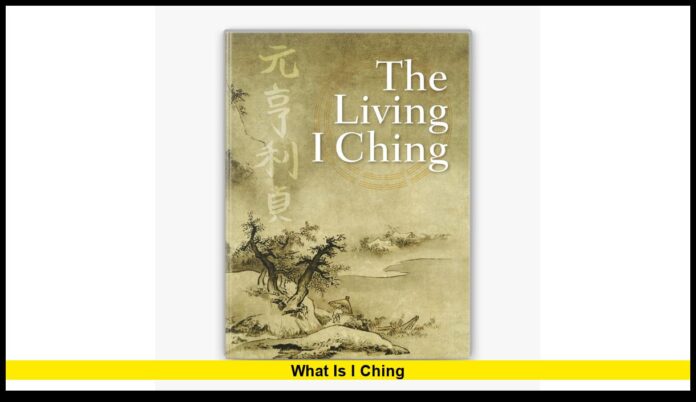
Curiosity about what is I Ching has surged across social platforms and online searches in recent years, as Americans explore ancient practices for mindfulness, decision-making, and spiritual insight. Also known as the Book of Changes, the I Ching is one of the world’s oldest surviving texts, serving as both a philosophical guide and a divination system rooted in Chinese culture.
Today, it’s finding renewed popularity among scholars, wellness communities, and those seeking deeper understanding in a fast-paced digital world.
Table of Contents
The Origins of the I Ching
The I Ching (Yijing, 易经) is an ancient Chinese text that dates back more than 3,000 years, making it one of the oldest continuously studied books in human history. Scholars trace its earliest layers to the Western Zhou Dynasty (1046–771 BCE), with later commentary added during the Han Dynasty (206 BCE–220 CE).
The book’s title translates literally as “Classic of Changes.” It reflects the belief that life, nature, and human experience are all part of a constant state of transformation.
Originally, the I Ching was used for divination — a way to gain guidance through symbolic interpretations. Over time, it evolved into a cornerstone of Chinese philosophy, influencing Confucianism, Taoism, and even modern psychology.
Structure of the I Ching
The I Ching consists of 64 hexagrams, each made up of six horizontal lines — some solid (yang) and others broken (yin).
Each hexagram represents a particular situation, pattern, or universal principle. The combinations of yin and yang lines are thought to symbolize the balance of opposing forces — a concept central to Chinese cosmology.
| Hexagram Type | Lines | Meaning |
|---|---|---|
| Solid Line (Yang) | ——— | Active, creative, strong |
| Broken Line (Yin) | — — | Passive, receptive, yielding |
Each of the 64 hexagrams has a name, image, and commentary that help users interpret its message. The text explains transitions and potential outcomes, offering insight into challenges, timing, and personal growth.
How the I Ching Is Used Today
In modern times, the I Ching serves both spiritual and psychological purposes. While some use it for traditional fortune-telling, others turn to it as a form of reflection — similar to journaling or meditation.
Here’s how people commonly use it today:
- Divination practice: Tossing coins or using yarrow stalks to form hexagrams.
- Meditation tool: Reading a hexagram’s message for daily insight or guidance.
- Philosophical study: Exploring the text as a foundation for understanding change, ethics, and balance.
- Therapeutic reflection: Psychologists and wellness coaches use it to promote mindfulness and introspection.
The process encourages users to pause, reflect, and observe how external events and internal emotions are interconnected — a principle deeply relevant in today’s fast-moving society.
How I Ching Divination Works
One of the most well-known aspects of the I Ching is its divination method.
Traditionally, practitioners used 50 yarrow stalks, a detailed ritual that could take nearly half an hour. In modern practice, however, most people use three coins to generate the lines more quickly.
Here’s a simplified version of the coin method:
- Toss three coins simultaneously.
- Assign heads a value of 3 and tails a value of 2.
- Add the values from each toss to determine the line type:
- Total of 6 = broken yin line (changing)
- Total of 7 = solid yang line
- Total of 8 = broken yin line
- Total of 9 = solid yang line (changing)
- Repeat six times to form a full hexagram, starting from the bottom up.
- Look up the hexagram’s meaning in an I Ching reference book or app.
This simple process is used worldwide as a method for self-guidance and contemplation.
Cultural and Philosophical Significance
Beyond divination, the I Ching represents one of the foundational texts of Chinese philosophy. It shaped major schools of thought and continues to influence global intellectual traditions.
Key Influences:
- Confucianism: Emphasized the I Ching’s moral and ethical lessons. Confucius himself reportedly studied it extensively.
- Taoism: Adopted the book’s themes of harmony, natural order, and balance.
- Chinese medicine and Feng Shui: Used its yin-yang theory to understand health, energy flow, and environmental balance.
Even modern thinkers, such as Carl Jung, found inspiration in the I Ching. Jung, the Swiss psychologist, introduced it to Western readers in the 20th century, calling it a mirror of the unconscious mind.
I Ching in the Modern Digital Era
Interest in the I Ching has expanded far beyond traditional scholars. Today, it’s being rediscovered by younger generations through mobile apps, YouTube videos, and online readings.
In 2025, several popular wellness and mindfulness influencers have incorporated I Ching readings into their social media content, presenting it as a form of spiritual self-care.
Some apps now include AI-powered interpretations that analyze patterns in users’ questions or emotional states before suggesting relevant hexagrams.
On platforms like TikTok and Instagram, short educational clips explain how to use the I Ching for decision-making or meditation. The modern approach combines ancient wisdom with technology, making the text more accessible than ever before.
I Ching and Western Psychology
The I Ching’s psychological dimension appeals strongly to Western audiences seeking meaning or self-discovery.
Carl Jung’s preface in the 1950 English translation by Richard Wilhelm described it as a “timeless oracle” that connects conscious intention with unconscious insight.
Today, therapists and mindfulness practitioners use I Ching symbolism to explore emotional patterns, decision blocks, and personal transformation. The book’s messages — centered on change, adaptability, and timing — resonate deeply with those facing uncertainty or transition.
Why Americans Are Turning to the I Ching
In a world filled with information overload and constant digital noise, many Americans are revisiting ancient wisdom for grounding and clarity. The I Ching’s focus on balance, timing, and natural flow aligns with modern wellness philosophies like mindfulness and holistic living.
Its non-dogmatic nature makes it appealing to people from all backgrounds. Unlike rigid belief systems, the I Ching invites personal interpretation, encouraging readers to find their own meaning in life’s changing patterns.
Studying and Reading the I Ching
If you’re new to the I Ching, there are several ways to begin exploring it:
- Start with a reliable translation. Recommended versions include those by Richard Wilhelm, Thomas Cleary, and John Minford.
- Use a printed text to gain a deeper sense of ritual and connection.
- Try digital versions or apps if you prefer a more interactive experience.
- Keep a reflection journal to record your readings and interpretations over time.
While the I Ching can be complex at first, many readers find that understanding grows naturally with practice and consistency.
I Ching’s Enduring Relevance in 2025
The I Ching continues to hold cultural and intellectual importance worldwide. Academic institutions in the U.S., such as Harvard, Stanford, and Columbia, include it in their East Asian Studies curricula.
Philosophers and historians regard it as not only a divination tool but a profound model for understanding human consciousness and change.
From ancient oracle to modern self-help resource, the I Ching has proven its resilience through millennia. In 2025, it stands at the intersection of tradition and technology — a testament to the timeless quest for wisdom.
Final Thoughts
The next time you hear someone ask, “what is I Ching,” think beyond fortune-telling. It’s a 3,000-year-old guide to understanding change, balance, and personal growth — wisdom that feels more relevant now than ever in our modern, uncertain world.
Have you ever tried consulting the I Ching? Share your thoughts or personal experiences in the comments below and join the conversation on this ancient source of insight.

