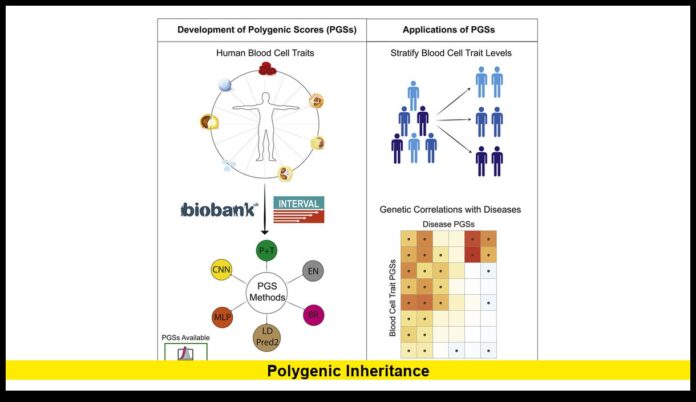
Polygenic inheritance plays a crucial role in determining how traits and disease risks are shaped by multiple genes working together. In 2025, new research and applications are giving scientists and clinicians more precise tools to understand how polygenic factors influence everything from height and weight to heart disease and neurological conditions.
Table of Contents
Understanding What Polygenic Inheritance Means
Polygenic inheritance occurs when many different genes, often spread across the entire genome, collectively influence a single trait. Each gene involved usually has a small individual effect, but when combined, they produce significant variations. Unlike single-gene disorders that follow simple Mendelian patterns, polygenic traits are more complex and typically show a continuous range of outcomes.
Common examples of traits influenced by polygenic inheritance include:
- Height and body shape
- Skin color and hair texture
- Blood pressure and cholesterol levels
- Risk for common diseases such as diabetes, heart disease, or Alzheimer’s
- Behavioral and cognitive tendencies influenced by multiple genetic factors
Because so many genes are involved, these traits tend to show gradual variation within populations, rather than distinct categories.
The Rise of Polygenic Risk Scores in Medicine
One of the most significant advances tied to polygenic inheritance is the use of polygenic risk scores (PRS). These scores combine the small effects of many genetic variants to estimate a person’s inherited risk for a particular trait or condition.
In recent years, polygenic risk scores have become more accurate due to larger datasets and improved statistical models. By analyzing genetic data from millions of individuals, researchers can now calculate risk scores for conditions such as coronary artery disease, obesity, type 2 diabetes, and various neurological disorders.
For example, in clinical settings, polygenic risk scores are being tested to help:
- Identify people at higher risk of developing certain diseases earlier than traditional screening allows.
- Guide preventive strategies, such as lifestyle changes or early interventions.
- Support personalized treatment plans by considering genetic predisposition alongside environmental factors.
While PRS are still not universally applied in everyday healthcare, they are increasingly used in research and pilot clinical programs across the United States.
Recent Developments in 2025
The year 2025 has seen rapid progress in applying polygenic inheritance to both medical research and practical healthcare. Advances include:
- Improved prediction models that account for diverse populations, reducing bias in genetic testing.
- Integration with artificial intelligence to combine polygenic risk with lifestyle data, blood biomarkers, and clinical histories for more precise risk assessments.
- Expansion beyond common diseases, with polygenic scores now being explored for traits such as stuttering, mental health conditions, and cognitive decline.
- Better understanding of gene–environment interactions, showing how lifestyle and environment can amplify or reduce genetic risk.
These developments reflect a shift from theoretical genetics to real-world application, making polygenic inheritance more relevant to personalized healthcare than ever before.
Polygenic Inheritance and Embryo Screening
One of the most controversial applications of polygenic inheritance is embryo screening during in vitro fertilization (IVF). This involves calculating polygenic risk scores for embryos and selecting those with lower predicted risks for certain diseases.
Supporters of this technology argue that it could reduce the likelihood of children being born with certain inherited predispositions. However, there are significant ethical debates surrounding its use. Critics warn that the predictive power of polygenic scores is still limited and that such practices raise complex questions about equity, consent, and the potential for misuse.
In the United States, embryo screening based on polygenic scores remains largely experimental and is not part of standard medical care. Regulatory discussions and ethical guidelines continue to evolve as the science advances.
Challenges in Applying Polygenic Inheritance
Despite its potential, several challenges remain before polygenic inheritance can be fully integrated into everyday clinical practice:
1. Population Diversity
Most existing genetic studies have focused on people of European ancestry. As a result, polygenic scores often work better for those populations than for others. Efforts are underway to make models more inclusive and accurate across diverse groups.
2. Prediction Uncertainty
Polygenic scores provide probabilities, not certainties. There is still significant variation in how genetic risk translates into real-world outcomes, especially when environmental factors are involved.
3. Ethical and Social Concerns
Using genetic risk scores in healthcare and reproduction raises important questions about privacy, consent, equity, and potential discrimination. Transparent policies and safeguards are essential to ensure responsible use.
4. Clinical Implementation
Even when a polygenic score is accurate, translating it into meaningful medical decisions requires careful integration with other data, clinical guidelines, and patient preferences.
The Role of Environment and Lifestyle
Polygenic inheritance does not act in isolation. Environmental factors, lifestyle choices, and social conditions all interact with genetic predispositions. For example, someone with a high polygenic risk score for obesity might maintain a healthy weight through diet and exercise, while another person with a lower risk might gain weight in a different environment.
This interaction between genes and environment is a key focus of current research. By understanding these dynamics, scientists hope to design better prevention strategies that take into account both genetic and non-genetic factors.
Looking Ahead: The Future of Polygenic Inheritance in Health
As research advances, polygenic inheritance is expected to become a core part of precision medicine in the United States. Over the next few years, we can expect:
- Earlier and more accurate disease prediction, allowing interventions before symptoms appear.
- More personalized healthcare, where genetic risk informs screening schedules, lifestyle recommendations, and treatment options.
- Integration into electronic health records, making polygenic data a standard part of patient profiles.
- Stronger regulations and ethical frameworks, ensuring that new technologies are used responsibly and fairly.
Polygenic inheritance has moved from academic theory to practical application. Its role in shaping health, behavior, and even societal debates will only grow stronger in the coming decade.
Polygenic inheritance is reshaping how we understand genetics and health — and its story is only just beginning. Share your thoughts or questions below and join the conversation as this field evolves.

