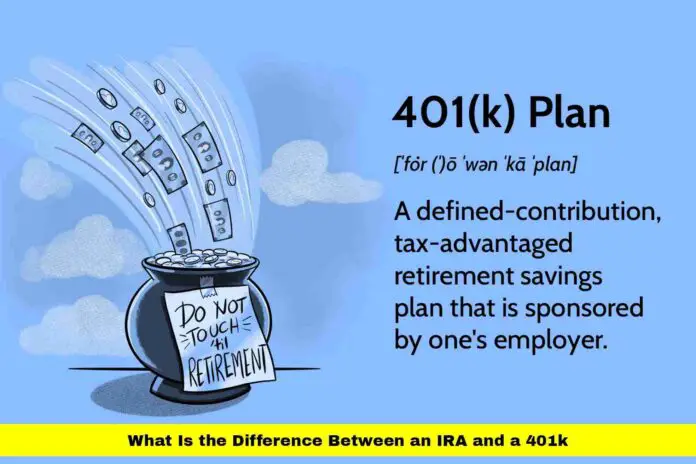
Understanding what is the difference between an IRA and a 401k is essential for anyone aiming to secure a stable retirement. Both of these retirement accounts are widely used in the United States, but they differ significantly in ownership, contribution limits, tax treatment, and investment options. Making an informed choice can significantly impact the growth of your retirement savings and your tax obligations.
As retirement planning becomes more critical in 2025, knowing these distinctions allows investors to optimize their financial strategy. This article provides an in-depth look at all the key differences and practical tips for maximizing both IRAs and 401ks.
Table of Contents
KEY POINTS SUMMARY
For readers who want a quick overview:
- IRA (Individual Retirement Account): Individually managed, with flexible investment options and income-based contribution limits.
- 401k: Employer-sponsored account, often with matching contributions, higher contribution limits, but limited investment options.
- Tax Treatment: Both can be Traditional (pre-tax) or Roth (after-tax), affecting how withdrawals are taxed in retirement.
- Withdrawals: IRAs offer more flexibility, but early withdrawals may incur penalties. 401ks have stricter rules but may allow loans under certain conditions.
- Contribution Limits 2025: IRA up to $7,000 (age 50+), 401k up to $23,000 (age 50+).
This summary highlights the main distinctions for fast understanding and decision-making.
IRA VS 401K: OWNERSHIP AND ACCOUNT STRUCTURE
The first major difference is who owns and manages the account:
- IRA Ownership: Individual Retirement Accounts are fully owned by the account holder. You have full control over contributions, withdrawals, and investment choices.
- 401k Ownership: A 401k is employer-sponsored, and the plan is technically owned by the employer while the funds belong to the employee. Access and management options may be more limited.
- Implications: This ownership structure affects portability, flexibility, and the ability to tailor investments to your specific needs.
The level of control you want over your retirement investments often determines which account suits you best.
CONTRIBUTION LIMITS AND CATCH-UP RULES
Contribution limits are a critical factor for retirement planning, and they differ between IRAs and 401ks:
- IRA Limits 2025: Individuals under 50 can contribute up to $6,500 annually; those 50 and older can add a $1,000 catch-up contribution, totaling $7,500.
- 401k Limits 2025: Employees under 50 can contribute up to $23,000; those 50 and older may add $7,500 as a catch-up contribution, totaling $30,500.
- Significance: 401ks allow higher annual contributions, making them suitable for individuals seeking aggressive retirement savings.
Maximizing contributions, especially if your employer offers matching funds, is one of the most effective strategies for long-term growth.
INVESTMENT OPTIONS AND FLEXIBILITY
Investment flexibility is another major distinction:
- IRAs: Offer a wide range of investment choices including stocks, bonds, ETFs, mutual funds, and alternative assets. Investors can tailor their portfolios to match risk tolerance and long-term goals.
- 401ks: Usually limited to employer-selected funds, such as mutual funds or target-date funds. The options are fewer but simplified, which can benefit those less comfortable managing investments independently.
- Consideration: The flexibility of an IRA allows for personalized strategies, while the simplicity of a 401k can reduce decision fatigue and administrative burdens.
The choice between flexibility and simplicity depends on your investment knowledge and comfort level with managing assets.
TAX TREATMENT: TRADITIONAL VS ROTH
Both IRAs and 401ks offer Traditional and Roth options, which impact taxation differently:
- Traditional Accounts: Contributions are made pre-tax, reducing current taxable income. Taxes are paid on withdrawals in retirement.
- Roth Accounts: Contributions are made with after-tax dollars. Qualified withdrawals in retirement are tax-free.
- Required Minimum Distributions (RMDs): Traditional accounts require RMDs starting at age 73 (as of 2025). Roth IRAs do not have RMDs, allowing funds to grow tax-free longer.
Deciding between Traditional and Roth depends on current income, anticipated future tax rate, and retirement objectives. Many retirees use a combination of both to manage taxes efficiently.
WITHDRAWAL RULES AND PENALTIES
Knowing withdrawal rules is crucial to avoid unexpected taxes or penalties:
- IRA Early Withdrawals: Funds taken before age 59½ may incur a 10% penalty plus income taxes, unless specific exceptions apply (first-time home purchase, disability, qualified education expenses).
- 401k Early Withdrawals: Similar 10% penalty and taxes for early withdrawals. Some plans allow loans, but these must be repaid according to plan rules.
- Roth Exceptions: Roth contributions (not earnings) can often be withdrawn penalty-free at any time, providing liquidity if needed.
Proper planning around withdrawals ensures that you do not jeopardize long-term retirement growth.
EMPLOYER MATCHING CONTRIBUTIONS
One of the most powerful benefits of a 401k is employer matching:
- Typical Matching: Many employers match 50% of employee contributions up to a certain percentage of salary, commonly 6%.
- Impact: Employer contributions are essentially free money, accelerating the growth of your retirement fund.
- IRA Limitation: IRAs do not have employer contributions, so growth depends solely on your personal contributions and investment performance.
Maximizing employer matches is generally the first step in an effective retirement strategy.
ACCOUNT ROLLOVERS AND PORTABILITY
Rolling over accounts is often necessary when changing jobs or consolidating retirement savings:
- IRA Rollovers: You can consolidate multiple IRAs or move funds from a 401k into an IRA.
- 401k Rollovers: Can roll into a new employer’s 401k or into an IRA, maintaining tax advantages.
- Consideration: Properly executed rollovers avoid taxes and penalties while keeping retirement planning on track.
Understanding rollover rules can simplify retirement account management over multiple employment periods.
FEES AND EXPENSES
Fees can significantly impact long-term retirement savings:
- IRA Fees: Typically low when using online brokerages; may include fund management fees.
- 401k Fees: Can include plan administrative fees, investment fund expense ratios, and third-party management fees.
- Long-Term Impact: Even small fees compound over decades, reducing total retirement assets.
Comparing fee structures is critical before committing to any account type.
STRATEGIES TO MAXIMIZE RETIREMENT SAVINGS
A combined approach can be highly effective:
- Contribute to 401k First: Take advantage of employer matching before contributing to other accounts.
- Supplement with IRA: Broader investment choices and potential Roth benefits enhance diversification.
- Diversify Tax Treatment: Using both Roth and Traditional accounts can reduce future tax exposure.
- Maximize Contributions: Aim to reach contribution limits for both accounts whenever possible.
Strategically combining IRAs and 401ks can optimize retirement readiness while balancing taxes and investment growth.
RETIREMENT TIMELINES AND AGE CONSIDERATIONS
Timing matters in retirement planning:
- Early Career: Prioritize 401k to secure employer match, then consider Roth IRA for flexibility.
- Mid-Career: Increase contributions to both accounts as income grows; focus on tax diversification.
- Pre-Retirement: Evaluate account balances, investment mix, and RMD requirements to ensure tax-efficient withdrawals.
Understanding how age affects contribution limits, penalties, and tax strategies is crucial to maximizing retirement savings.
INVESTMENT RISK MANAGEMENT
Risk management differs between IRA and 401k strategies:
- IRA Flexibility: Allows for diversified portfolios, including stocks, bonds, and alternative assets.
- 401k Simplicity: Limited options can reduce risk exposure but may limit growth potential.
- Strategy: Younger investors may favor riskier, higher-growth IRA investments; older employees may prefer conservative 401k options.
Matching investment strategy to age and risk tolerance can protect assets while achieving growth goals.
FREQUENTLY ASKED QUESTIONS
1. Can I contribute to both an IRA and a 401k in the same year?
Yes, you can, but each account has separate contribution limits.
2. Is one account better for tax purposes than the other?
It depends on your current income, future tax expectations, and whether you choose Traditional or Roth options.
3. What happens if I change jobs?
You can roll over a 401k into a new employer’s 401k or into an IRA without tax penalties if done correctly.
Disclaimer: This article is for informational purposes only and does not constitute legal, tax, or financial advice. Consult a qualified professional before making decisions regarding retirement accounts.

