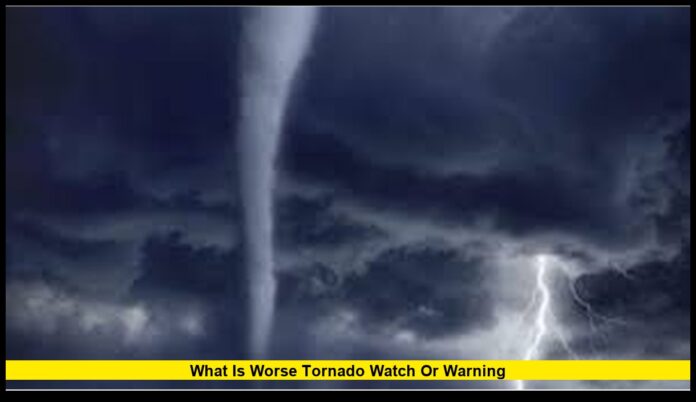
When severe weather hits, many Americans wonder what is worse tornado watch or warning — a crucial distinction that can determine how quickly you need to act. As of November 2025, the National Weather Service (NWS) continues to emphasize the importance of knowing the difference between these alerts to save lives during tornado season.
With tornado activity increasing in parts of the South and Midwest this year, understanding these alerts has never been more important. Knowing when to take shelter — and what each term means — can make the difference between safety and danger.
Table of Contents
The Key Difference: Watch vs. Warning
The National Weather Service issues two types of alerts when conditions could lead to tornadoes: a Tornado Watch and a Tornado Warning. Though they sound similar, their meanings — and the actions they require — are very different.
| Alert Type | Meaning | What You Should Do |
|---|---|---|
| Tornado Watch | Weather conditions are favorable for tornadoes to form. | Be alert, review your safety plan, and monitor weather updates. |
| Tornado Warning | A tornado has been sighted or detected by radar. | Take immediate shelter. Move to a safe location now. |
In simple terms:
- A watch means be ready — conditions are right for a tornado.
- A warning means take cover now — a tornado is already happening or imminent.
So, to answer the question directly: a Tornado Warning is worse than a Tornado Watch because it signals an immediate threat to life and property.
When Tornado Season Peaks
Tornadoes can occur in any month, but the most active season in the U.S. typically runs from March through June. However, 2025 has seen an extended period of tornado activity due to shifting weather patterns influenced by El Niño.
Recent data from the Storm Prediction Center (SPC) shows that the most tornado-prone states remain:
- Texas
- Oklahoma
- Kansas
- Alabama
- Mississippi
- Missouri
While the Midwest has traditionally been known as “Tornado Alley,” outbreaks have increasingly occurred in the Southeast, where nighttime tornadoes are especially dangerous due to reduced visibility and sleeping populations.
Understanding Tornado Watches
A Tornado Watch is issued when atmospheric conditions suggest tornadoes could develop soon. The NWS typically issues watches several hours in advance to give people time to prepare.
During a watch, meteorologists monitor radar patterns, wind changes, and humidity levels that indicate possible severe storms. While no tornado has formed yet, the environment is unstable enough that one could appear quickly.
What to do during a Tornado Watch:
- Stay informed through weather apps, radio, or television.
- Review your emergency plan with family members.
- Identify your nearest safe shelter — such as a basement or interior room.
- Secure outdoor items that could become projectiles.
- Charge phones and have flashlights ready.
Many people underestimate tornado watches because the sky might still appear calm. However, storms can develop fast — sometimes within minutes — turning a watch into a warning.
What a Tornado Warning Means
A Tornado Warning is a call to action. It means a tornado has either been spotted by trained storm spotters or detected on radar using rotation patterns known as a “tornado signature.”
These warnings are typically more localized than watches, covering smaller areas such as parts of a county or city. Once a warning is issued, you may only have a few minutes to seek safety.
What to do during a Tornado Warning:
- Go immediately to a safe space. A basement, storm cellar, or interior room on the lowest floor offers the best protection.
- Avoid windows. Flying debris is the leading cause of tornado-related injuries.
- Cover yourself. Use mattresses, heavy blankets, or helmets to protect from falling debris.
- Stay put. Remain in your shelter until the warning expires and you receive an official all-clear message.
Modern warning systems give residents more lead time than ever before — an average of 13 to 15 minutes — but every second counts.
Advancements in Tornado Detection
In recent years, weather technology has made significant strides. The National Weather Service uses dual-polarization radar, which provides better detection of debris and rotation. These systems help meteorologists confirm tornadoes faster and issue warnings earlier.
Additionally, Wireless Emergency Alerts (WEA) — the loud tones sent to your smartphone — are automatically issued when a Tornado Warning is declared in your area. These alerts are life-saving, especially for those without access to TV or radio.
Emergency managers also recommend having a NOAA Weather Radio with battery backup, ensuring you stay informed even during power outages.
Common Misconceptions About Tornado Alerts
Even though tornado warnings save lives, many misconceptions still lead people to delay seeking shelter. Here are a few key myths and the facts behind them:
- Myth: “If there’s no siren, it’s safe.”
- Fact: Not all areas have tornado sirens, and some fail during power outages. Always rely on multiple alert systems.
- Myth: “Tornadoes only happen in Tornado Alley.”
- Fact: Tornadoes have touched down in all 50 states. Recent years have seen strong storms across the South and even in the Northeast.
- Myth: “You can outrun a tornado in your car.”
- Fact: Tornadoes can move faster than vehicles and change direction quickly. The safest option is to shelter indoors.
- Myth: “Overpasses are safe shelter.”
- Fact: Winds accelerate under overpasses, making them extremely dangerous during a tornado.
Understanding these misconceptions is key to making quick, informed decisions when severe weather strikes.
Tornado Safety Tips
Here’s a checklist to help you prepare for tornado season:
Before a Storm:
- Create an emergency plan for your family.
- Identify your safe shelter space.
- Assemble an emergency kit with essentials like water, medications, and a flashlight.
- Keep shoes nearby in case of debris after a storm.
During a Watch:
- Stay alert to updates from the National Weather Service.
- Keep your vehicle fueled and devices charged.
- Avoid unnecessary travel if storms are developing.
During a Warning:
- Move to your safe space immediately.
- Protect your head and neck from debris.
- Avoid elevators and windows.
- Listen to official updates until the threat has passed.
These steps can significantly reduce risk during severe weather emergencies.
How Communities Are Adapting in 2025
With changing weather patterns, emergency management agencies have increased investments in public warning systems and shelter programs.
- Tornado-safe community shelters are now common in rural towns.
- Weather education programs in schools teach children how to respond to warnings.
- Many states have adopted tornado drill days to help residents practice emergency procedures.
These community-driven efforts, combined with improved technology, have contributed to a notable decrease in tornado fatalities compared to the early 2000s.
The Bottom Line: Stay Alert, Stay Ready
When it comes to tornado alerts, a warning always means immediate danger, while a watch signals potential risk. Both require attention — but how you respond can determine your safety.
With more severe weather expected in coming years, staying informed, having a plan, and acting quickly remain the best defenses against disaster.
Tornado preparedness isn’t about panic — it’s about awareness. Have you experienced a tornado watch or warning in your area? Share your story or safety tips in the comments below.

