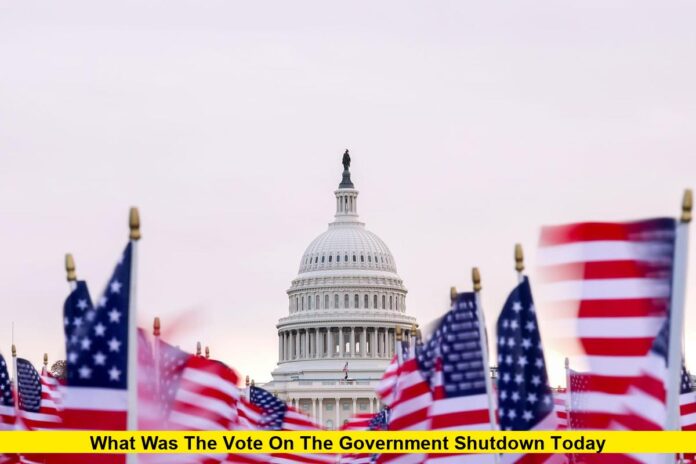
The question “what was the vote on the government shutdown today” has been answered: the House of Representatives voted 222–209 Wednesday night to pass a spending bill that ends the shutdown and reopens the federal government. This article walks through the full context, implications, and next steps of that vote.
Table of Contents
What Happened Tonight
At a late-night session, the House approved the funding measure by a margin of 222 votes in favor and 209 opposed. The bill had already cleared the Senate earlier in the week, meaning that with the House tally completed, the path was clear for the President to sign and reopen most government operations.
The vote specifically addressed the pressing question of what was the vote on the government shutdown today, providing that definitive figure and moving the country out of the shutdown phase.
Breakdown of the Vote
Here’s how the vote broke down in key respects:
- Yes: 222 – This included nearly all Republicans and a handful of Democrats.
- No: 209 – Included most Democrats and a couple of Republicans who broke away.
- Party dynamics: Six Democrats joined the majority. Two Republicans voted against the bill, indicating fissures within the majority party’s unity.
This voting pattern suggests that while the bill passed, it did so with some political cost and not without intra-party disagreement.
Why the Vote Was Critical
The shutdown had dragged on for 43 days, making it the longest in U.S. history. Hundreds of thousands of federal workers were either furloughed or working without guaranteed pay, key services were disrupted, and economic ripple effects were mounting.
By answering what was the vote on the government shutdown today, lawmakers sought to deliver closure to that disruption.
Passing the bill officially allows for:
- Restoration of full funding to most federal agencies.
- Backpay to federal workers who missed paychecks.
- Reopening of services long postponed, including food aid, travel oversight, and regulatory operations.
Without the bill, the government would have continued operating without clear funding, risking deeper service interruptions and greater economic damage.
What the Bill Contains
The spending package passed in the vote covers several key items:
- Full-year funding for major departments like Agriculture, Military Construction and Veterans Affairs, and the Legislative branch.
- A stop-gap extension for other federal agencies, pushing the next deadline to January 30 of next year.
- A provision reversing recent layoffs of federal workers and guaranteeing back pay.
- Restoration of programs that had been frozen or slowed by the shutdown.
Notably, the bill does not resolve all outstanding policy disputes: key among them is the debate over subsidies for health insurance under the Affordable Care Act, which remain unaddressed in this package.
The Political Landscape
For Republicans, getting the 222-vote threshold in the House meant they achieved their immediate goal of reopening the government. Still, the fact that two Republicans voted against the package reveals that some within the party felt the deal did not go far enough on spending cuts or policy guarantees.
For Democrats, the result was bittersweet. They succeeded in ending the shutdown and restoring normal operations, but they did not secure their top priorities—especially an extension of health-care subsidies. Many viewed the passage as a temporary fix, not a solution to the broader issues.
Speaker of the House Mike Johnson celebrated the passage, describing it as relief for federal workers and the American people. Meanwhile, Democratic leaders warned that the fight over health care and funding priorities is far from over.
Impact on Federal Workers and Services
With the bill passed in the vote, the practical effects begin almost immediately:
- Federal agencies will resume normal operations starting as early as Thursday.
- Workers who were furloughed or worked without pay can expect to receive back pay in the coming days.
- Food-aid programs and travel oversight that were hampered by the shutdown will begin ramping back up.
- The broader economic damage caused by the shutdown—estimated in the billions—may begin to reverse as operations normalize.
This vote answered what was the vote on the government shutdown today in a way that carries real human and institutional consequences.
Next Deadline Looms
While the immediate crisis is resolved, this vote is, in many ways, a pause rather than an endpoint. Because the funding largely extends only to January 30 of next year, the next budget battle is already on the horizon.
Key issues to watch:
- Whether the House will follow through on promised future votes on health-care subsidies and other contested priorities.
- How federal agencies manage the restart process and whether any service backlogs linger.
- Whether lawmakers use the breathing room to negotiate more durable, full-year funding bills rather than another stop-gap measure.
- Whether the memory of the 43-day shutdown shapes legislative strategy and public opinion heading into next year.
Why This Vote Matters Now
Understanding what was the vote on the government shutdown today is important not just because of the numbers, but because of what they represent:
- A decision to move past stalemate and reopen government.
- A reflection of political compromise—neither side got everything, but a resolution was reached.
- A signal to federal workers, service‐recipients, and markets that the dysfunction can end.
- A reminder that the threat of future shutdowns remains unless core issues are addressed.
In short, this vote isn’t just about this week’s tally—it’s about how Congress chooses to govern and prioritize in an era of divided control and high public expectations.
Public Reaction and Outlook
Across America, reactions ranged widely:
- Relief among federal workers and their families who endured pay delays or furloughs.
- Skepticism among advocates who say the deal lacked substance on health care and longer-term reform.
- Concern among budget Hawks who argue this stops only one shutdown and guarantees nothing past January.
- Cautious optimism in agencies preparing to reopen—many stressed that recovery will take time.
It will be important to watch how smoothly the transition happens now that the vote is in. Delays in back pay, service restarts, or residual staff shortfalls could undermine public confidence.
Summary
So, the answer to what was the vote on the government shutdown today is clear: 222 in favor, 209 opposed. That vote officially ends the 43-day funding lapse, sends the bill to the President for signature, and brings government operations back online.
Even so, the victory is procedural—not yet complete. The real work of longer-term budget stability, policy reform, and avoiding the next shutdown lies ahead. And while today’s vote gets the headlines, what happens next will determine whether Congress truly learned from the disruption.

