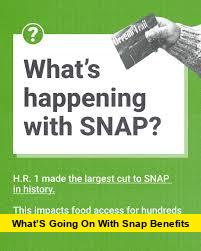
The latest update on what’s going on with SNAP benefits reveals a rapidly escalating crisis as federal funding for the Supplemental Nutrition Assistance Program (SNAP) faces depletion. With the U.S. federal government shutdown now underway, the U.S. Department of Agriculture (USDA) has warned that unless Congress acts immediately, November benefit payments could be suspended—putting more than 40 million Americans at risk.
Funding Crunch & Payment Risk
As of late October 2025, multiple states have confirmed they may be unable to distribute SNAP benefits for November if the shutdown continues. Some state agencies stated that while October benefits already loaded onto EBT cards remain usable, new payments scheduled for November will not be issued without federal funding being restored.
The USDA disclosed that the agency will not draw on the contingency fund reserved for emergency situations to cover regular SNAP monthly payments. That fund contains roughly $5 billion, but the expected cost of benefits for November is far higher.
Because SNAP is fully federally funded, the absence of a budget resolution means states cannot legally proceed with benefit distribution. Some states already have begun issuing warnings to beneficiaries.
Who Is Affected
- Roughly 42 million Americans depend on SNAP benefits monthly; failure to issue November payments could impact a substantial share of the population.
- In states like Pennsylvania, where about 2 million people receive SNAP, officials have publicly stated that payments may not go out without federal action.
- Some states estimate that up to 21 % of their residents rely on SNAP—if payments stop, the impact on communities could be severe.
Why This Is Happening
The core issue is the continued federal government shutdown, which began October 1, 2025, and the lack of a continuing resolution or appropriation that authorises SNAP payments beyond October. Because SNAP benefits are mandatory spending, they typically continue—but the USDA says it lacks the flexibility to cover the shortfall using emergency reserves, as those are reserved for disasters, not monthly benefit payments.
In short, the shutdown has cut off the flow of funds needed to operate SNAP nationally, and the USDA says the program cannot issue November benefits until funding resumes.
What States Are Doing
States are scrambling to respond:
- Some are preparing contingency plans to rely on food banks and local emergency resources.
- Officials urge recipients to check their EBT balance and use any remaining October benefits while they remain accessible.
- States are also informing households of alternative food support resources, such as food banks and community programs, in case November benefits are delayed.
Additional Policy Changes in Motion
Beyond the funding pause, SNAP is also facing structural changes under legislation passed earlier in 2025. These include expanded work requirements for adult recipients without dependents, and an expected shift of some costs and administrative burdens to states. While those changes do not directly trigger the current payment pause, they add another layer of uncertainty for program participants going forward.
What Recipients Should Do
- Check your balance on your EBT card and use any remaining funds for groceries while the benefit is still active.
- Stay informed via your state human services or SNAP agency—dates and benefit schedules may change rapidly.
- If you are an adult recipient subject to new work/training requirements (for example, without dependents), verify your eligibility status and follow any state-specific guidelines.
- Explore alternative resources such as food banks, community food programs and local non-profits in the event of benefit suspension.
Looking Ahead
The critical thing to watch is whether Congress passes a funding resolution that reinstates SNAP payments for November. If action is taken promptly, payments may resume and even be paid retroactively. But if the shutdown continues, the risk grows that November payments will not go out as scheduled—leading to severe hardship for many low-income households.
The longer the pause extends, the greater the pressure on food-assistance infrastructure such as food banks and emergency services. Some states may face significant budget stress trying to bridge the gap.
For millions of Americans, the coming weeks are pivotal in determining whether regular SNAP benefits continue or whether households face a gap in food assistance.
In summary, what’s going on with SNAP benefits is a significant and immediate issue: the program’s funding has been interrupted due to the federal shutdown, benefits may not be issued for November without congressional action, and states as well as recipients are left bracing for the consequences.
Stay engaged, stay informed—and if you or someone you know relies on SNAP, now is the time to explore backup plans and local support.

