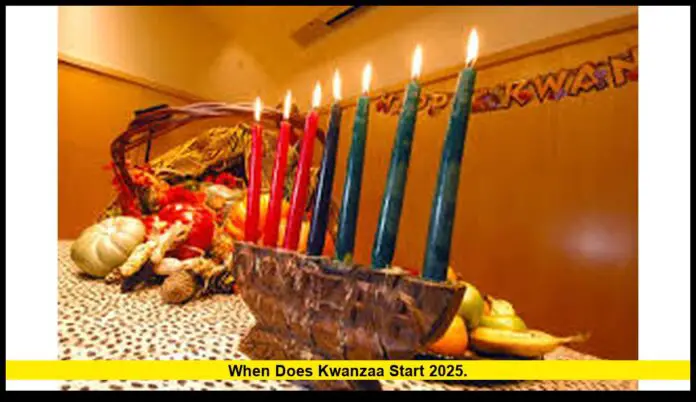
When does Kwanzaa start 2025 is a question many Americans ask each holiday season as Christmas ends and cultural celebrations continue. In 2025, Kwanzaa officially begins on Friday, December 26, 2025, and continues through Thursday, January 1, 2026. This annual cultural observance has a fixed start date, which means it always begins on December 26, regardless of the day of the week. This consistency allows families, communities, schools, and cultural organizations across the United States to plan their celebrations with clarity and excitement.
Across the country, communities and cultural institutions have already begun planning events, workshops, performances, and feasts as part of the 2025 Kwanzaa observance. Whether you are new to the tradition or have celebrated for years, understanding the timing, history, and ways different communities observe Kwanzaa helps deepen appreciation for this meaningful holiday.
Table of Contents
A Fixed Start: Why Kwanzaa Always Begins on December 26
Kwanzaa is not tied to astronomical calendars, lunar cycles, or shifting dates that move year to year. From its inception, Kwanzaa was established to be observed every year from December 26 through January 1. The holiday’s founder chose these dates intentionally to fall immediately after Christmas, allowing the celebration to stand as a distinct cultural observance that honors African heritage, community, and values.
In 2025, this tradition continues with Kwanzaa starting on Friday, December 26 and concluding on Thursday, January 1, 2026. Observing Kwanzaa during this specific week links its themes to the end of one calendar year and the beginning of another, symbolizing reflection, renewal, and cultural unity.
The Official 2025 Kwanzaa Date Timeline
Below is an easy reference for the 2025 Kwanzaa dates:
| Event | Date |
|---|---|
| Kwanzaa Begins (First Day) | Friday, December 26, 2025 |
| Kwanzaa Ends (Last Day) | Thursday, January 1, 2026 |
| Total Duration | 7 Days |
| First Principle Focus | Umoja (Unity) |
| Final Day Focus | Imani (Faith) |
This schedule applies nationwide. Unlike holidays like Thanksgiving or Easter, Kwanzaa’s dates do not shift from year to year.
What Is Kwanzaa? The Meaning Behind the Dates
Kwanzaa is a cultural holiday created in 1966 to honor African and African American heritage, community, and shared values. The word “Kwanzaa” derives from the Swahili phrase matunda ya kwanza, which means “first fruits.” The celebration draws inspiration from first fruit harvest festivals found in various cultures throughout Africa. Rather than being a religious holiday, Kwanzaa focuses on cultural reflection, community strength, and the appreciation of heritage.
Each year, Kwanzaa invites families and communities to come together to reflect on principles that foster unity, purpose, responsibility, and mutual support. These principles guide events, discussions, and traditions throughout the weeklong celebration.
The Seven Principles (Nguzo Saba) of Kwanzaa
Kwanzaa centers around the Nguzo Saba, which translates to “Seven Principles.” Each day of the holiday is dedicated to one principle, offering reflection and action tied to cultural identity and community values. These principles are:
1. Umoja (Unity) — Day One — December 26, 2025
Umoja emphasizes unity within the family, community, and nation. On this first day, many households light the center candle in the kinara and reflect on togetherness and collective identity.
2. Kujichagulia (Self-Determination) — Day Two — December 27, 2025
Kujichagulia encourages individuals and communities to define themselves, speak for themselves, and determine their own path without external definition or influence.
3. Ujima (Collective Work and Responsibility) — Day Three — December 28, 2025
Ujima highlights shared responsibility. On this day, communities focus on working together to solve problems and support one another’s progress.
4. Ujamaa (Cooperative Economics) — Day Four — December 29, 2025
Ujamaa centers on economic cooperation. Observers are encouraged to support Black-owned businesses and build economic strength within their communities.
5. Nia (Purpose) — Day Five — December 30, 2025
Nia focuses on personal and collective purpose. It invites participants to consider goals that benefit the broader community and future generations.
6. Kuumba (Creativity) — Day Six — December 31, 2025
Kuumba celebrates creativity and cultural expression. The principle encourages people to leave their communities more beautiful and vibrant than they found them.
7. Imani (Faith) — Day Seven — January 1, 2026
Imani, the final principle, emphasizes faith—faith in people, traditions, and the future. It is a time to hope and believe in collective strength moving forward.
Together, these principles shape a week of meaningful activities, intentional discussions, and cultural reflection.
Kwanzaa Traditions That Mark the Week
Kwanzaa celebrations typically involve a series of rituals and customs that help families and communities observe each day’s principle. These include:
Lighting the Kinara
Central to Kwanzaa is the kinara, a seven-branched candleholder. On each night of Kwanzaa, a candle is lit to represent the day’s principle. The black candle in the center is lit first, followed by the red and green candles corresponding to the Nguzo Saba principles.
Unity Cups and Libations
The Kikombe cha Umoja, or Unity Cup, may be used in a libation ceremony where water or juice is poured to honor ancestors and symbolically connect past, present, and future.
Reflection and Discussion
Families often gather each evening to discuss the principle of the day, share stories, and reflect on its meaning in their lives.
Communal Feasts
A highlight of Kwanzaa is the karamu, the communal feast typically held on December 31. This gathering brings together family and community members to celebrate through food, song, dance, and fellowship.
Cultural Presentations and Artistic Expression
Throughout the week, many communities host performances, storytelling sessions, workshops, and art displays that honor African cultural traditions.
Celebrations and Community Events Across the U.S. in 2025
As Kwanzaa approaches, many cities and cultural organizations have scheduled events to mark the holiday in 2025. These celebrations range from library programs to cultural center gatherings that bring principles, values, and heritage into public spaces.
Philadelphia and Region Events
In Philadelphia, events kick off as early as mid-December with cultural performances, workshops, storytelling sessions, and community gatherings designed to educate and celebrate African heritage while observing Kwanzaa’s principles.
San Diego’s 45th Annual Celebration
The WorldBeat Cultural Center in San Diego is hosting its 45th Annual Kwanzaa Celebration, with nightly events starting on December 26. Each evening focuses on one of the Nguzo Saba principles through music, dance, educational activities, and community participation.
Mercer Museum Celebration
On December 26, 2025, the Mercer Museum hosts an interactive Kwanzaa celebration including music, children’s activities, and educational presentations that introduce visitors to Kwanzaa’s origins and values.
Anacostia Opening Ceremony
On the opening day of Kwanzaa, the Anacostia museum hosts an Umoja celebration with traditional candle lighting, African drumming, storytelling, and discussions about unity.
Cary Arts Center Program
In Cary, North Carolina, a special program on December 29, 2025 highlights cultural performance, dance, and storytelling that weave together tradition and community identity.
St. Louis Celebration at the Art Museum
The St. Louis Art Museum’s free Kwanzaa celebration on December 26 invites families to enjoy performances, presentations, and cultural displays that reflect Kwanzaa’s core values.
Library and Educational Programs
Libraries in Philadelphia and other cities host Kwanzaa celebration programs with workshops, storytelling, crafts, and cultural presentations that help attendees understand heritage, principles, and traditions.
These events—among many across the U.S.—reflect an active and engaged Kwanzaa community celebrating heritage, values, and cultural expression throughout the holiday week.
Schools and Kwanzaa in 2025
While most public schools are on winter break when Kwanzaa begins, many educational institutions incorporate Kwanzaa into their diversity and cultural awareness programs. Schools often use this time to:
- Offer lessons about Kwanzaa’s principles
- Engage students in discussions about African heritage
- Host cultural performances or student presentations
- Encourage family participation in community events
These educational efforts help younger generations understand the history, meaning, and community significance of Kwanzaa.
Workplaces and Kwanzaa Recognition
Kwanzaa is not a federal holiday, but many workplaces include it in their diversity calendars. In 2025, organizations acknowledge Kwanzaa by:
- Recognizing the holiday in internal communications
- Hosting educational sessions or employee-led discussions
- Inviting employees to share their cultural experiences
- Offering flexible scheduling during the week of December 26–January 1
Workplace recognition continues to grow, reflecting increased awareness of cultural celebrations beyond traditional holidays.
Kwanzaa’s Cultural Significance in the U.S.
Kwanzaa has grown steadily in cultural visibility and understanding over the decades. It continues to serve as a time for:
- Reflection on community values
- Celebration of African and African American heritage
- Recognition of collective responsibility and progress
- Connection across families and communities
Alongside Christmas, Hanukkah, New Year’s, and other seasonal traditions, Kwanzaa adds cultural depth to the U.S. holiday landscape.
Common Misconceptions Clarified
Despite its longevity, Kwanzaa is sometimes misunderstood. Here are key clarifications:
- Kwanzaa does not replace Christmas; many celebrate both.
- Kwanzaa is not religious; it is cultural and community-focused.
- Participation is open to all who wish to engage with its principles.
- The dates never change; they always run December 26 through January 1.
Understanding these clarifications encourages broader appreciation and respectful participation.
Looking Forward: Beyond 2025
Kwanzaa’s fixed dates mean planning is easy for future observances:
- 2026: Begins Saturday, December 26
- 2027: Begins Sunday, December 26
- 2028: Begins Tuesday, December 26
- 2029 and beyond: Continues annual tradition
This consistency allows long-term cultural planning for families, schools, and community groups.
Final Reflection on Kwanzaa 2025
In 2025, Kwanzaa officially begins on Friday, December 26 and continues through January 1, 2026 as a vibrant cultural celebration across the United States. From library programs and museum celebrations to community feasts and cultural performances, Kwanzaa continues to grow in visibility and meaning. Whether observing at home or participating in local events, the holiday invites reflection on unity, purpose, responsibility, and collective strength rooted in shared heritage.
How will your community or family observe Kwanzaa this year, and which principle will guide your celebrations most deeply? Share your thoughts and join the conversation below.

