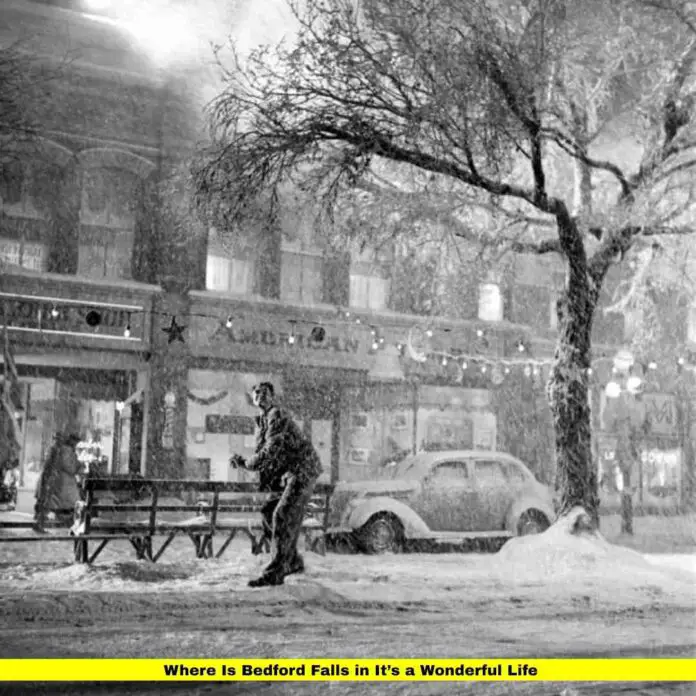
The question behind this famous small town continues to attract attention decades after the film’s release. Viewers often search for a real-world location, convinced that such a believable place must exist somewhere in the United States. In reality, the town was deliberately created as a fictional setting, designed to feel authentic while remaining untied to any single point on the map.
This detailed feature explains the origins, design, purpose, and lasting cultural impact of the town that anchors one of America’s most enduring films.
Table of Contents
A Town Created for Storytelling
The town was invented specifically for the film and exists only within its narrative world. It was never intended to represent a real municipality, county, or state. Filmmakers made this choice to give the story universal appeal, allowing audiences across the country to see pieces of their own communities reflected on screen.
Because it was fictional, every aspect of the town could be shaped to serve the story. Streets, buildings, and public spaces were designed with intention, ensuring that each location supported emotional beats rather than geographic accuracy.
How the Film Brought the Town to Life
To create a convincing setting, the production team constructed an extensive town set on a studio backlot in California. This was not a minimal or symbolic build. It was a full-scale environment with streets, storefronts, houses, a bridge, and public gathering areas.
This approach allowed filmmakers to control lighting, weather, and camera movement. Snow-covered scenes, nighttime sequences, and wide establishing shots were all possible because the town existed as a complete, functional set.
Why Audiences Believe the Town Is Real
The realism of the town comes from its familiarity. Its layout resembles countless American communities that developed in the late nineteenth and early twentieth centuries. A compact downtown sits near residential neighborhoods, with daily life centered around local businesses and shared spaces.
These design choices were intentional. Rather than copying one place, the town blends features from many regions, making it feel both specific and universal at the same time.
The Town’s Role in the Story
Within the film, the town is not just a backdrop. It actively shapes the story and the main character’s emotional journey. Every major turning point is tied to a specific location within the town, reinforcing the idea that place and identity are deeply connected.
Homes, streets, and public spaces all carry symbolic weight. The town reflects the values of cooperation, sacrifice, and community responsibility that define the story’s message.
Why Viewers Keep Searching for Its Location
Many viewers assume the town must be based on a real place because it feels lived-in and consistent. This sense of realism encourages curiosity and fuels ongoing searches for its physical location.
Holiday broadcasts and modern streaming access introduce the film to new audiences each year. As a result, questions about the town’s whereabouts continue to surface across digital platforms.
Blending Inspiration Without Naming a Place
The filmmakers drew inspiration from common American town features rather than a single source. Architectural styles, street layouts, and community interactions were selected to feel familiar to viewers nationwide.
By avoiding direct references to an actual town, the story avoided regional bias. This decision helped the film resonate equally with audiences in urban, suburban, and rural areas.
The Importance of the Bridge
One of the most memorable landmarks in the town is its bridge. It appears at crucial moments and carries deep symbolic meaning within the story. The bridge represents crisis, transition, and connection, all central themes in the film.
Although viewers often try to locate this bridge in real life, it was built specifically for the production. Its design echoes countless real bridges across the country, reinforcing the illusion of authenticity.
A Tale of Two Versions of the Same Town
The film presents two versions of the town, each reflecting different outcomes based on personal choices. One version appears warm and cooperative, while the other feels crowded and impersonal.
This contrast emphasizes how individual actions influence community life. Because the town is fictional, the transformation can occur dramatically and clearly, without real-world constraints.
Timeless Design and Enduring Appeal
The town’s design avoids heavy reliance on trends or dated elements. Clothing styles, signage, and architecture reflect a general era without anchoring the story to a specific year.
This timeless quality allows modern audiences to connect with the setting just as strongly as viewers did decades ago. The town feels familiar regardless of when the film is watched.
Modern Engagement and Ongoing Curiosity
Today, audiences continue to engage with the film through television, digital platforms, and social media. Many pause mid-viewing to research the town, convinced it must exist somewhere.
Online discussions regularly revisit the question of location, keeping interest alive year after year. This sustained curiosity highlights the effectiveness of the film’s world-building.
Why No Real Address Exists
There is no official address, state designation, or map location for the town. Any claims placing it in a specific region are interpretations rather than facts.
The absence of a real location was a creative decision. It allowed the story to stand on its own without being tied to regional identity or historical constraints.
Cultural Meaning Beyond Geography
The town represents an idealized vision of community life rather than a physical place. It embodies values such as mutual support, empathy, and shared responsibility.
These themes remain relevant today, which is why the town continues to resonate even without a real-world presence.
Why Fiction Can Feel More Real Than Reality
Sometimes fictional places feel more vivid than real ones because they are designed with purpose. Every street and building in the town serves the story, reinforcing emotional connections.
This intentional design creates a sense of cohesion that real towns, shaped by chance and time, often lack.
Clarifying Common Assumptions
Despite popular belief, the town is not officially linked to any U.S. state or region. Similarities to real places exist because the filmmakers drew from shared American experiences.
Understanding this distinction helps separate emotional association from factual reality.
The Town’s Place in Film History
The fictional town ranks among the most recognizable settings in American cinema. Its influence extends beyond the film into holiday traditions and cultural memory.
Few fictional communities inspire such consistent curiosity across generations.
Why the Question Still Resonates
The ongoing search for the town’s location reflects more than curiosity. It shows how deeply viewers connect with the story and its setting.
People want to visit the town because it represents belonging, familiarity, and hope.
A Place That Lives in Memory
Although it cannot be visited physically, the town exists in memory and imagination. Each viewer forms a personal version shaped by their own experiences.
This flexibility gives the town a unique kind of permanence.
The Power of an Unmapped Place
Without geographic boundaries, the town belongs to everyone. It can feel like a hometown, a childhood memory, or a place one wishes existed.
That universality is the key to its lasting impact.
Why It Continues to Matter Today
In a fast-changing world, the town represents stability and connection. Its fictional nature allows it to remain untouched by real-world change.
That consistency is part of its enduring appeal.
A Legacy That Endures Without Coordinates
The town’s influence proves that physical location is not required for cultural significance. Stories can create places just as powerful as those built from brick and stone.
This legacy continues to inspire discussion and discovery.
Final Reflection
The town at the center of this beloved film may not exist on any map, but it remains firmly rooted in American cultural memory. Its fictional nature has allowed it to transcend geography and become a shared emotional space for generations of viewers.
Do you imagine this town as a version of your own hometown, or as a place you wish you could visit? Share your thoughts and stay informed as its legacy continues to inspire curiosity.

