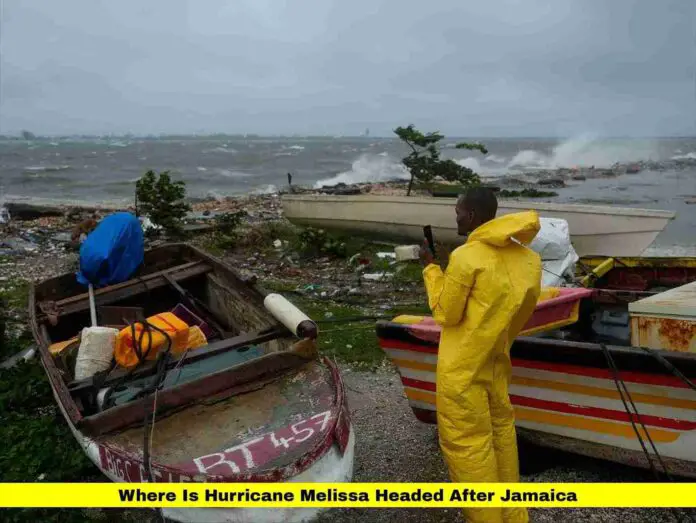
Hurricane Melissa has left Jamaica reeling after striking the island with catastrophic force, and now all eyes are on its next destination. The powerful storm has already moved beyond the island’s shores, setting its sights on new regions across the Caribbean and potentially the Atlantic.
Table of Contents
Hurricane Melissa’s Impact on Jamaica
When Hurricane Melissa made landfall in Jamaica, it did so as a monstrous Category 5 storm. With sustained winds around 185 mph, the hurricane tore through major parts of the island, including Kingston, St. Elizabeth, and Manchester. Coastal areas were inundated by storm surges as high as 13 feet, and more than 500,000 residents lost electricity.
The island’s infrastructure took a major hit—homes, schools, and hospitals were damaged, while bridges and roads were blocked by debris. Emergency responders worked tirelessly to rescue stranded families as the government declared the entire island a disaster zone. The storm’s strength was compared to some of the most destructive hurricanes ever recorded in the Caribbean.
Current Position of Hurricane Melissa
After devastating Jamaica, Hurricane Melissa weakened slightly and moved toward southeastern Cuba as a Category 3 storm. As of today, Melissa is now passing near the southern Bahamas, bringing with it torrential rain, life-threatening storm surge, and strong winds.
Meteorological reports show that Melissa’s wind field has expanded significantly. This means the hurricane’s outer bands are spreading farther, impacting areas hundreds of miles from the center. Even if the core of the storm avoids direct landfall in certain islands, the surrounding regions will still experience heavy rainfall and dangerous flooding.
Next in Line: The Bahamas and Bermuda
The Bahamas is now bracing for Hurricane Melissa’s impact. Islands including Exuma, Long Island, Crooked Island, and San Salvador are currently under hurricane warnings. Weather officials predict rainfall totals between 8 and 10 inches, enough to trigger flash floods and landslides in low-lying areas.
In addition to wind and rain, coastal storm surge could reach between 6 and 8 feet, threatening to submerge roads, homes, and businesses near the shoreline.
After crossing the southern Bahamas, forecasts indicate that Melissa will move northeast toward Bermuda by late Thursday or early Friday. Though it may weaken slightly over open waters, Bermuda could still experience tropical-storm-force winds, large ocean swells, and power outages.
Forecast Path Beyond the Caribbean
As Hurricane Melissa continues its journey across the Atlantic, meteorologists predict it will eventually curve east-northeast, moving away from the U.S. mainland. By the weekend, it could transition into a post-tropical system while maintaining strong winds.
Still, forecasters caution that the storm’s outer bands could influence weather patterns along parts of the southeastern U.S. coast, especially through heavy surf and rip currents.
Aftermath in Jamaica: Recovery and Response
In Jamaica, the recovery process has already begun. Emergency shelters remain open across several parishes as cleanup crews clear fallen trees and rebuild damaged power lines. Health officials have warned residents about contaminated water supplies and the risk of waterborne diseases.
The government has requested international assistance for rebuilding efforts, with aid expected from regional partners and international relief agencies. Many communities remain isolated due to landslides and collapsed bridges, complicating the delivery of food and medical aid.
Communities on High Alert
Residents in the Bahamas and Bermuda are now urged to finalize preparations as Hurricane Melissa continues its track. Authorities recommend stocking up on essential supplies, including food, water, flashlights, and medical kits.
Safety recommendations include:
- Stay indoors and away from windows once winds intensify.
- Keep emergency contacts and radios ready for weather updates.
- Avoid floodwaters, as they may be deeper and faster-moving than they appear.
- Follow evacuation orders immediately if issued by local officials.
Even after the eye passes, dangerous conditions like tornadic activity and flooding may persist for hours.
Air and Sea Travel Disruptions
With Melissa’s path extending across the Caribbean, major travel disruptions are expected. Several airports in Jamaica remain closed due to runway flooding and damage to terminals. In the Bahamas, flights are being rescheduled or canceled as airlines divert routes.
Maritime activity has also come to a halt in multiple Caribbean ports. Cruise lines are rerouting ships, and commercial vessels are delaying departures due to the extreme sea state and visibility issues.
Comparing Hurricane Melissa to Past Storms
Meteorologists have compared Hurricane Melissa’s intensity to past historic storms such as Hurricane Gilbert in 1988 and Hurricane Ivan in 2004. Both of those storms caused severe devastation in Jamaica and nearby islands, but Melissa’s rapid intensification and record-breaking wind speeds have made it one of the strongest October storms in the Atlantic basin in decades.
Experts attribute the hurricane’s explosive growth to unusually warm ocean temperatures, which fueled its development into a Category 5 system in less than 48 hours.
Environmental and Economic Impacts
Beyond immediate destruction, Hurricane Melissa’s impact on the economy will be significant. Jamaica’s agriculture, a key part of its economy, suffered heavy losses, with banana and sugarcane crops wiped out in several regions. Tourism, another major sector, will take months to recover due to damaged resorts and ports.
In the Bahamas, businesses are already shutting down operations as they prepare for potential storm damage. The recovery cost could reach billions once assessments are complete.
Preparedness Moving Forward
Caribbean governments and emergency agencies are using this storm as a reminder of the region’s vulnerability to extreme weather. Climate scientists continue to warn that warmer ocean waters and shifting atmospheric patterns are likely to make hurricanes like Melissa more frequent and intense in the coming years.
Communities across the Caribbean are being urged to strengthen coastal defenses, improve early-warning systems, and ensure that rebuilding efforts focus on resilience against future storms.
Conclusion
Tracking where Hurricane Melissa is headed after Jamaica remains critical as the powerful system moves toward the Bahamas and possibly Bermuda. The damage across Jamaica shows how dangerous this storm can be, and other islands now have only a short time to prepare. While Melissa will eventually weaken as it moves out over the Atlantic, the effects it leaves behind will last far longer. Stay alert, follow local advisories, and prioritize safety above all else.

