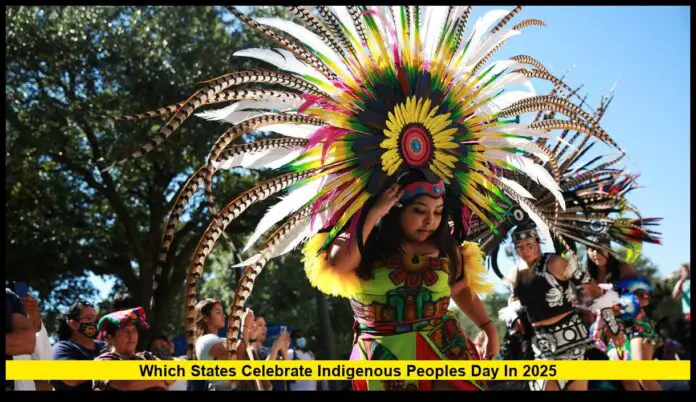
Every October, Americans ask which states celebrate Indigenous Peoples Day, as the holiday continues to gain recognition across the country. In 2025, more states than ever are officially observing or recognizing the day, reflecting a growing shift in how the United States commemorates its history.
Table of Contents
Indigenous Peoples Day: A Quick Overview
Indigenous Peoples Day is observed each year on the second Monday in October. It serves as a celebration of the history, culture, and contributions of Native American and Indigenous communities.
The holiday also acts as a counterpoint to Columbus Day, which occupies the same date on the federal calendar. While Columbus Day remains a federal holiday, many states and cities have either replaced or supplemented it with Indigenous Peoples Day.
The movement to recognize Indigenous Peoples Day has grown significantly over the past decade. What started with a few local proclamations has become a nationwide discussion, with states, cities, school districts, and organizations reconsidering how this day is observed.
Federal Status in 2025
As of 2025, Indigenous Peoples Day is not yet a federal holiday, but it has gained strong symbolic support. The President has issued proclamations recognizing the day nationally since 2021, encouraging Americans to honor Indigenous communities. However, Columbus Day is still the legal federal holiday on the calendar.
This dual status means that whether Indigenous Peoples Day is recognized depends largely on individual state and local decisions.
Which States Celebrate Indigenous Peoples Day Officially
A growing number of states now officially celebrate Indigenous Peoples Day through legislation, executive orders, or statewide proclamations. As of October 2025, these states have fully replaced Columbus Day with Indigenous Peoples Day as an official state holiday:
- Alaska
- Maine
- Minnesota
- New Mexico
- Vermont
- South Dakota (celebrates Native Americans’ Day, a similar holiday)
- Oregon
- Hawaii (celebrates Discoverers’ Day, but officially observes Indigenous Peoples Day statewide)
- Virginia
- Colorado
- Nebraska
These states close government offices and observe the holiday statewide, aligning their calendars with Indigenous Peoples Day rather than Columbus Day.
States Recognizing Indigenous Peoples Day Alongside Columbus Day
Several states have taken a dual-holiday approach, officially recognizing both Columbus Day and Indigenous Peoples Day on the same date. This means both holidays appear on state calendars, but government offices may remain open:
- California
- Michigan
- Wisconsin
- North Carolina
- Nevada
- Washington
- Maryland
- Iowa
In these states, the holiday often involves proclamations, educational programming, and cultural events. While Columbus Day may still be marked on calendars, Indigenous Peoples Day is given increasing visibility and emphasis.
States Where Indigenous Peoples Day Is Locally Observed
Some states have not made statewide changes but allow cities, counties, or school districts to recognize Indigenous Peoples Day independently. Notable examples include:
- Texas – Several major cities, including Austin and Dallas, have replaced Columbus Day with Indigenous Peoples Day at the local level.
- Florida – Local governments and universities observe Indigenous Peoples Day even though the state does not officially recognize it.
- Pennsylvania – Philadelphia celebrates Indigenous Peoples Day, and local schools incorporate Indigenous history into their curriculum.
- Ohio – Columbus (ironically) and Cleveland have both hosted Indigenous Peoples Day events in recent years.
These local celebrations often include cultural festivals, public art installations, marches, and educational initiatives. They have been critical in building momentum for broader state-level change.
States That Still Officially Observe Columbus Day Only
While the majority of states now recognize Indigenous Peoples Day in some form, a small number still observe only Columbus Day as of 2025. These include:
- Alabama (observes both Columbus Day and American Indian Heritage Day separately)
- Kentucky
- South Carolina
- Tennessee
- Louisiana
- Mississippi
In these states, there are ongoing discussions and local movements, but official statewide recognition of Indigenous Peoples Day has not yet been established.
National Trends: A Steady Shift Toward Recognition
The question of which states celebrate Indigenous Peoples Day highlights a broader cultural shift taking place across the U.S. Each year, more states introduce legislation or issue proclamations to recognize the holiday.
Several factors are driving this change:
- Public Awareness: Growing understanding of Native American history has led to widespread support for renaming or reframing the holiday.
- Educational Movements: Schools and universities have played a key role in pushing for recognition, often being the first institutions in a state to adopt the new holiday.
- Bipartisan Support: Recognition has crossed political lines in several states, showing that the issue resonates widely.
- Grassroots Activism: Indigenous communities and advocacy groups continue to lead the conversation, holding cultural events and engaging lawmakers.
This trend is likely to continue, with more states expected to transition in the coming years.
How States Celebrate Indigenous Peoples Day
Celebrations vary widely across the country, reflecting the diversity of Indigenous cultures and histories. Common ways states and communities mark the day include:
- Cultural Events: Traditional dances, music performances, and art exhibitions.
- Educational Programs: Workshops, panel discussions, and school activities focusing on Indigenous history and contemporary issues.
- Proclamations and Ceremonies: Governors, mayors, and tribal leaders issue statements and hold public gatherings.
- Community Service Projects: Many communities use the day to highlight environmental stewardship and cultural preservation.
For Indigenous communities, the day is both a celebration of resilience and a platform for raising awareness about ongoing challenges.
Looking Ahead
Momentum continues to grow. In several states where Indigenous Peoples Day is not yet officially recognized, bills are pending or discussions are underway. It’s expected that more states will transition in the next few years, following the pattern of gradual but steady adoption seen throughout the 2020s.
Final Thoughts
The answer to which states celebrate Indigenous Peoples Day is changing every year—but the direction is clear. More states are embracing the holiday, replacing Columbus Day, or recognizing both. What began as a localized movement has become a national conversation about history, identity, and inclusion.
Do you live in a state that celebrates Indigenous Peoples Day? Share how your community marks the occasion in the comments below.

