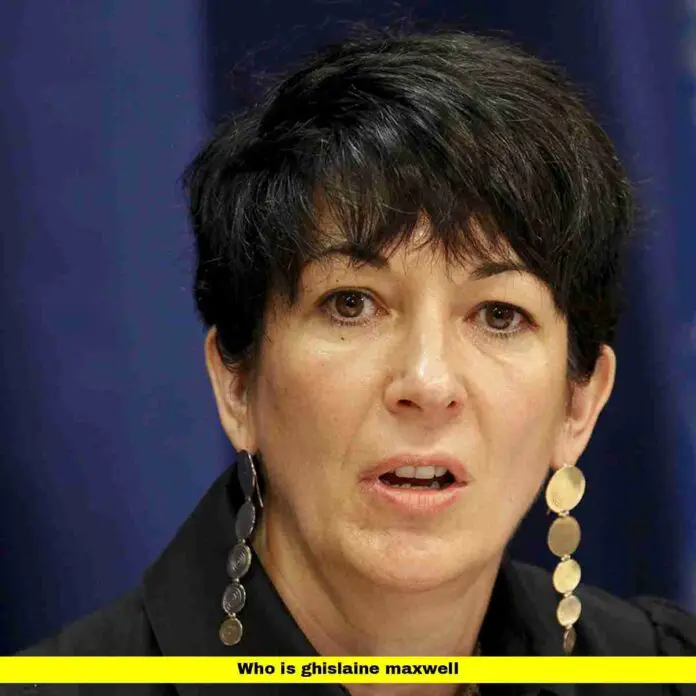
Who is Ghislaine Maxwell? This question continues to captivate the public as of 2025. Maxwell, a British socialite, gained worldwide notoriety due to her association with financier Jeffrey Epstein and her subsequent conviction for sex trafficking of minors. Her story encompasses a privileged upbringing, connections to elite social circles, and a high-profile legal battle that has drawn international attention.
Table of Contents
Early Life and Family Background
Ghislaine Maxwell was born on December 25, 1961, in Maisons-Laffitte, France. She is the daughter of Robert Maxwell, a British media magnate, and Elisabeth Maxwell, a respected academic. Growing up in an affluent and influential family gave Ghislaine access to elite social networks from a young age.
Her father, Robert Maxwell, owned a vast media empire and had considerable influence in Europe and beyond. Ghislaine’s upbringing involved exposure to high-profile events, international travel, and interactions with political and business leaders. Her education at prestigious institutions, including Balliol College, Oxford, where she studied modern history, further cemented her position within elite circles.
Maxwell later worked in publishing and public relations, building her career while maintaining high-society connections. These early experiences laid the groundwork for her later association with Jeffrey Epstein and her involvement in high-profile social and business networks.
Association With Jeffrey Epstein
Ghislaine Maxwell became closely associated with Jeffrey Epstein in the 1990s. Epstein, a financier with a history of sexual abuse, relied on Maxwell to manage his social connections and, according to court records, recruit and groom underage girls.
Maxwell’s role was central in Epstein’s operations, as she facilitated meetings, arranged accommodations, and coordinated interactions between Epstein and minors. Evidence presented during her trial demonstrated that she played an active part in ensuring that Epstein’s illegal activities could continue without interruption.
Her connection to Epstein ultimately led to federal charges, as the U.S. government gathered testimonies and documentation proving her involvement in sex trafficking and exploitation.
Conviction and Legal Proceedings
In December 2021, Maxwell was convicted on five counts related to sex trafficking of minors, including:
- Transporting a minor with intent to engage in criminal sexual activity.
- Conspiracy to entice minors to travel for illegal sexual activity.
- Recruitment and grooming of underage girls for abuse.
During the trial, multiple victims testified about their experiences, outlining how Maxwell facilitated Epstein’s crimes. The court found her guilty on all counts, and she was sentenced to 20 years in federal prison.
The trial was widely publicized, with extensive media coverage highlighting both the legal proceedings and the broader implications for accountability among high-profile individuals involved in criminal networks.
Appeals and Legal Challenges
Following her conviction, Maxwell’s legal team pursued multiple appeals. One key argument involved a 2007 non-prosecution agreement Epstein had reached with federal authorities, which her attorneys claimed should have extended protection to Maxwell.
In 2025, the U.S. Supreme Court declined to hear her appeal, leaving her conviction intact. Maxwell’s legal team has since explored other options, including clemency requests, as a potential avenue for relief. Despite these efforts, courts have consistently upheld her conviction, citing the substantial evidence presented during her trial.
Current Incarceration
Maxwell is currently serving her sentence at a federal prison facility in Texas. She was transferred from a federal institution in Florida to a minimum-security camp in 2025. While incarcerated, Maxwell remains under standard federal supervision and participates in programs appropriate for her security level.
Her imprisonment continues to draw attention due to the high-profile nature of the case and her association with Epstein. The public remains interested in developments regarding her sentence, appeals, and any potential adjustments to her prison term.
Public Perception and Controversy
The case of Ghislaine Maxwell has generated intense public debate. Some view her as a scapegoat for Epstein’s crimes, while others see her as an active participant who enabled exploitation. The case has sparked discussions about wealth, privilege, and justice, highlighting how high-profile individuals can be both protected and scrutinized by the legal system.
Conspiracy theories and misinformation have surrounded Maxwell’s story, but courts have relied solely on verified evidence and testimonies. The public continues to closely follow developments, especially regarding her appeals, prison conditions, and potential for clemency.
Impact on Victims and Legal Precedent
Maxwell’s conviction has provided a sense of justice for many of Epstein’s victims. It also established an important legal precedent: enablers of sex trafficking can be held accountable, regardless of social status or connections.
Her case has contributed to a broader understanding of sex trafficking and the responsibilities of individuals who facilitate exploitation. Legal experts note that the Maxwell case will continue to shape how future cases involving high-profile enablers are prosecuted.
The Role of Media and Public Interest
Media coverage has played a major role in shaping public perception of Maxwell. Documentaries, news segments, and interviews have examined her life, her connection to Epstein, and the legal process that led to her conviction.
Social media platforms continue to amplify discussions about her case, often generating debate about accountability, privilege, and the justice system. Public fascination stems not only from the crimes themselves but also from Maxwell’s social background and connections to powerful individuals.
Lessons and Broader Implications
The story of Ghislaine Maxwell provides several key takeaways:
- Wealth and privilege do not exempt individuals from legal accountability.
- Legal systems can hold enablers of criminal activity responsible, setting precedents for future cases.
- Public interest and media coverage can influence awareness and education about crimes such as sex trafficking.
Maxwell’s case has prompted reflection on how society addresses abuse, power, and accountability, particularly when powerful figures are involved.
Conclusion
Who is Ghislaine Maxwell? She is a British socialite whose life intersected with wealth, influence, and high-profile criminal activity. Convicted in 2021 for sex trafficking minors, Maxwell continues to serve a federal prison sentence as of 2025. Her legal battles, public scrutiny, and association with Jeffrey Epstein make her case a significant example of accountability for enablers of criminal activity.
Her story remains a cautionary tale about the consequences of exploiting power and privilege, and it highlights the ongoing efforts of the justice system to provide closure for victims and enforce accountability for perpetrators and facilitators alike.

