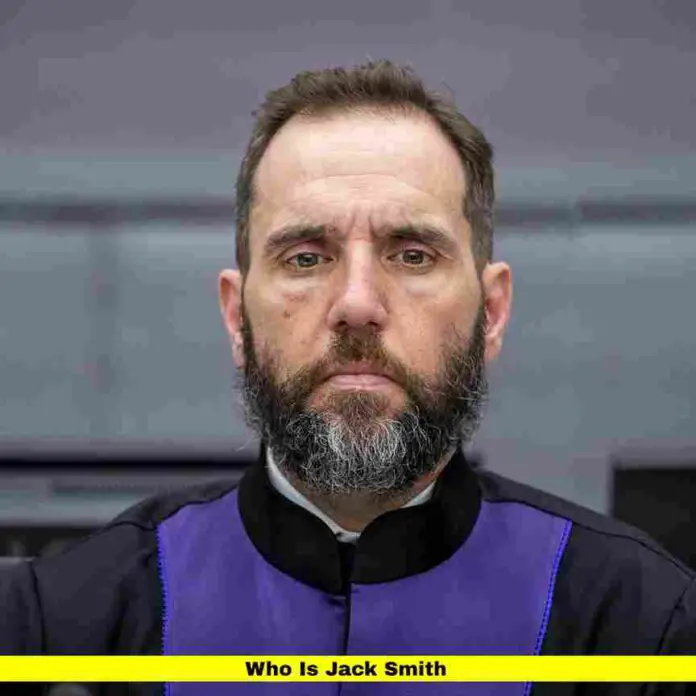
Jack Smith has become one of the most talked-about legal figures in the United States, not because of public speeches or political ambitions, but due to the extraordinary cases he was asked to lead. His career reflects decades of work inside the justice system, shaped by discipline, legal rigor, and a willingness to take on matters involving powerful individuals. Understanding his background helps explain why his name continues to surface in national debate.
Table of Contents
Early Years and Academic Foundation
Jack Smith’s path into law was built on a strong academic base and an early commitment to public service. Born in 1969, he pursued higher education with the intention of entering government work rather than private practice. He completed his undergraduate studies at the State University of New York at Oneonta, where he developed an interest in law, ethics, and institutional accountability.
He later attended Harvard Law School, an experience that placed him among future leaders of the American legal profession. At Harvard, he focused on criminal law and litigation, preparing for a career that would demand precision, independence, and resilience under pressure. This educational background positioned him for competitive roles within the justice system.
Entering Public Service
After law school, Smith chose the demanding route of prosecution. His early career began in New York, where he served as an assistant district attorney in Manhattan. In this role, he handled violent crime cases and complex criminal prosecutions, gaining hands-on trial experience.
These early years were critical. Courtroom exposure taught him how to build cases methodically, evaluate witness credibility, and manage high-stakes trials. His work earned him recognition as a disciplined prosecutor who relied on evidence rather than rhetoric.
Federal Prosecutorial Experience
Smith later transitioned into federal service as an assistant U.S. attorney in the Eastern District of New York. This role expanded his responsibilities and introduced him to large-scale investigations involving organized crime and public corruption.
Federal prosecution required coordination with multiple agencies and strict adherence to procedural rules. Smith’s work during this period strengthened his reputation as someone capable of handling sensitive cases that intersected with politics, finance, and law enforcement. These experiences laid the groundwork for future leadership roles within the Department of Justice.
Leadership Within the Justice Department
A major milestone in Smith’s career came when he was appointed to lead the Public Integrity Section of the Department of Justice. This division investigates corruption involving public officials, election crimes, and abuse of power.
As head of the unit, Smith oversaw investigations involving elected officials across different levels of government. His role demanded independence, as the cases often carried political consequences. He emphasized strict legal standards and avoided public commentary, allowing court filings to speak for themselves.
His tenure reinforced his standing as a prosecutor trusted to handle politically sensitive matters without external influence.
International Legal Work
Before returning to prominence in U.S. law, Smith spent several years working on the international stage. He served as chief prosecutor at the Kosovo Specialist Chambers in The Hague, a court established to investigate serious crimes linked to the Kosovo conflict of the late 1990s.
This role required navigating international law, complex jurisdictional issues, and cooperation with foreign governments. Smith led investigations into allegations of war crimes, including murder and torture. The work demanded patience, diplomacy, and meticulous evidence collection, often across borders.
His international experience distinguished him from many American prosecutors and demonstrated his ability to manage cases with global implications.
Selection for a Historic Role
Smith returned to the national spotlight in late 2022 when he was appointed special counsel by the U.S. attorney general. The appointment followed heightened political tension and concerns about conflicts of interest within the Justice Department.
He was tasked with overseeing two major federal investigations involving a former president. The cases carried historic weight and unprecedented public attention. His appointment signaled an effort to ensure independence and credibility in the handling of these matters.
Managing High-Profile Investigations
As special counsel, Smith led teams responsible for gathering evidence, issuing subpoenas, and presenting findings to grand juries. The investigations focused on actions connected to the 2020 election and the handling of classified government materials.
Smith maintained a low public profile throughout this period. He avoided interviews and limited public statements, choosing to communicate primarily through official court filings. This approach aligned with his long-standing belief that legal proceedings should unfold inside courtrooms, not media cycles.
Indictments and Legal Milestones
Under Smith’s leadership, federal indictments were brought in connection with both investigations. These actions marked the first time a former U.S. president faced federal criminal charges, placing Smith at the center of a historic legal moment.
The cases sparked intense public debate, legal analysis, and political reaction. Smith’s role was not to comment on these reactions but to pursue the cases within the boundaries of federal law and Department of Justice policy.
Conclusion of the Special Counsel Chapter
Following the 2024 presidential election, longstanding Justice Department policy prevented prosecution of a sitting president. As a result, the cases overseen by Smith were dismissed before reaching trial.
In early 2025, Smith stepped down from his role, formally ending his service as special counsel. His resignation closed a chapter that reshaped public discussion around prosecutorial independence and accountability at the highest levels of government.
Congressional Attention After Departure
Even after leaving office, Smith remained under congressional scrutiny. Lawmakers sought information about how the investigations were conducted and whether internal procedures were followed correctly.
Smith later appeared for a private interview with members of Congress, addressing questions about decision-making and investigative authority. His participation reflected the continuing political and legal interest in his work and its broader implications.
Debate Over Prosecutorial Power
Smith’s career has become a focal point in debates over the role of prosecutors in politically sensitive cases. Critics argue that such investigations risk politicizing the justice system, while supporters contend that independence is essential when powerful figures are involved.
Smith’s approach, characterized by limited public engagement and strict reliance on legal process, has been cited by supporters as a model of restraint. Critics remain unconvinced, highlighting the deep divisions surrounding his legacy.
Professional Reputation and Character
Those who have worked with Smith describe him as reserved, disciplined, and intensely focused. He is known for long hours, attention to detail, and an aversion to publicity.
Throughout his career, he has consistently avoided personal spotlight, allowing his work to define his public image. This approach has contributed to both respect and criticism, depending on political perspective.
Why His Career Still Matters
Jack Smith’s journey illustrates how the American legal system confronts moments of extraordinary challenge. His work raises questions about independence, accountability, and the limits of prosecutorial authority.
As legal and political institutions continue to evolve, the decisions made during his tenure will influence future debates about justice and governance. His career serves as a case study in how law operates when it intersects with power.
What are your thoughts on Jack Smith’s impact on the U.S. justice system? Share your perspective below and stay informed as legal and political discussions continue to evolve.

