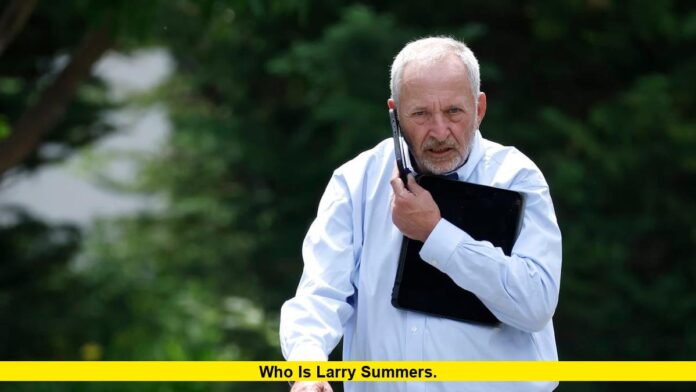
Larry Summers is a prominent American economist and policymaker known for holding key positions in government and academia. In November 2025, he announced he is stepping back from his public commitments after revelations surfaced about his prolonged correspondence with convicted sex offender Jeffrey Epstein.
Early life and academic credentials
Born on November 30, 1954, in New Haven, Connecticut, Larry Summers earned his Bachelor of Science at MIT and completed his Ph.D. in Economics at Harvard University. He became a tenured faculty member at Harvard in 1983, one of the youngest to achieve that status. Over time, he rose to hold the Charles W. Eliot University Professorship and directed the Mossavar-Rahmani Center for Business & Government at Harvard’s Kennedy School.
Major government roles
Summers has served in several high-profile public-service posts:
- Under Secretary of the Treasury for International Affairs under President Bill Clinton in the mid-1990s.
- 71st U.S. Secretary of the Treasury from July 1999 to January 2001.
- Director of the National Economic Council under President Barack Obama from 2009 to 2011.
These roles established him as a major voice in U.S. economic policy, from fiscal strategy to global finance.
Academic leadership and controversies
From 2001 to 2006, Summers served as President of Harvard University. His tenure ended amid significant controversy after remarks he made about gender differences triggered a faculty vote of no confidence. Despite that, he remained active in teaching, research, and commentary on economics and policy.
The latest developments and current status
As of November 18, 2025, Summers has publicly stated that he will withdraw from his external public roles and appearances, while continuing his teaching duties. This comes in response to correspondence released by the U.S. House Oversight Committee, which showed communication between Summers and Epstein spanning years, including discussions of personal and professional matters. In his statement, Summers said: “I am deeply ashamed of my actions and recognize the pain they have caused. I take full responsibility for my misguided decision to continue communicating with Mr. Epstein.”
Key points:
- Summers remains a professor at Harvard.
- He currently holds board or advisory positions in organizations such as OpenAI and Bloomberg, though their responses to his announcement are still evolving.
- Political and institutional pressure has mounted: a senior official in the administration has urged organizations to sever ties with him, and Senator Elizabeth Warren has publicly questioned his fitness to teach given the revelations.
- The broader investigation into Epstein-related records may bring further scrutiny to Summers and other institutions.
Timeline snapshot
| Year | Milestone |
|---|---|
| 1999-2001 | Served as U.S. Secretary of the Treasury |
| 2001-2006 | President of Harvard University |
| 2009-2011 | Directed National Economic Council under Obama |
| November 2025 | Announced stepping back from public commitments following Epstein-related disclosures |
Why this matters
For U.S. readers, the story of Larry Summers is significant because he has been a defining figure in economic policy for decades. Whether advising presidents, shaping global economic strategies, or teaching future policymakers, his influence has been extensive. The current controversy touches on issues of institutional integrity, elite networks, accountability, and public trust. Moreover, institutions tied to him—universities, think tanks, media outlets—are now under pressure to respond and possibly reconsider their affiliations.
Looking ahead
Here are a few developments to watch:
- Whether Harvard will revise Summers’ teaching role, title or affiliation in light of the disclosures.
- If media companies or boards will remove him or restrict his involvement.
- How major institutions will handle their relationships with Summers in the context of reputational risk.
- What further information may emerge from the release of Epstein-related documents, and whether new associations will come to light.
In summary, Larry Summers remains a figure of major historical importance in U.S. economic policy and academia. While he retains his teaching role, his broader public presence is now dramatically curtailed in light of the new revelations.
Feel free to share your thoughts or ask for more detail about any aspect of his career.

