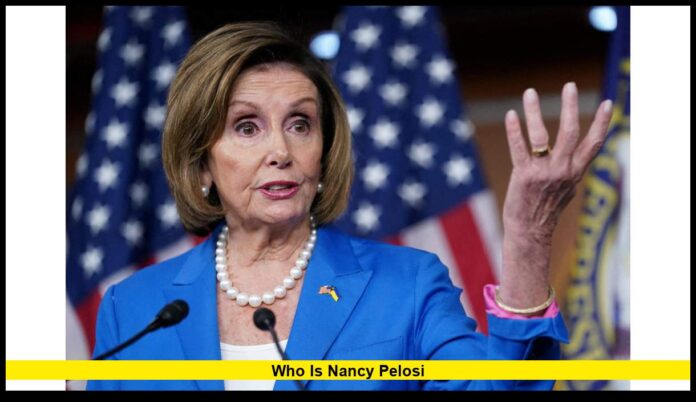
If you’ve ever wondered who is Nancy Pelosi, you’re asking about one of the most powerful and influential political figures in modern American history. As of 2025, Pelosi remains an active member of the U.S. House of Representatives, representing California’s 11th Congressional District, which includes much of San Francisco. With a career spanning nearly four decades, Pelosi has left an undeniable mark on U.S. politics as the first woman to serve as Speaker of the House, a position she held twice—from 2007 to 2011 and again from 2019 to 2023.
Even after stepping down from her leadership position, Pelosi continues to play a major role in shaping Democratic policy and mentoring the next generation of political leaders.
Table of Contents
Early Life and Education
Nancy Patricia D’Alesandro Pelosi was born on March 26, 1940, in Baltimore, Maryland, into a family deeply rooted in politics. Her father, Thomas D’Alesandro Jr., served as both a U.S. Congressman and later as the Mayor of Baltimore. Her mother, Annunciata D’Alesandro, was also active in local political and community work.
Growing up in a household that revolved around public service, Pelosi learned the art of campaigning and constituent engagement at an early age. She attended Institute of Notre Dame High School in Baltimore before earning a bachelor’s degree in political science from Trinity College in Washington, D.C., in 1962.
Her early life experiences, combined with her family’s political background, set the foundation for her eventual career in national politics.
Early Political Involvement and Rise in California
Pelosi’s political journey began after she moved to San Francisco, California, following her marriage to Paul Pelosi in 1963. While raising five children, she became active in the California Democratic Party, building connections that would later propel her into national office.
In the 1970s and 1980s, Pelosi worked behind the scenes as a Democratic fundraiser and strategist. Her organizational skills and networking ability quickly earned her recognition within party circles. She served as Chair of the California Democratic Party from 1981 to 1983, strengthening her influence in one of the country’s most politically active states.
Entry Into Congress
Nancy Pelosi entered Congress in 1987, winning a special election to represent California’s 5th Congressional District, which later became the 11th District due to redistricting. She succeeded the late Sala Burton, who had encouraged Pelosi to run before her death.
From the beginning of her congressional career, Pelosi positioned herself as a progressive Democrat, focusing on issues like healthcare, education, civil rights, and environmental protection. Her early advocacy for AIDS research funding and human rights helped her gain respect within the Democratic caucus and among her constituents in San Francisco.
Climbing the Leadership Ladder
Pelosi’s leadership abilities were evident early on. By the late 1990s, she was appointed to several influential committees and steadily rose through the ranks of the Democratic Party.
Key milestones in Pelosi’s rise to power:
- 2001: Elected as House Minority Whip, becoming the first woman to hold that position.
- 2003: Elected House Minority Leader, leading the Democratic opposition in the House.
- 2007: Became the first female Speaker of the House after Democrats regained control of Congress.
Her election as Speaker marked a historic turning point for women in American politics. Pelosi’s leadership style — strategic, assertive, and deeply organized — helped her navigate complex political environments and unite her party during pivotal legislative battles.
Historic Tenure as Speaker of the House
As Speaker, Nancy Pelosi wielded significant influence over legislative priorities and national policy. Her tenure was marked by major legislative achievements, political confrontations, and history-making moments.
Major achievements under Pelosi’s leadership:
- Affordable Care Act (2010): Pelosi played a central role in passing President Obama’s signature healthcare reform, extending insurance coverage to millions of Americans.
- Economic Recovery Act (2009): Helped lead Congress in passing a $787 billion stimulus package following the 2008 financial crisis.
- COVID-19 Relief Legislation (2020–2021): Oversaw negotiations for several pandemic relief bills, including the CARES Act and the American Rescue Plan.
- Infrastructure and Climate Policy: Advocated for clean energy investment and federal infrastructure funding.
Her leadership style often earned praise for its effectiveness, though it also drew criticism from political opponents who viewed her as a polarizing figure. Still, Pelosi’s ability to keep her party unified during divisive times solidified her reputation as one of the most skilled legislative strategists in modern history.
Nancy Pelosi’s Legacy as the First Woman Speaker
Pelosi’s most enduring legacy lies in her role as a trailblazer for women in government. When she first took the Speaker’s gavel in 2007, she shattered a glass ceiling that had stood for more than two centuries.
She famously remarked during her swearing-in ceremony:
“For our daughters and granddaughters, today we have broken the marble ceiling. For the first time, the Speaker of the House is a woman.”
Her achievement inspired generations of women to pursue leadership roles in government, law, and business.
Pelosi’s Political Views and Priorities
Throughout her career, Pelosi has maintained a progressive but pragmatic political philosophy, blending liberal social values with fiscal discipline and strong institutional respect.
Core issues Pelosi has championed:
- Healthcare: Strong advocate for expanding access and protecting the Affordable Care Act.
- Climate Change: Consistent supporter of clean energy and environmental sustainability.
- Women’s Rights: Longtime defender of reproductive rights and equal pay legislation.
- LGBTQ+ Equality: Early supporter of marriage equality and anti-discrimination laws.
- Economic Policy: Advocates for middle-class tax relief and corporate accountability.
Even in 2025, Pelosi continues to use her influence to shape Democratic legislative priorities on these fronts.
Nancy Pelosi’s Family and Personal Life
Nancy Pelosi’s personal life has been as full as her public one. She married Paul Pelosi, a successful businessman and investor, in 1963. Together, they have five children — Nancy Corinne, Christine, Jacqueline, Paul Jr., and Alexandra Pelosi — and several grandchildren.
Paul Pelosi manages Financial Leasing Services, Inc., a San Francisco-based real estate and investment firm. The Pelosi family’s financial portfolio, including investments in technology and property, has been the subject of public interest, particularly during Nancy Pelosi’s leadership years.
Despite the scrutiny that comes with public service, Pelosi has maintained a strong focus on family and faith, often citing her upbringing in a Catholic household as a guiding influence on her values and leadership.
Pelosi’s Continued Role in 2025
As of 2025, Nancy Pelosi remains an active member of Congress, focusing on mentoring younger lawmakers, supporting women in leadership, and advancing key Democratic initiatives. Though she stepped down as Speaker in 2023, she continues to serve as a symbol of Democratic unity and experience.
She has stated that her mission now is to “prepare the next generation of leaders” while continuing to advocate for the issues that defined her career: climate action, healthcare, and social justice.
Pelosi also plays an important advisory role in the Democratic Party, helping guide strategy for upcoming elections and legislative efforts.
Awards and Recognition
Over her long career, Pelosi has received numerous awards for leadership and service, including:
- John F. Kennedy Profile in Courage Award
- Nobel Peace Prize nomination (shared, for environmental advocacy)
- National Women’s Hall of Fame induction (2013)
- Time Magazine’s 100 Most Influential People list (multiple years)
Her name is now synonymous with American political history and female empowerment in leadership.
The Bottom Line
For those still asking who is Nancy Pelosi, the answer is clear: she is one of the most powerful, enduring, and transformative leaders in the history of the U.S. Congress. From breaking barriers as the first female Speaker to shaping national policy for decades, Pelosi’s influence reaches far beyond her San Francisco district.
Her combination of political toughness, legislative expertise, and commitment to public service continues to define her as a central figure in American democracy — one whose impact will be felt for generations to come.
What are your thoughts on Nancy Pelosi’s legacy and leadership? Share your opinions in the comments below and join the conversation.

