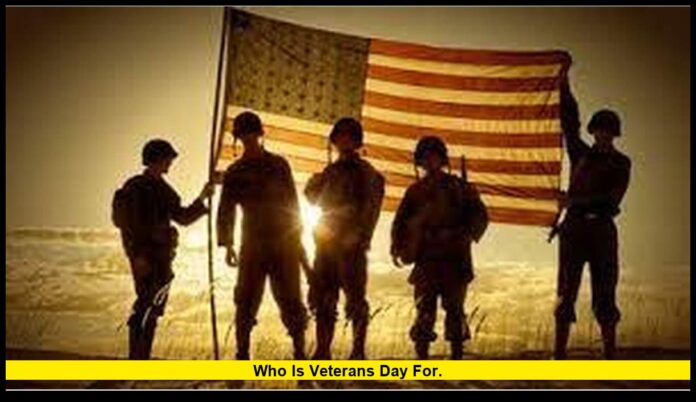
Every year, Americans pause to ask an important question: Who is Veterans Day for? The answer is simple yet deeply meaningful — Veterans Day is for all U.S. military veterans, living or deceased, who have served honorably in any branch of the Armed Forces. On this day, the nation comes together to celebrate the courage, sacrifice, and dedication of millions of men and women who have worn the uniform of the United States.
Table of Contents
The True Purpose of Veterans Day
Veterans Day is a federal holiday observed each year on November 11, marking the anniversary of the end of World War I in 1918. While it began as Armistice Day, the holiday evolved over time to honor all who served, not just those who fought in that war.
In 1954, President Dwight D. Eisenhower officially renamed the holiday Veterans Day, expanding its meaning to include veterans from all branches, ranks, and eras — whether they served in wartime or peace.
The purpose of the day is to express national gratitude. It’s about recognizing ordinary Americans who answered an extraordinary call — to defend their country and uphold freedom, both at home and abroad.
Who Veterans Day Honors
When we ask, “Who is Veterans Day for?” the answer extends to every individual who has served under the U.S. flag. This includes:
- Living Veterans: Those who have completed military service and returned to civilian life. Veterans Day gives them a moment of appreciation and visibility.
- Deceased Veterans: While Memorial Day is primarily dedicated to honoring the fallen, Veterans Day also acknowledges those who served and have since passed away.
- All Branches of Service: The Army, Navy, Air Force, Marine Corps, Coast Guard, and Space Force — every branch is represented and honored.
- Combat and Non-Combat Veterans: Whether stationed abroad in conflict zones or serving stateside in support roles, every veteran’s contribution matters.
- Men and Women of All Eras: From World War I and II to Vietnam, Iraq, Afghanistan, and beyond — Veterans Day includes every generation of service members.
In essence, Veterans Day is for anyone who took an oath to serve the nation, no matter when or where they did so.
How Americans Celebrate Veterans Day
Across the United States, Veterans Day is recognized with heartfelt tributes and community events. Parades, ceremonies, and public gatherings are held from small towns to major cities, each honoring local heroes and national pride.
Common Ways Americans Celebrate Include:
- Parades: Cities like New York, Chicago, and Washington D.C. host annual Veterans Day parades featuring veterans’ organizations, active-duty personnel, and marching bands.
- Ceremonies: Communities hold flag-raising ceremonies, wreath-layings at memorials, and moments of silence to honor those who served.
- School Programs: Many schools teach students the history and meaning of the holiday, encouraging the next generation to understand its significance.
- Business Tributes: Restaurants and companies offer free meals, discounts, or special promotions to veterans as a gesture of thanks.
- Social Media Recognition: Americans share stories, photos, and personal messages using hashtags like #ThankYouVeterans and #VeteransDay.
These activities serve one common goal — to ensure that veterans feel recognized, respected, and remembered.
Veterans Day vs. Memorial Day
A common question arises every year: what’s the difference between Veterans Day and Memorial Day?
- Veterans Day (November 11) celebrates all veterans, living and deceased, for their service.
- Memorial Day (observed on the last Monday of May) honors those who died in military service to the United States.
While both holidays reflect gratitude, Veterans Day emphasizes appreciation for the living, making it a celebration rather than a day of mourning.
Why Veterans Day Still Matters Today
In 2025, the meaning of Veterans Day resonates more deeply than ever. America is home to over 18 million living veterans, representing every background, region, and generation.
These individuals often transition quietly back into civilian life, continuing to serve their communities as teachers, first responders, business owners, and civic leaders. Veterans Day is a vital reminder that service doesn’t end when the uniform comes off — it continues in the lives they build afterward.
The holiday also highlights ongoing needs within the veteran community, including access to quality healthcare, mental health support, education, and employment opportunities. Honoring veterans means recognizing both their past sacrifices and their current challenges.
How to Show Appreciation on Veterans Day
If you’re wondering how to personally honor veterans today, here are meaningful ways to show gratitude:
- Thank a Veteran: A simple “thank you for your service” can mean more than you think.
- Attend a Ceremony: Participate in a local event or parade in your area.
- Fly the Flag: Displaying the American flag respectfully is a traditional show of support.
- Volunteer: Offer time or donations to veteran support organizations.
- Listen to Their Stories: Sharing veterans’ experiences keeps their history and sacrifices alive for future generations.
Even the smallest gesture — a handshake, a message, or a public acknowledgment — can make a lasting impact.
Veterans Day Traditions Across America
In communities large and small, certain traditions have become synonymous with Veterans Day:
- The 11th Hour Observance: Across the nation, many ceremonies begin at 11 a.m., marking the moment the World War I armistice was signed in 1918.
- Wreath-Laying at Arlington National Cemetery: The President or Vice President traditionally lays a wreath at the Tomb of the Unknown Soldier to honor all service members.
- Community Parades and Flyovers: From local high school marching bands to military flyovers, these displays bring people together in patriotic unity.
- Moments of Reflection: Many Americans take a few minutes to silently reflect on the meaning of service and the freedoms it protects.
These observances reinforce the spirit of gratitude that defines Veterans Day.
Who Is Veterans Day For? The Simple Answer
So, who is Veterans Day for? It is for the heroes who served our country — in war, in peace, abroad, and at home. It is for the men and women who stood ready to defend the United States, whether in combat or support roles. It is for those who came home and those who never did.
It’s also a day for all Americans — a reminder to pause, reflect, and express gratitude for the freedom that service members have helped secure.
On this Veterans Day, take a moment to thank those who have worn the uniform. Whether through words, actions, or reflection, let us never forget the debt of gratitude we owe to our veterans. Share how you honor them below and keep the spirit of appreciation alive.

