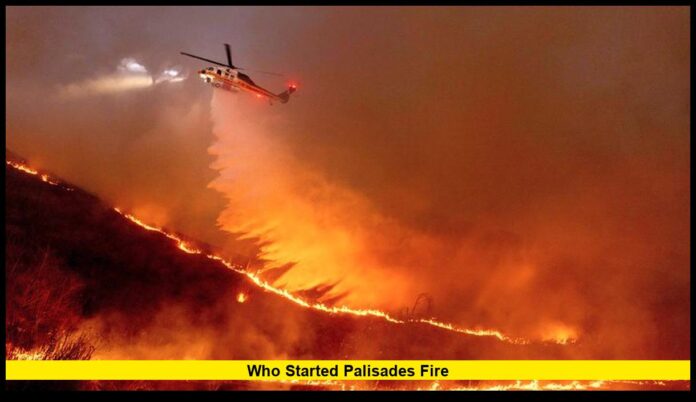
Authorities have finally answered the question many Californians have been asking for months — who started Palisades Fire. After a lengthy investigation, law enforcement officials have arrested a 29-year-old man accused of deliberately setting the blaze that devastated Pacific Palisades and surrounding neighborhoods in early January 2025.
This arrest marks a major step forward in one of California’s most tragic wildfire cases. The Palisades Fire killed 12 people, destroyed thousands of homes, and forced tens of thousands to evacuate, making it one of the deadliest and most destructive fires in Los Angeles County history.
Table of Contents
The Suspect Behind the Fire
On October 8, 2025, investigators announced the arrest of the suspect believed to have started the fire. According to officials, he intentionally ignited a fire near a hiking trail late on the night of January 1. The timing and location allowed the blaze to grow unnoticed during the night, spreading rapidly as strong Santa Ana winds pushed flames into nearby neighborhoods.
The suspect was apprehended out of state and will be extradited to California to face multiple federal charges, including arson resulting in death. Due to the scale of the destruction and the loss of life, prosecutors have said they will seek the maximum penalties under the law. If convicted, the suspect could face life in prison.
Authorities spent months piecing together the evidence, which included forensic analysis, burn pattern studies, witness accounts, and digital records. This arrest ends one of the most complex wildfire investigations in recent years.
The Night the Palisades Fire Started
The Palisades Fire began just after midnight on January 2, 2025. Conditions were extremely dangerous: low humidity, dry vegetation from months of drought, and powerful winds created a perfect storm. Within hours, flames tore through hillsides and jumped roads, setting homes ablaze as embers traveled on the wind.
Residents were awakened in the middle of the night by evacuation alerts, sirens, and the sight of flames approaching their neighborhoods. Many had only minutes to gather belongings and escape. The fire spread at an alarming pace, reaching thousands of acres by morning.
The Scale of the Disaster
The impact of the Palisades Fire was devastating:
- Acres burned: Over 23,000 acres scorched
- Structures destroyed or damaged: Around 6,800 homes, businesses, and buildings
- Lives lost: 12 fatalities, including both residents and responders
- Evacuations: Tens of thousands forced to flee their homes
- Containment: Achieved by late January 2025 after weeks of firefighting
Entire neighborhoods were reduced to ash, and thick smoke blanketed the Los Angeles area for days. The fire left behind widespread environmental damage, stripping hillsides of vegetation and increasing the risk of landslides in the months that followed.
Emergency Response Under Review
While firefighters worked tirelessly to contain the blaze, the disaster exposed significant challenges in the region’s wildfire response systems. A post-incident review found several critical issues:
- Evacuation alerts: Some areas received delayed or confusing notifications, leading to dangerous evacuation conditions.
- Agency coordination: Communication between city, county, and state agencies was inconsistent at key moments.
- Policy gaps: Certain emergency plans were not updated to reflect the speed and intensity of modern wildfires.
- Technology limitations: Emergency alert systems failed to reach some residents, leaving them unaware of the danger.
These shortcomings have fueled discussions among state and local leaders about upgrading evacuation protocols, improving inter-agency coordination, and modernizing public warning systems.
Rebuilding After the Fire
Recovery efforts have been ongoing since the fire was finally contained. By mid-2025, most of the burned properties had been cleared of debris, allowing reconstruction to begin. Residents are now navigating insurance claims, building permits, and financial recovery as they try to rebuild their lives.
Key recovery milestones include:
- Debris removal completed across most burned areas by summer 2025.
- Temporary housing established for displaced families.
- Fast-track permitting introduced to speed up the rebuilding process.
- Infrastructure repair underway for roads, water systems, and utilities.
- Environmental restoration projects launched to stabilize burned terrain and restore local ecosystems.
Although progress has been steady, full recovery will take years. Some neighborhoods may not be fully rebuilt for half a decade, and the emotional recovery for many residents is just beginning.
Legal Implications of the Arrest
The arrest of the suspect accused of starting the fire will now move into the courts, where prosecutors are preparing to present a detailed case. If found guilty, the suspect faces life imprisonment. This case is expected to set a legal precedent due to the scope of destruction and loss of life.
In addition to criminal charges, civil lawsuits are likely. Homeowners, insurance companies, and victims’ families may pursue damages for the massive property losses and personal suffering caused by the fire. The case will also bring greater scrutiny to arson-related penalties and how the justice system handles wildfires caused intentionally.
Policy Changes on the Horizon
The Palisades Fire has renewed urgency around wildfire prevention in California. State lawmakers are considering new measures to strengthen fire safety and response, including:
- Expanding early fire detection systems, such as satellite monitoring and AI-assisted surveillance.
- Improving evacuation planning to ensure warnings reach all residents quickly and clearly.
- Increasing arson penalties for fires started in high-risk areas.
- Investing in vegetation management to reduce fuel loads near communities.
- Enhancing interagency communication to create faster, more coordinated responses.
These changes reflect the growing reality that wildfires are no longer limited to remote forests — they are increasingly threatening suburban and urban communities as well.
Community Resilience
Despite the immense losses, the Pacific Palisades community has shown remarkable resilience. Neighbors have supported one another through donations, volunteer efforts, and rebuilding projects. Many homeowners are taking proactive steps to fireproof their properties, such as installing fire-resistant materials, clearing vegetation, and creating defensible spaces.
Local organizations have played a key role in helping families recover, providing temporary housing, financial assistance, and emotional support. The fire has brought the community together in unexpected ways, fostering a shared determination to rebuild stronger and safer.
Looking Ahead
For months, residents asked who started Palisades Fire, and now they finally have an answer. The arrest marks a critical moment in the search for justice and accountability. Legal proceedings will unfold over the coming months, revealing more details about how and why this devastating fire was started.
At the same time, recovery continues across Pacific Palisades and surrounding communities. The lessons learned from this tragedy are shaping policy, preparedness, and community efforts to reduce wildfire risk in the future.
The Palisades Fire will be remembered not only for its destruction but also for the resilience of the people affected by it. As legal cases proceed and rebuilding continues, Californians are looking to this event as a reminder of both the danger of wildfire and the strength of communities that face it together.

