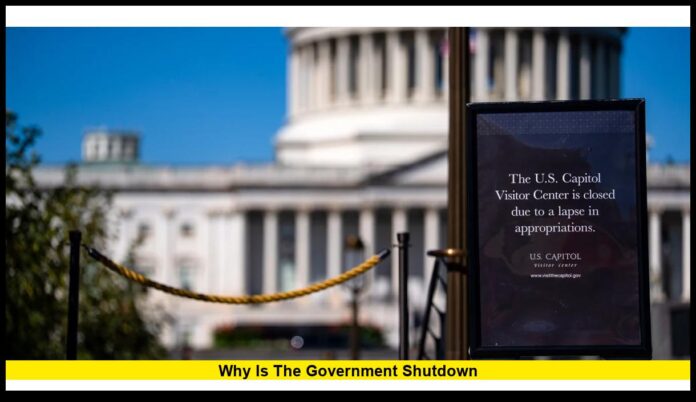
The question on many Americans’ minds this week is simple: why is the government shutdown? As of November 2025, the United States has entered another partial federal shutdown after lawmakers in Congress failed to approve a long-term spending bill before the fiscal deadline.
This shutdown has once again exposed the deep partisan divide in Washington, with both major parties locked in disagreement over how much the federal government should spend — and on what. Negotiations between the Republican-led House and the Democratic-controlled Senate broke down over key issues such as border security funding, foreign aid for Ukraine, and proposed cuts to domestic programs. Without a compromise, funding for many federal agencies expired, automatically triggering the shutdown.
The impact has been swift and wide-reaching. Hundreds of thousands of federal employees are currently furloughed or working without pay, while essential services such as air travel, public safety, and food assistance face mounting pressure. National parks have closed, small business loan approvals are frozen, and many families who rely on federal programs are left in uncertainty.
For most Americans, the shutdown feels all too familiar — another reminder of how political gridlock in Washington can disrupt daily life and weaken public confidence in government leadership.
Table of Contents
What Caused the 2025 Government Shutdown?
The 2025 government shutdown began at 12:01 a.m. on November 6, after Congress missed the deadline to approve a comprehensive budget or a temporary funding extension.
At the center of the dispute is a deep divide between the Republican-led House of Representatives and the Democratic-controlled Senate over federal spending priorities, border security funding, and aid to Ukraine.
The House has pushed for significant spending cuts and stricter immigration enforcement measures as conditions for approving new funding bills. The Senate, meanwhile, has advanced bipartisan spending proposals without those provisions.
When negotiations broke down, both chambers adjourned without reaching a compromise — triggering an automatic lapse in government funding.
Which Government Services Are Affected?
A government shutdown doesn’t mean the entire federal government stops working. However, it does mean that many “non-essential” services and employees are temporarily suspended until funding is restored.
Here’s a breakdown of how the shutdown is impacting different sectors:
- Federal Workers: More than 800,000 federal employees are affected, with many furloughed or working without pay. Essential workers — such as air traffic controllers, TSA agents, and border patrol — remain on duty but won’t receive paychecks until the government reopens.
- National Parks and Museums: Most national parks, monuments, and Smithsonian museums are closed, leading to major tourism disruptions.
- Food Assistance Programs: The Supplemental Nutrition Assistance Program (SNAP) continues temporarily but faces funding gaps if the shutdown extends beyond two weeks.
- Military and Veterans: Active-duty military personnel continue working without pay, while some Department of Veterans Affairs services may experience delays.
- IRS and Social Security: The IRS has scaled back services, but Social Security checks and Medicare benefits continue uninterrupted.
The longer the shutdown lasts, the more severe the economic and social impact becomes — particularly for federal workers and contractors who rely on regular pay.
Political Divisions Driving the Stalemate
At the core of this shutdown lies an ideological clash over spending levels and government priorities.
Republican lawmakers, led by Speaker Mike Johnson, have demanded cuts to non-defense discretionary spending and stronger border enforcement measures, including new restrictions on asylum and immigration programs.
Democrats, led by Senate Majority Leader Chuck Schumer, have pushed for a clean funding bill — one that keeps government agencies operating without controversial policy riders.
President Joe Biden has urged Congress to pass a bipartisan spending package, emphasizing that shutdowns harm the economy and damage public trust in government.
Despite calls for cooperation, internal divisions within the House Republican caucus have made it difficult for leadership to rally enough votes for any single plan. A small bloc of hardline conservatives continues to oppose compromise measures, echoing similar conflicts that led to the 2023 near-shutdown and Speaker turnover last year.
The Economic Impact of the Shutdown
Every government shutdown has ripple effects beyond Washington. Economists estimate that a prolonged funding lapse could cost the U.S. economy billions of dollars per week, reducing GDP growth and eroding consumer confidence.
Key areas of impact include:
- Federal Pay Delays: Thousands of workers in D.C., Virginia, Maryland, and across the country are facing missed paychecks.
- Contractor Losses: Private contractors, who cannot recoup lost income after a shutdown, may lose significant revenue.
- Travel and Tourism: Park closures and delayed passport services impact the travel industry, especially ahead of the holiday season.
- Stock Market Volatility: Investors often react to shutdowns with uncertainty, though short-term effects typically stabilize once funding resumes.
The Congressional Budget Office (CBO) estimates that the 2018–2019 shutdown — the longest in U.S. history — cost the economy $11 billion, $3 billion of which was permanently lost. Economists warn that the 2025 shutdown could mirror those losses if it extends into December.
How Long Could the 2025 Shutdown Last?
As of November 7, there’s no clear timeline for a resolution. Congressional leaders continue to negotiate, but deep divisions persist.
Historically, shutdowns have ranged from a single day to 35 days (as seen in the 2018–2019 impasse). The duration often depends on how quickly lawmakers can reach a bipartisan compromise — or how much political pressure builds from public frustration.
Both parties are aware that the longer the shutdown lasts, the greater the political and economic consequences. Federal unions, small businesses, and governors from both parties are urging Congress to act swiftly to restore funding.
Public Reaction and Political Fallout
Public reaction to the current shutdown has been largely negative. Polls conducted this week by Pew Research Center and Reuters/Ipsos show that a majority of Americans blame Congress for the gridlock, with slightly more attributing responsibility to House Republicans.
Analysts say that the political impact could influence upcoming 2026 midterm elections, particularly in swing districts where voters are frustrated by dysfunction in Washington.
For many Americans, the shutdown has become symbolic of a broader lack of cooperation in government — with public trust in Congress already at record lows.
How This Shutdown Compares to Previous Ones
The United States has experienced 21 government shutdowns since 1976, though only a handful have lasted longer than a few days.
| Year | Duration | Primary Issue |
|---|---|---|
| 1995–1996 | 21 days | Federal spending cuts (Clinton vs. Gingrich) |
| 2013 | 16 days | Affordable Care Act funding |
| 2018–2019 | 35 days | Border wall funding |
| 2023 | Avoided last-minute | Budget and Ukraine aid dispute |
| 2025 | Ongoing | Spending cuts, immigration, Ukraine aid |
Each shutdown has had unique political triggers, but the pattern is familiar: partisan disagreements over spending priorities that push government operations to the brink.
What makes the 2025 shutdown notable is the combination of global and domestic pressures — including international aid debates, rising inflation, and upcoming election tensions.
Is There a Solution in Sight?
Behind closed doors, congressional negotiators are exploring several potential solutions:
- Short-term continuing resolution (CR): Extending government funding for a few weeks to allow more time for negotiations.
- Omnibus spending bill: Combining multiple appropriations into one comprehensive package — often used to end past shutdowns.
- Bipartisan compromise: Lawmakers may agree to modest spending reductions and targeted policy adjustments to satisfy both sides.
President Biden has reiterated that his administration is open to negotiation but “will not accept extreme cuts” to social programs or public services.
If a short-term funding deal is reached, the government could reopen within days. But without a breakthrough, the standoff risks lasting through the Thanksgiving holiday — a politically damaging prospect for both parties.
Why the Government Shutdown Matters to Every American
Even for those not directly employed by the federal government, shutdowns carry real consequences. They delay services, weaken public infrastructure, and create economic uncertainty that affects businesses and families alike.
Beyond the financial cost, each shutdown underscores the fragility of bipartisan cooperation in Washington. The repeated cycle of brinkmanship has led many experts to call for budget process reforms — including automatic funding measures to prevent future shutdowns.
Do you think lawmakers should change how the federal budget process works to avoid shutdowns? Share your thoughts below and stay tuned for updates as negotiations continue in Washington.

