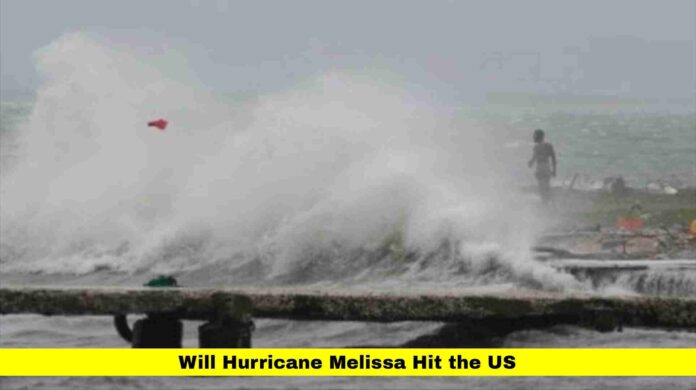
Hurricane Melissa has become one of the most powerful storms of the 2025 Atlantic hurricane season, raising urgent questions: will Hurricane Melissa hit the US? As of October 30, 2025, forecasts show that a direct landfall on the US mainland is unlikely, though the storm’s remnants may still influence parts of the East Coast with heavy rain, strong surf, and gusty winds.
Table of Contents
Hurricane Melissa’s Current Position and Strength
Hurricane Melissa made landfall on the southern coast of eastern Cuba on October 29, packing sustained winds of around 120 mph. Before reaching Cuba, it devastated several Caribbean islands, including Jamaica, Haiti, and the Cayman Islands. Meteorologists recorded Melissa’s peak intensity near Jamaica, where winds reached an astonishing 185 mph with central pressure dipping below 895 millibars, making it one of the most intense hurricanes in recent decades.
After striking Cuba, the system moved northeast over warm Caribbean waters. It is now tracking toward the southeastern Bahamas, gradually losing strength but still classified as a Category 2 hurricane. Despite the weakening trend, the storm continues to produce dangerous storm surges, flooding rains, and hurricane-force winds across parts of the Caribbean.
Will Hurricane Melissa Hit the US Mainland?
According to the latest forecast models, Hurricane Melissa is not expected to make landfall in the continental United States. Instead, the storm is projected to move northeast into the Atlantic Ocean, skirting well east of the Florida coastline before turning toward Bermuda.
However, meteorologists warn that indirect effects from Melissa could still be felt along the US East Coast. While the core of the storm will remain offshore, the outer bands and residual moisture could impact weather systems over the Mid-Atlantic and New England regions later this week.
These effects may include:
- Heavy rainfall in parts of the eastern United States as moisture from Melissa interacts with a cold front.
- Rough surf and rip currents along beaches from Florida to New Jersey.
- Strong offshore winds affecting maritime operations and coastal travel.
Why the US Is Avoiding a Direct Strike
Several atmospheric factors have steered Melissa away from the United States. A strong trough of low pressure has developed along the eastern seaboard, pulling the hurricane northeastward into the Atlantic. Additionally, high wind shear and cooler ocean temperatures near the US coast are weakening the storm and reducing the likelihood of a westward shift.
Meteorologists note that while hurricanes can change course unexpectedly, the current steering patterns make a US landfall highly improbable. The greatest risks now lie in the Bahamas and Bermuda, which may experience hurricane-force conditions as Melissa moves closer.
Indirect Impacts Expected in the US
Even though Hurricane Melissa is not expected to strike the United States directly, its influence on regional weather could still be noticeable. Coastal communities and travelers should remain cautious over the coming days.
Possible effects along the US East Coast include:
- High Surf and Coastal Flooding: Melissa’s outer wind field will generate large ocean swells that may reach the southeastern and mid-Atlantic coasts. This could cause minor coastal flooding and beach erosion in low-lying areas.
- Dangerous Rip Currents: Swimmers and surfers are urged to stay alert as dangerous rip currents may extend across beaches from South Carolina to Long Island.
- Enhanced Rainfall: As tropical moisture from Melissa merges with a frontal system, parts of the Mid-Atlantic and New England could experience locally heavy rain and gusty winds by Thursday and Friday.
Safety Tips for Coastal Residents
While a direct impact isn’t forecasted, it’s still important for residents along the eastern seaboard to stay informed. Hurricanes can evolve quickly, and indirect effects often lead to dangerous conditions even without a landfall.
Key precautions include:
- Monitor official weather updates from the National Hurricane Center (NHC) and local authorities.
- Avoid swimming or boating in areas where surf advisories or rip current warnings are in effect.
- Prepare emergency supplies in case of localized power outages or flooding.
- Secure outdoor furniture, boats, and equipment to prevent damage from strong winds.
Hurricane Melissa’s Next Destination
After crossing Cuba and the Bahamas, Melissa is expected to continue north-northeast toward Bermuda. The island is under a hurricane watch, with forecasters predicting tropical-storm-force winds and heavy rain by late Thursday. Beyond that, Melissa is likely to transition into a post-tropical cyclone as it moves into cooler Atlantic waters.
While the system will weaken, its legacy will remain significant. Jamaica, in particular, has reported widespread power outages, flooding, and infrastructure damage, with early assessments suggesting billions of dollars in losses. Relief efforts are now underway across affected Caribbean nations.
The 2025 Atlantic Hurricane Season So Far
Hurricane Melissa marks the seventh major hurricane of the 2025 Atlantic season, which has been unusually active due to record-high ocean temperatures in the tropical Atlantic. Experts say that warmer waters and favorable atmospheric conditions have contributed to the rapid intensification of multiple storms this year.
Meteorologists emphasize that hurricane season is not over yet — it officially runs through November 30. Even as Melissa moves away, forecasters continue to monitor new disturbances forming off the west coast of Africa and in the central Atlantic.
Outlook for the United States
For now, the US mainland is safe from a direct hit, but the East Coast will still feel some lingering effects from Hurricane Melissa. Rain, rip currents, and strong surf could disrupt travel and outdoor activities, especially heading into the weekend.
Residents are encouraged to remain cautious and follow updates from the National Weather Service and National Hurricane Center as conditions evolve.
Conclusion
Hurricane Melissa has proven to be one of the most intense storms in years, leaving a trail of destruction across the Caribbean. Thankfully, the United States appears to have avoided a direct strike, but the storm’s far-reaching influence will still be felt along the Atlantic coast.
Stay alert, stay safe, and share your local experiences in the comments below if Melissa has impacted your area — every observation helps others stay prepared.

