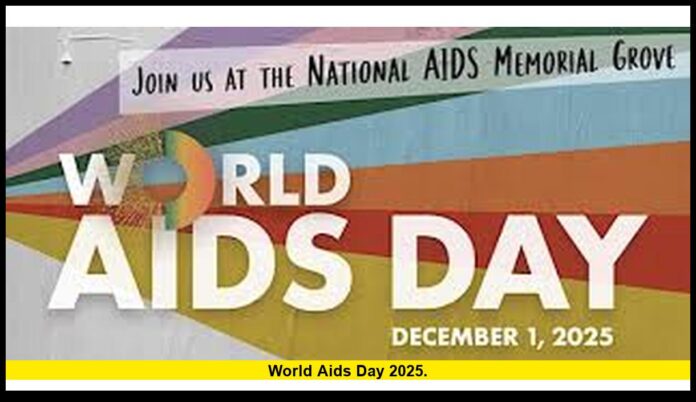
World AIDS Day 2025 arrives on December 1 at a critical moment: global progress against HIV faces fresh setbacks even as life-saving tools and community-led programs continue to make a difference. Today’s commemoration centers on rebuilding momentum, protecting services, and ensuring people in the United States and worldwide can access prevention, testing, and treatment without interruption.
Table of Contents
What this year’s theme means
The official 2025 theme — “Overcoming disruption, transforming the AIDS response” — calls attention to interruptions in HIV services and financing that have worsened in 2025, and urges governments, health systems, and communities to adapt and restore essential programs. The theme stresses political leadership, rights-based policies, and sustained international cooperation to avoid reversing decades of gains.
Where the epidemic stands globally
Recent global estimates show there were about 40.8 million people living with HIV at the end of 2024, with roughly 1.3 million new infections that year and an estimated 630,000 AIDS-related deaths. While long-term reductions in new infections and deaths are real — achievements built on treatment scale-up and prevention tools — the raw numbers underline that HIV remains a major public-health challenge. These global figures form the backdrop for calls this World AIDS Day to protect funding and services.
A funding shock and service disruptions
Multiple agencies and advocacy groups warn that 2025 brought a sharp decline in external funding for the global AIDS response. That funding shortfall is already disrupting prevention programs, testing supply chains, and community services in many high-burden countries. Without rapid course correction, progress toward ending AIDS as a public-health threat could stall or even reverse.
The U.S. situation: data and services
In the United States, HIV remains concentrated in specific populations and regions. The most recent surveillance reports show over 39,000 HIV diagnoses nationwide in 2023 and roughly 1.1 million persons living with diagnosed HIV at year-end 2023, with significant racial, ethnic, and geographic disparities. Public-health officials note steady improvements in linkage to care and viral suppression for people on treatment, yet gaps remain in prevention reach (including access to PrEP), testing, and retention in care — particularly in the Southern U.S. and among Black and Hispanic/Latino communities.
Policy shifts and public-sector commemoration
This World AIDS Day has also seen controversy across federal agencies: some U.S. government offices reportedly directed employees and certain grantees not to publicly mark December 1 with commemorative messaging or events. That development prompted alarm among advocacy groups, who argue federal acknowledgment and visibility matter for funding, outreach, and stigma reduction. Public and private partners across the U.S. continue to plan community events, testing drives, and education campaigns despite mixed signals from some official quarters.
What communities are doing — and why it matters
Across the country, community-based organizations, clinics, and local health departments are using World AIDS Day to ramp up testing drives, promote PrEP and HIV treatment access, and spotlight services for marginalized groups. Community organizations remain the backbone of the response — delivering outreach to people who mistrust formal systems, providing culturally competent services, and reaching groups that face legal or social barriers to care. The 2025 theme explicitly emphasizes supporting these localized efforts to stabilize services amid funding and supply challenges.
Prevention and treatment tools still available
Clinically, the tools that prevent transmission and keep people healthy remain available and effective: antiretroviral therapy (ART) suppresses viral loads to undetectable levels, preventing onward transmission; pre-exposure prophylaxis (PrEP) remains highly protective for people at risk when taken as recommended; and routine testing identifies people who need care. Ensuring those tools reach everyone who can benefit — through clinics, community programs, pharmacies, and mobile services — is a central call on World AIDS Day 2025.
Practical actions for U.S. readers today
- Get tested if you’ve never been tested or if you have new or ongoing risk factors. Local health departments and community clinics often run free or low-cost testing events on World AIDS Day.
- If you’re at risk, talk to a health provider about PrEP. Providers can explain options and help with prescription access programs.
- If you live with HIV, stay connected to care. Viral suppression protects your health and keeps the virus from being transmitted.
- Support community organizations that deliver testing, harm-reduction, and outreach services. Small donations, volunteering, or amplifying their messages helps sustain services at a local level.
- Reduce stigma: speak factually about HIV, avoid judgments, and support policies that expand access to care and prevention.
Why this World AIDS Day matters for the U.S.
The U.S. plays a dual role: domestic public-health stewardship and major global funder/partner. Disruptions in either sphere can have ripple effects. For Americans, protecting and expanding testing, prevention, and treatment programs now safeguards community health and supports global gains that help keep infections and deaths down worldwide. The message of World AIDS Day 2025 is practical and urgent: shore up services, center communities, and ensure continuity of care.
Looking ahead
World AIDS Day is both a moment of remembrance and a call to action. The facts verified today show the epidemic remains far from over, but they also show what works: treatment, prevention, strong community networks, and decisive public investment. As communities and health systems respond to the 2025 disruptions, restoring funding, safeguarding supply chains, and prioritizing people most affected by HIV will determine whether the global response stays on track.

