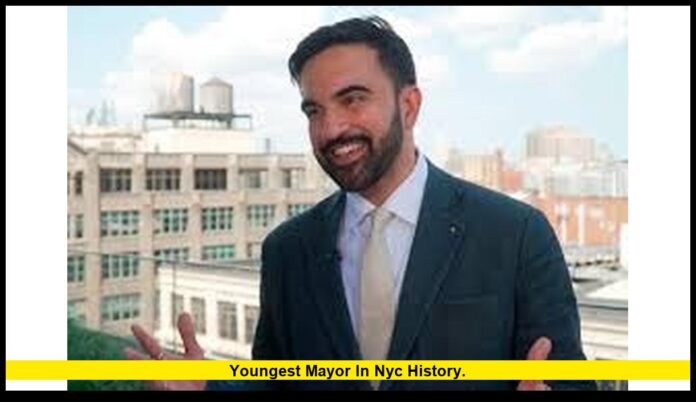
At just 34 years old, Zohran Mamdani has officially become the youngest mayor in NYC history, marking a defining moment in the city’s political landscape. His victory represents a generational shift for New York, as voters embrace youthful leadership focused on inclusivity, affordability, and modern progress.
Table of Contents
A Historic Election and a Groundbreaking Win
The 2025 New York City mayoral election reshaped the city’s political narrative. Zohran Mamdani, the Queens-based politician and activist, secured a decisive victory that brought new energy to City Hall. By defeating veteran politicians with decades of establishment influence, Mamdani’s success symbolized a hunger for generational change.
New York’s younger voters, who turned out in record numbers, viewed him as a voice of their generation — someone who understands the challenges of rising rents, public transit issues, and the cost of living in the city. His election redefined what it means to lead in a city built on ambition and diversity.
Zohran Mamdani: From Queens Roots to City Hall
Born and raised in Uganda before moving to Queens, New York, Zohran Mamdani built his career around community advocacy and grassroots organizing. Before his mayoral bid, he served as a New York State Assembly member representing District 36, which covers Astoria.
Mamdani’s work focused on affordable housing, tenants’ rights, public transit access, and immigrant support programs. His background in activism and his relatable, down-to-earth approach made him a standout candidate among a field of more traditional politicians.
When he announced his run for mayor, few believed he could win against high-profile opponents. But his campaign’s focus on economic fairness, community empowerment, and generational inclusion propelled him to the forefront.
Why Zohran Mamdani’s Age Makes History
The title of youngest mayor in NYC history is not merely symbolic — it reflects a major cultural and political transition. Before Mamdani’s election, that record was held by Hugh J. Grant, who became mayor in 1889 at just 31 years old. For more than a century, City Hall had been dominated by leaders in their 40s, 50s, and 60s.
Now, Mamdani’s leadership style brings a generational refresh to New York politics. His age represents a bridge between the digital, fast-paced reality of younger residents and the traditional systems that govern city life. He is expected to use technology, social media, and direct community dialogue to transform how government interacts with citizens.
The Youngest Mayor in NYC History Faces Big Challenges
While his election is historic, Mamdani inherits one of the most complex leadership roles in America. The city faces mounting issues that demand bold but pragmatic solutions. Among his top priorities are:
- Affordable Housing: Expanding the availability of affordable units and implementing rent freeze policies for lower-income residents.
- Public Transportation: Improving subway reliability and expanding fare-free transit programs to reduce commuter costs.
- Economic Inequality: Introducing policies aimed at redistributing city resources to uplift underrepresented communities.
- Climate and Sustainability: Investing in green infrastructure, renewable energy projects, and resilient urban planning.
- Public Safety and Policing Reform: Building stronger community-based safety models while modernizing NYPD accountability systems.
Balancing these priorities while managing New York’s $100+ billion annual budget will test even the most skilled administrator. Yet Mamdani’s youth brings the advantage of adaptability — a key asset in navigating the city’s fast-changing environment.
A Modern Vision for a Modern City
As the youngest mayor in NYC history, Mamdani’s vision emphasizes innovation, inclusivity, and sustainability. His administration is expected to focus on redefining how the city operates in areas like technology, public health, and environmental justice.
He has already outlined several forward-thinking goals:
- Digital Government: Expanding city services online to improve accessibility and reduce bureaucratic red tape.
- Green New York Initiative: Implementing citywide sustainability programs to reduce carbon emissions and invest in renewable energy.
- Youth Empowerment Programs: Creating leadership and mentorship opportunities for young New Yorkers across all five boroughs.
- Small Business Support: Streamlining permits, reducing taxes on small enterprises, and supporting minority-owned businesses.
These initiatives align with his image as a mayor who not only represents younger generations but also understands how to translate modern needs into policy.
How Mamdani’s Leadership Differs from His Predecessors
Unlike previous mayors known for corporate or political backgrounds, Mamdani’s grassroots activism shapes his approach. He’s not just governing from City Hall — he’s taking governance to the people. His emphasis on community engagement and participatory democracy sets him apart.
Where older administrations relied heavily on top-down decision-making, Mamdani’s leadership model encourages open dialogue with constituents. He often uses social media to address issues directly, holding digital “town halls” and encouraging civic participation through technology.
His commitment to transparency and accountability has struck a chord with younger voters who demand a more responsive and relatable government.
Generational Change in New York Politics
Mamdani’s rise also highlights a generational shift in political representation across the United States. Younger leaders are increasingly entering positions of power — from city councils to Congress — bringing new priorities centered on climate, equity, and social justice.
In New York, this change reflects the city’s evolving demographics. Nearly 40% of its population is under 35, and younger voters are more active and politically aware than ever before. Having the youngest mayor in NYC history at the helm mirrors that transformation and signals the direction New York is heading — progressive, diverse, and unapologetically modern.
Public Reaction and Expectations
Public response to Mamdani’s win has been overwhelmingly positive, particularly among millennial and Gen Z voters. Many see him as a symbol of hope for a fairer, more equitable city.
However, expectations are high. Critics argue that his inexperience could pose challenges when navigating the bureaucracy of the nation’s largest municipal government. Supporters counter that his new perspective and willingness to challenge convention are exactly what New York needs right now.
As the youngest mayor in NYC history, Mamdani’s success will depend on balancing bold vision with effective management — turning his campaign ideals into practical results.
Looking Ahead: What Mamdani’s Election Means for New York
Zohran Mamdani’s victory is more than just a personal milestone; it marks a generational turning point in the story of New York City. His tenure will test whether youth and innovation can redefine leadership in one of the world’s most complex urban environments.
If successful, Mamdani’s administration could serve as a model for other major cities across the U.S., proving that fresh perspectives can solve long-standing urban challenges.
As the youngest mayor in NYC history, Mamdani’s chapter is only beginning — one that could redefine what leadership looks like for decades to come.
Do you believe younger leaders can bring lasting change to cities like New York? Share your thoughts below and join the conversation!

